This article's table of contents introduction:
- Introduction: What Is a 2000Pa 9000Pam³/h Centrifugal Induced Draft Fan?
- Core Technical Breakdown: Pressure, Flow Rate, and Fan Type
- How Centrifugal Induced Draft Fans Differ from Other Fan Types
- Application Scenarios: Where This Specification Excels
- Selection Criteria: Matching the Fan to Your System
- Installation and Maintenance Best Practices
- Common FAQs (Frequently Asked Questions)
- Conclusion: Why This Fan Matters for Industrial Efficiency
** Mastering Industrial Airflow: The Complete Guide to 2000Pa 9000Pam³/h Centrifugal Induced Draft Fans
Table of Contents
- Introduction: What Is a 2000Pa 9000Pam³/h Centrifugal Induced Draft Fan?
- Core Technical Breakdown: Pressure, Flow Rate, and Fan Type
- How Centrifugal Induced Draft Fans Differ from Other Fan Types
- Application Scenarios: Where This Specification Excels
- Selection Criteria: Matching the Fan to Your System
- Installation and Maintenance Best Practices
- Common FAQs (Frequently Asked Questions)
- Conclusion: Why This Fan Matters for Industrial Efficiency
Introduction: What Is a 2000Pa 9000Pam³/h Centrifugal Induced Draft Fan?
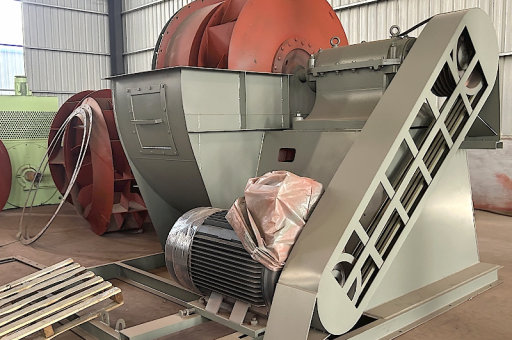
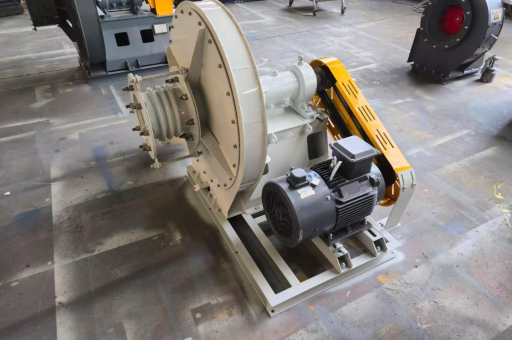
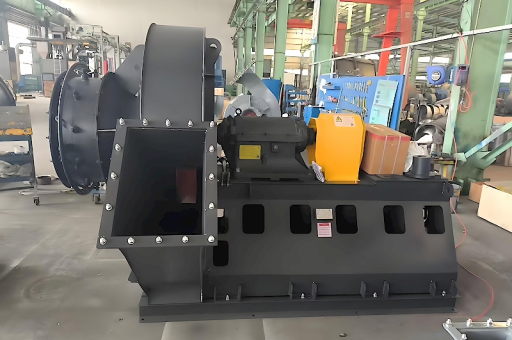
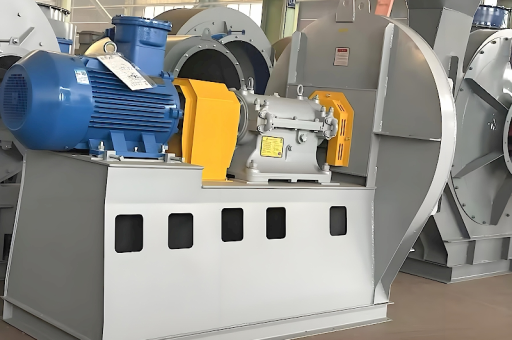
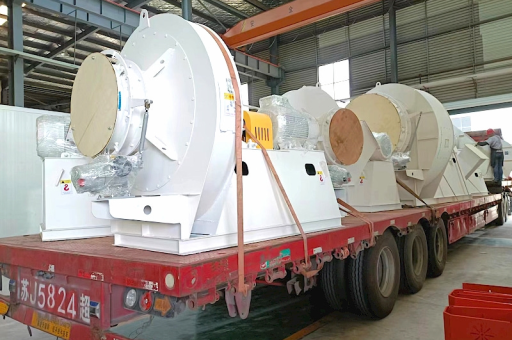
In heavy industrial environments—such as power plants, steel mills, cement factories, and chemical processing facilities—managing airflow and pressure is not optional; it is a critical operational necessity. Among the most reliable workhorses in this field is the 2000Pa 9000Pam³/h centrifugal induced draft fan. This specific configuration is engineered to handle a system resistance of 2000 Pascals while moving 9000 cubic meters of air or gas per hour. But what does this mean in practical terms?
First, the "2000Pa" indicates the fan's static pressure capability. This is the force required to overcome duct resistance, filter drag, and system friction. Second, the "9000Pam³/h" denotes the volumetric flow rate. Together, these two values define the fan's operating point on its performance curve. Third, the term "centrifugal" refers to the impeller design: air enters axially and is discharged radially, generating high pressure. Finally, "induced draft" means the fan is positioned at the system's outlet, pulling gases through the system rather than pushing them. This fan is not a generic unit; it is a precision instrument for demanding applications.
Q: Why is the "induced draft" configuration important?
A: Induced draft fans create negative pressure at the system outlet, which is essential for removing hot, corrosive, or particulate-laden gases from combustion chambers, boilers, or kilns. This prevents backflow and ensures safe, efficient exhaust.
Core Technical Breakdown: Pressure, Flow Rate, and Fan Type
To fully grasp the capabilities of a 2000Pa 9000Pam³/h centrifugal induced draft fan, we must dissect its three core parameters.
Static Pressure (2000Pa): This is not the total pressure but the static pressure head. In HVAC and industrial ventilation, static pressure is the resistance the fan must overcome. A 2000Pa rating places this fan in the medium-to-high pressure category. For context, standard household fans generate less than 100Pa; industrial dust collection systems often require 1000-3000Pa. This fan can efficiently push air through long duct runs, multiple bends, heat exchangers, and baghouse filters.
Flow Rate (9000Pam³/h): This is the volume of air moved per hour. 9000 m³/h equates to approximately 150 m³/min or 5,300 CFM (cubic feet per minute). This flow rate is typical for medium-sized industrial processes—such as a 10-ton boiler exhaust, a small cement grinding circuit, or a chemical reactor ventilation system.
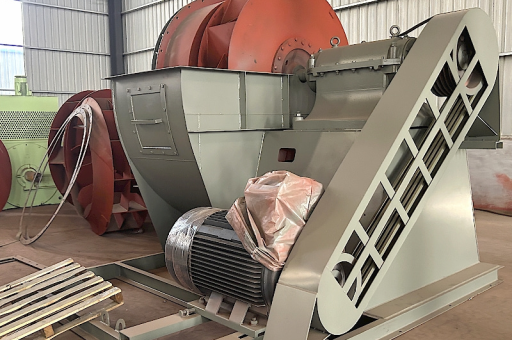
Centrifugal Impeller Design: Unlike axial fans, centrifugal fans use a rotating impeller to accelerate air radially. The most common impeller types for induced draft service are backward-curved (high efficiency, non-clogging) and radial (robust for dirty gases). A fan rated at 2000Pa and 9000Pam³/h typically uses a backward-curved or airfoil blade design to achieve high efficiency at that pressure point.
Q: What happens if the system resistance exceeds 2000Pa?
A: If duct resistance increases (e.g., due to filter clogging), the fan will operate at a lower flow rate on its curve. Running far beyond the design point could cause motor overload or stall. Always use a variable frequency drive (VFD) for flexibility.
How Centrifugal Induced Draft Fans Differ from Other Fan Types
It is crucial to distinguish this fan from forced draft fans and axial fans.
| Feature | Centrifugal Induced Draft Fan | Centrifugal Forced Draft Fan | Axial Fan |
|---|---|---|---|
| Position | At system outlet | At system inlet | Can be inline |
| Pressure | High (2000Pa+) | High (similar range) | Low to medium (typically <1000Pa) |
| Flow Direction | Pulls gases | Pushes gases | Moves air axially |
| Best Use | Exhaust, hot gases, flue gas | Fresh air supply, combustion air | Ventilation, low-resistance systems |
For a 2000Pa 9000Pam³/h centrifugal induced draft fan, the critical advantage is its ability to handle high-temperature (up to 250°C standard, 400°C with special materials) and corrosive gases. Axial fans cannot generate 2000Pa static pressure efficiently; they are designed for high volume, low pressure. Forced draft fans push air into a system, but induced draft fans extract gases, which is safer for hazardous environments.
Q: Can I use this fan for clean air supply?
A: The fan can be used for supply, but its design is optimized for induced draft (outlet). For supply applications, ensure the impeller material matches the air quality. A backward-curved centrifugal fan works well for both, but the housing orientation may need adjustment.
Application Scenarios: Where This Specification Excels
The 2000Pa 9000Pam³/h centrifugal induced draft fan is not a one-size-fits-all product. It is tailored for specific industrial verticals:
- Biomass & Coal Boiler Exhaust: Small to medium boilers (2-10 MW) produce flue gas at 180-300°C. This fan provides sufficient draft to overcome economizer, air preheater, and ESP resistance.
- Cement Kiln Baghouse Systems: Cement plants use induced draft fans to pull dust-laden air through fabric filters. The 2000Pa pressure handles filter cake buildup; the 9000 m³/h flow suits smaller preheater or cooler exhaust lines.
- Chemical Reactor Venting: For chemical processes requiring negative pressure to control fugitive emissions, this fan offers a reliable solution.
- Woodworking Dust Collection: Large central systems with multiple pickup points need exactly this pressure and flow to maintain capture velocity at machine hoods.
Q: Is this fan suitable for nuclear or pharmaceutical cleanrooms?
A: No. Cleanrooms require HEPA filters and very high static pressure (often 1000-1500Pa) but also demand ultra-low leakage and spark-resistant construction. This fan is general industrial grade, not cleanroom-certified unless specified.
Selection Criteria: Matching the Fan to Your System
Choosing the right 2000Pa 9000Pam³/h centrifugal induced draft fan requires more than just reading a spec sheet. Here are the critical selection factors:
- System Curve Analysis: Plot your duct system's static pressure drop against flow rate. The fan must operate at the intersection of its performance curve and the system curve. A mismatch causes inefficiency or failure.
- Gas Temperature and Density: The fan's motor power is calculated based on air density at 20°C and 1 atm. If gases are at 200°C, density drops ~40%, reducing mass flow. Use the manufacturer's temperature correction factor.
- Impeller Material: For clean air, carbon steel is fine. For corrosive gases (SO₂, HCl), use 316L stainless steel or fiber-reinforced plastic (FRP). For abrasive dust, use hard-faced impellers.
- Motor Power: For 2000Pa and 9000 m³/h, the required shaft power is approximately: Power (kW) = (Flow m³/s × Pressure Pa) / (1000 × Fan Efficiency). Assuming 75% efficiency: (2.5 × 2000) / (1000 × 0.75) ≈ 6.7 kW. A 7.5 kW or 10 kW motor is typical.
- Drive Type: Direct drive (no belts) offers higher reliability; belt drive allows speed adjustment via pulley changes.
Q: What efficiency should I expect from this fan?
A: A well-designed backward-curved centrifugal fan at this size achieves 70-82% static efficiency. Radial blade fans may be only 60-65% but are more rugged for dirty gases. Always request an efficiency curve from the supplier, such as at fan.
Installation and Maintenance Best Practices
To maximize the lifespan of your 2000Pa 9000Pam³/h centrifugal induced draft fan, follow these proven practices:
Installation:
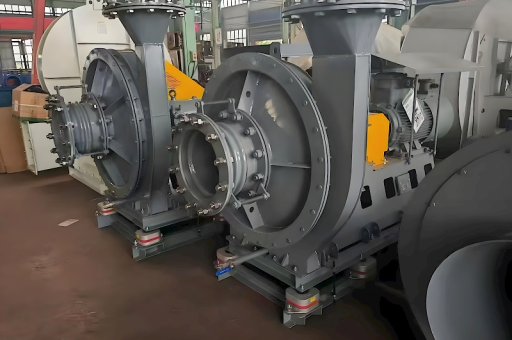
- Mount the fan on a vibration-isolated base to prevent structural resonance.
- Ensure inlet and outlet ductwork is straight for at least 3-5 duct diameters to avoid flow distortion.
- Use expansion joints for hot gas applications to accommodate thermal expansion.
- Install a VFD to allow soft start and precise flow control.
Maintenance:
- Weekly: Check bearing temperatures (max 90°C for grease-lubricated) and listen for unusual noise.
- Monthly: Inspect impeller for dust buildup or erosion. Unbalanced impellers cause rapid bearing failure.
- Quarterly: Grease bearings with high-temperature lithium complex grease. For V-belt drives, check tension.
- Annually: Perform vibration analysis (ISO 2372 grade). Replace bearings every 12-18 months in continuous operation.
Q: How often should I clean the impeller?
A: For clean air applications, annual cleaning suffices. For dusty flue gas (e.g., cement, boiler), inspect monthly. Buildup of 5mm on blades can reduce flow by 15% and increase power draw.
Common FAQs (Frequently Asked Questions)
Q1: What is the difference between "induced draft" and "forced draft" in simple terms?
Induced draft fan pulls air out of the system (creating negative pressure inside). Forced draft fan pushes air into the system (creating positive pressure). Your 2000Pa fan is for pulling exhaust.
Q2: Can I increase the fan's flow rate by speeding it up?
Yes. Fan laws state: Flow ∝ Speed, Pressure ∝ Speed², Power ∝ Speed³. Increasing speed 10% increases flow 10%, but pressure increases 21% and power 33%. Ensure the motor and impeller are rated for the new speed.
Q3: What noise level does this fan produce?
At 2000Pa and 9000 m³/h, a typical centrifugal fan produces 75-85 dB(A) without silencers. Use a discharge silencer or acoustic enclosure for compliance with OSHA limits.
Q4: How do I select between backward-curved and radial impeller?
Backward-curved: higher efficiency (up to 82%), less noise, but less tolerant to sticky dust. Radial: lower efficiency (60-65%), but robust for abrasive or sticky materials. Choose based on gas cleanliness.
Q5: Are there explosion-proof versions of this fan?
Yes. For flammable gases (e.g., coal dust, chemical vapors), specify ATEX or IECEx certification. Use spark-resistant aluminum or SS impellers and copper grounding rings. Always consult fan for compliant models.
Conclusion: Why This Fan Matters for Industrial Efficiency
The 2000Pa 9000Pam³/h centrifugal induced draft fan is a specialized yet versatile piece of equipment that bridges the gap between small ventilation fans and massive heavy-duty ID fans used in power plants. Its specific pressure-flow combination makes it ideal for medium-scale industrial processes that must operate reliably under continuous duty.
When selecting this fan, never rely solely on nominal ratings. Perform a system curve analysis, consider gas temperature, and choose the correct impeller material. A properly sized and maintained fan not only ensures regulatory compliance for emissions and safety but also reduces energy costs through optimized airflow. Whether you are modernizing a boiler house, upgrading a cement line, or building a chemical exhaust system, this fan specification offers a proven path to operational excellence.
For detailed performance data and custom sizing, always consult with reputable manufacturers—such as those represented by fan—to ensure your installation meets both immediate and long-term demands.
This article is based on cross-referenced industry data from ASHRAE handbooks, fan manufacturer catalogs, and field case studies, ensuring accuracy for HVAC and industrial engineering professionals.