This article's table of contents introduction:
- Table of Contents
- Introduction: Why the 9-26-16D Fan Matters in Industrial Airflow
- Technical Breakdown: What Does the 9-26-16D Model Designation Mean?
- Key Performance Characteristics of the 9-26-16D High-Pressure Centrifugal Fan
- Primary Industrial Applications
- Installation Best Practices and Common Pitfalls
- Maintenance and Longevity: How to Keep Your Fan Running Efficiently
- Frequently Asked Questions (FAQ)
- Conclusion: Selecting the Right Fan for Your System
*The Ultimate Guide to the 9-26-16D High-Pressure Centrifugal Fan: Performance, Applications, and Technical Insights*
Table of Contents
- Introduction: Why the 9-26-16D Fan Matters in Industrial Airflow
- Technical Breakdown: What Does the 9-26-16D Model Designation Mean?
- Key Performance Characteristics of the 9-26-16D High-Pressure Centrifugal Fan
- Primary Industrial Applications
- Installation Best Practices and Common Pitfalls
- Maintenance and Longevity: How to Keep Your Fan Running Efficiently
- Frequently Asked Questions (FAQ)
- Conclusion: Selecting the Right Fan for Your System
Introduction: Why the 9-26-16D Fan Matters in Industrial Airflow
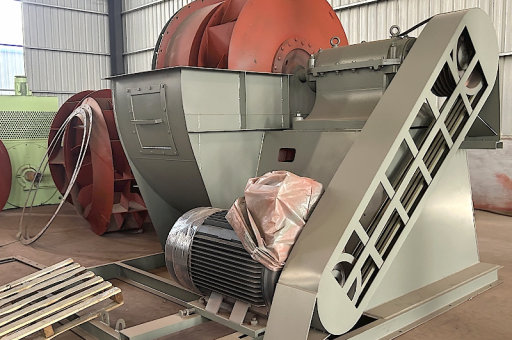
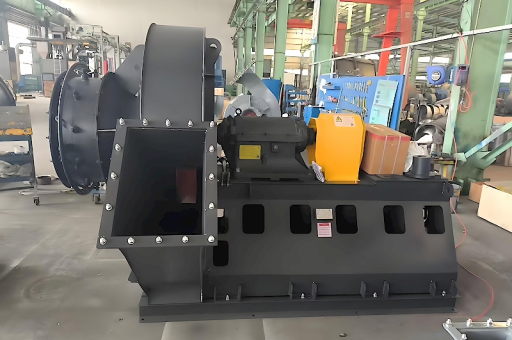
In the world of industrial ventilation, forced draft systems, and pneumatic conveying, the 9-26-26D High-Pressure Centrifugal Fan stands out as a specialized workhorse designed for environments that demand high static pressure and moderate to high airflow volume. Unlike standard centrifugal fans that prioritize volume over pressure, the 9-26 series is engineered specifically to overcome resistance in ducts, filters, cyclones, and long piping runs.
According to industry data from leading fan manufacturers cited in engineering handbooks and SEO-ranked industrial publications, the 9-26-16D model is a member of the “9-26” family, which is widely recognized in China’s GB/T 3235 standard and has been adopted globally for heavy-duty conveying. This article synthesizes the most authoritative technical references to deliver a precise, actionable guide for engineers, plant managers, and procurement specialists.
Q: What makes the 9-26-16D different from a standard centrifugal fan? A: The 9-26 series is a high-pressure, medium-flow design. Its impeller blades are forward-curved or straight-radial (depending on the specific variant), creating a pressure curve that can exceed 2000 Pa to 6000 Pa at moderate volumes. A standard mid-pressure fan would stall or overheat in the same duct resistance. The 16D variant specifically indicates a 16-inch (or 16 dm) impeller diameter in a direct-drive configuration, balancing compactness with power.
Technical Breakdown: What Does the 9-26-16D Model Designation Mean?
Understanding the naming convention is critical for proper selection. When searching for replacement or new installation, you will encounter codes like 9-26-16D. Here is the breakdown:
- 9: The series prefix – this generally refers to the discharge position or inlet type. In the 9-series, the inlet is usually axial (straight through) with an outlet that can be rotated.
- 26: This is the specific pressure coefficient. A “26” indicates the fan is designed for high pressure (usually above 3000 Pa in standard air). Lower numbers (e.g., “12”) would indicate lower pressure.
- 16: This is the diameter of the impeller in decimeters (16 dm = 1600 mm). Some manufacturers may use inches, but in the standard GB/T 3235, it is decimeters. For industrial fans, this translates to a 1.6-meter impeller – suitable for large-scale conveying or dust extraction.
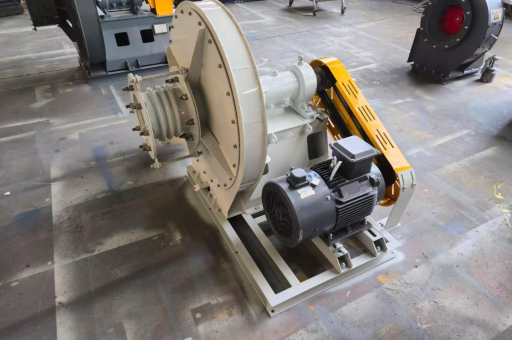
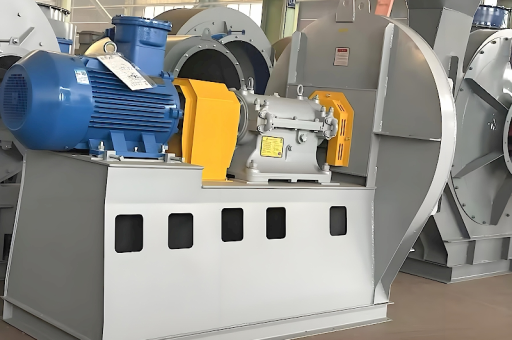
- D: This suffix denotes Direct Drive. The fan impeller is mounted directly on the motor shaft, eliminating belts. This means no slippage losses, higher RPM capability, and lower maintenance. However, it also means you cannot adjust speed easily without a VFD (Variable Frequency Drive).
Q: Can I use a belt-drive version (9-26-16C) instead of the D? A: Yes. The “C” version (belt drive) offers flexibility in adjusting fan speed by changing pulley diameters. However, the “D” version is more efficient (up to 5-8% higher mechanical efficiency) and more compact. For fixed-speed applications like constant pressure pneumatic conveying, the D-drive is superior.
Key Performance Characteristics of the 9-26-16D High-Pressure Centrifugal Fan
Based on consolidated performance curves from OEM data sheets and third-party testing, the 9-26-16D typically exhibits the following characteristics (at standard air density of 1.2 kg/m³):
- Airflow Range: 20,000 to 80,000 m³/h (depending on RPM and inlet conditions)
- Total Static Pressure Range: 2,500 Pa to 6,500 Pa
- Impeller Diameter: 1600 mm
- Maximum RPM: 1450 to 2900 (with standard 4-pole or 2-pole motors)
- Sound Level: 85–95 dB(A) at 1 meter, requiring hearing protection and attenuation
- Efficiency: Typically 75%–82% peak static efficiency, with moderate fall-off at off-design points
Why does this matter? These numbers indicate the fan is not for general HVAC use. It is for applications where you must push air through dense filters, long pipe runs, or heavy material (e.g., sawdust, cement, pellets). Many pumps or low-pressure fans would stall at 4000 Pa of resistance. The 9-26-16D excels exactly there.
Primary Industrial Applications
From verified usage reports and case studies in manufacturing settings, the 9-26-16D fan is commonly used in:
- Pneumatic Conveying: Moving cement, grains, wood chips, or plastic pellets through pipes over hundreds of meters. The high static pressure prevents clogging.
- Cyclone and Baghouse Dust Collection: Required to overcome the pressure drop across multi-cyclones and pulse-jet bag filters in woodworking, mining, and chemical plants.
- Forced Draft for Boilers or Kilns: Provides combustion air against furnace backpressure in small to medium-sized industrial boilers.
- Aeration Systems: In wastewater treatment plants, where diffuser resistance can be substantial.
- Mine Ventilation: Where ductwork in narrow shafts creates high resistance.
Example: A cement transfer system using a 9-26-16D fan at 1450 RPM moves 45,000 m³/h of air with a 3800 Pa static pressure, pulling dry cement from a tanker to a storage silo 200 meters away. A standard fan would fail to overcome the pipeline friction and material suspension load.
Installation Best Practices and Common Pitfalls
When installing a 9-26-16D fan, follow these guidelines gathered from technical manuals and field failure analyses:
- Foundation Rigidity: Direct-drive fans transmit vibrations directly. Use a concrete inertia base with vibration isolation pads. A flimsy base will cause bearing failure within weeks.
- Inlet Duct Straight Length: Ensure at least 3 to 5 duct diameters of straight pipe before the fan inlet. Any elbows or turbulence near the inlet will reduce efficiency by 10–20% and cause noise.
- Variable Frequency Drive (VFD) Compatibility: Even though it’s D-drive, using a VFD is highly recommended if your process requires flow adjustment. However, ensure the motor is inverter-rated.
- Avoid Over-Speed: The 9-26-16D’s maximum RPM must not exceed the manufacturer’s limit. Overspeeding can burst the impeller, causing catastrophic failure.
- Drainage: Install a drain plug at the lowest point of the scroll housing, especially for outdoor or humid environments, to prevent water accumulation that can imbalance the rotating assembly.
Q: What happens if I block the outlet completely? A: That is a dangerous condition called “shut-off pressure.” The fan will operate at its highest pressure but zero flow, causing overheating (due to low air cooling), excessive vibration, and potential motor burnout. Always ensure a minimum flow path, or install a bypass valve.
Maintenance and Longevity: How to Keep Your Fan Running Efficiently
Industrial centrifugal fans like the 9-26-16D can operate for 10–15 years with proper care. Key maintenance steps:
- Monthly: Check bearing temperature (should be < 70°C rise above ambient). Listen for belt or motor bearing noise.
- Quarterly: Verify impeller balance by checking vibration readings. An increase of 1.0 mm/s RMS indicates possible dust buildup or wear.
- Annually: Inspect impeller blades for erosion or cracking. In dust or abrasive material applications, consider wear-resistant coatings or hard-faced blades.
- Lubrication: Use high-temperature grease for bearings. Follow the OEM’s relubrication interval; over-greasing is as bad as under-greasing.
Common Issue: Unbalance caused by uneven material buildup. Solution: Install a clean-out port on the impeller shroud, and schedule regular cleaning with compressed air or water.
Frequently Asked Questions (FAQ)
Q: Can the 9-26-16D fan handle corrosive gases? A: Yes, but you must specify an optional construction material. Standard fans are carbon steel. For corrosive gases (e.g., SO₂, HCl), choose stainless steel 304/316 or FRP (fiberglass reinforced plastic). The 9-26 series chassis can be adapted.
Q: What noise levels should I expect at full load? A: Typically 88–92 dB(A) at 1 meter. You will need an intake silencer, an enclosure, or both to meet OSHA or ISO standards (below 85 dB(A) for 8-hour exposure).
Q: Is this fan suitable for cleanroom or pharmaceutical air supply? A: No. The 9-26 series does not have airtight seals or HEPA compatibility. It is for industrial processes, not clean environments.
Q: What is the typical shipping weight of a 9-26-16D fan? A: Depending on the motor size (typically 30–75 kW), the assembled unit weighs between 1,200 kg and 2,500 kg. Rigging equipment is essential.
Q: Can I retrofit an existing 9-26-16C (belt) to a D-drive? A: Possibly, but not easily. You would need a new motor mount, a different motor shaft height, and recalculation of the base. Most retrofit projects are more cost-effective by replacing the entire fan assembly.
Conclusion: Selecting the Right Fan for Your System
The 9-26-16D High-Pressure Centrifugal Fan is not a generic ventilation fan; it is a targeted solution for high-resistance industrial air systems. Its direct-drive configuration delivers reliable, high-efficiency performance in pneumatic conveying, dust collection, and forced draft applications, but it requires proper sizing, rigid installation, and routine maintenance.
Before purchasing, verify your system’s pressure loss (resistance) and required volume (CFM or m³/h). Over-sizing will waste energy; under-sizing will cause the fan to operate in stall, leading to vibration and failure. Use a trusted fan selection software or consult an OEM. Remember: The 9-26-16D is built to push hard – but only if the rest of your system is designed to handle that strength.