This article's table of contents introduction:
- What is a Powder Conveying Fan?
- Core Principle: How it Moves Powder
- The Most Common Type of Powder Conveying Fan
- Types of Powder Conveying Fans
- Critical Design Features for Abrasive Powders
- Key Selection Parameters
- Common Applications & Industries
- Maintenance & Wear Indicators
- Summary: Standard Fan vs. Powder Fan
- Final Recommendation
Here is a comprehensive overview of Powder Conveying Fans, covering their purpose, types, key design features, and selection criteria.
What is a Powder Conveying Fan?
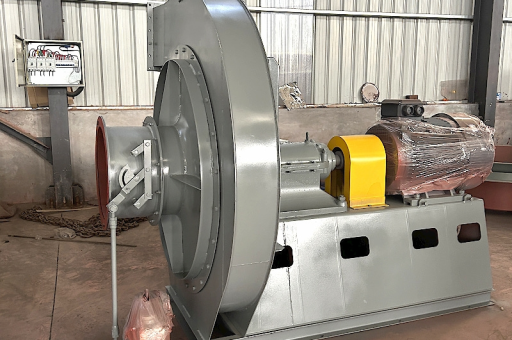
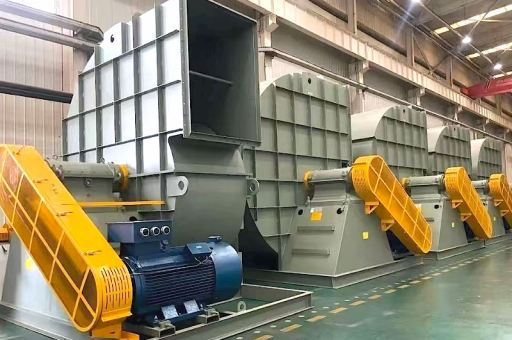
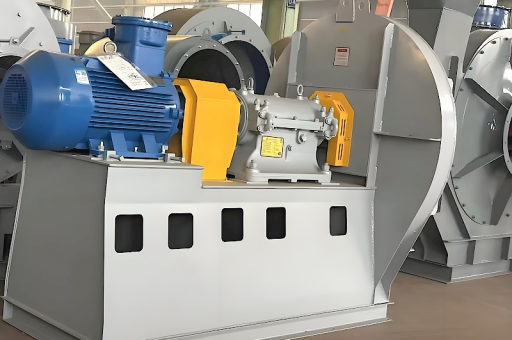
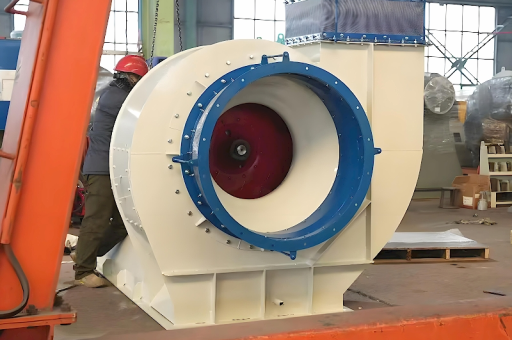
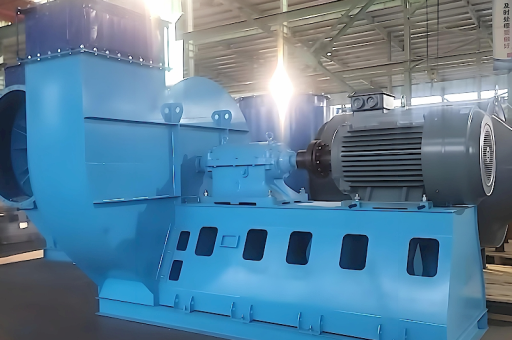
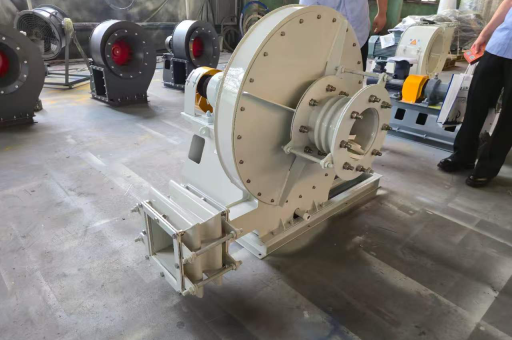
A powder conveying fan is a specialized industrial fan designed to transport bulk powders, granules, pellets, and other solid particulate materials through a pneumatic conveying system. Unlike standard ventilation fans, these fans are engineered to handle high pressures and resist wear from abrasive materials.
They are the "heart" of a pneumatic conveying system, generating the air velocity and pressure differential needed to lift or push material along pipelines.
Core Principle: How it Moves Powder
The fan creates a high-velocity air stream (usually between 20-35 m/s or 4000-7000 ft/min for powders). This air stream drags the solid particles along, suspending them in the air and carrying them to a destination (e.g., storage silo, mixer, process machine).
Types of Pneumatic Systems:
- Dilute Phase: High velocity, low pressure. Powder is fully suspended (like dust in a hurricane). Most common for simple conveying.
- Dense Phase: Low velocity, high pressure. Powder is pushed in "plugs" or slugs. Uses blowers or compressors instead of typical fans.
- Vacuum (Suction) Systems: The fan is at the end of the line, pulling material from a source (e.g., a truck).
- Pressure (Blow) Systems: The fan is at the beginning of the line, pushing material to a destination.
The Most Common Type of Powder Conveying Fan
While there are a few specialized types, the overwhelming industry standard for dilute phase conveying is the Centrifugal Fan, specifically a radial blade or paddle wheel design.
Why Centrifugal Fans?
- High Pressure: They generate the static pressure (typically 20-100 inches WG / 5-25 kPa) required to overcome pipe friction and lift material.
- Reliable Design: Simpler construction than positive displacement blowers (like Roots blowers) for many applications.
- Variable Airflow: Can be controlled with dampers or variable frequency drives (VFDs).
Types of Powder Conveying Fans
| Fan Type | Impeller Design | Best For | Pros | Cons |
|---|---|---|---|---|
| Standard Radial Blade | Flat blades radiating straight out from the hub. | General purpose, non-abrasive powders (flour, plastic pellets). | Simple, low cost, moderate pressure. | Poor for abrasive powders; blades wear quickly. |
| Radial Tip / Paddle Wheel | Robust, thick blades (often 5-12) with a large hub. | Heavy duty, abrasive powders (cement, sand, fly ash, minerals). | Extremely wear-resistant, high pressure, handles large particles. | Lower efficiency than airfoil blades. |
| High-Efficiency Radial | Curved backward-inclined blades. | Clean, non-abrasive powders where energy savings matter. | Highest efficiency, quietest operation, lower power cost. | Not suitable for abrasive or sticky powders; blades clog. |
| Compact Radial | Small diameter, high speed | Limited space, lower volume flow | Small footprint, relatively low cost | Lower efficiency, higher noise. |
| Positive Displacement Blower (Roots Blower) | Two rotating lobes (like a figure-8). | Dense phase conveying, very high pressure applications. | Constant volume regardless of pressure, high reliability. | More expensive, noisier, requires oil lubrication. |
Critical Design Features for Abrasive Powders
If you are conveying sand, cement, glass cullet, or similar materials, standard fans will fail rapidly. You need a heavy-duty fan with:
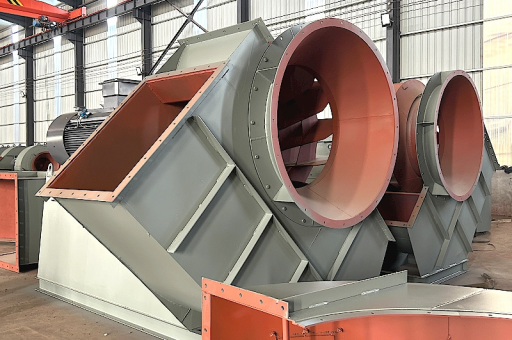
- Wear Liners: Replaceable steel or ceramic plates inside the fan housing at the "cut-off" (volute tongue) and impeller edges—the points of highest wear.
- Hardened Impeller: Blades made from AR (Abrasion Resistant) steel like 400 Brinell hardness or coated with tungsten carbide.
- Large Hub & Thick Blades: Reduces the velocity gradient and provides a sacrificial layer of material.
- Shaft Seals: To prevent powder from leaking into bearings.
- Split Housing: Allows the top half of the fan to be removed for inspection and maintenance without disturbing the ductwork.
Key Selection Parameters
To choose the correct fan, you need to specify:
- Air Volume (CFM / m³/hr): How much air is needed to move the material at the required velocity.
- Static Pressure (inches WG / Pa): Total resistance (friction in pipes, lift height, filter loss).
- Material Type & Abrasiveness: Determines fan material (mild steel vs. AR steel vs. stainless steel).
- Conveying Distance & Elevation: Longer distances = higher pressure requirement.
- Density of Material: Heavier materials need more air power.
- Air-to-Material Ratio: How much air per pound of material.
Common Applications & Industries
- Cement & Minerals: Transporting cement, sand, lime, fly ash, stone dust.
- Food Processing: Flour, sugar, grain, starch, spices, instant powder.
- Plastics & Rubber: PVC powder, plastic pellets (nurdles), carbon black.
- Chemicals & Pharmaceuticals: Fine chemical powders, active ingredients, detergents.
- Wood & Biomass: Sawdust, wood chips, biomass pellets (often uses a material handling fan).
- Agriculture: Grain, feed, seed, fertilizer.
Maintenance & Wear Indicators
| Symptom | Likely Cause | Solution |
|---|---|---|
| Vibration | Uneven wear on impeller blades (material buildup or erosion). | Balance impeller; clean or replace. |
| Reduced Airflow | Build-up in pipeline; worn impeller blades (reduced efficiency). | Check filter; inspect impeller. |
| Holes in Housing | Abrasion from powder hitting the cut-off. | Install or replace wear liners. |
| Seal Leaks | Powder bypassing shaft seal. | Replace seal (labyrinth or lip seal). |
| Overheating Motor | Low airflow (system restriction) or high pressure. | Clean filter; check dampers; verify duct sizing. |
Summary: Standard Fan vs. Powder Fan
| Feature | Standard Industrial Fan | Powder Conveying Fan |
|---|---|---|
| Pressure | Low-Medium (≤15" WG) | High (30"-100"+ WG) |
| Impeller | Airfoil, backward curved | Radial, heavy paddle wheel |
| Wear Protection | None | Wear liners, hardened steel |
| Tolerance | Clean air | Dirty, abrasive, high dust load |
Final Recommendation
For 90% of powder conveying applications, a Radial Tip / Paddle Wheel Centrifugal Fan with an abrasion-resistant housing is the correct choice.
Do not use a standard HVAC fan or a backward-inclined fan for abrasive powders—they will wear out in a matter of hours or days.
If you need to move a specific type of powder (e.g., sticky, hygroscopic, explosive), please provide the material name, and I can give more tailored advice on material selection and safety features (e.g., ATEX certification for combustible dusts).