This article's table of contents introduction:
- Table of Contents
- Introduction: The Role of 6kV Centrifugal Fans in Heavy Industry
- Technical Specifications: Voltage, Power, and Aerodynamic Design
- Key Applications: From Power Plants to Mining Ventilation
- Performance Parameters: Pressure, Flow Rate, and Efficiency
- Installation & Safety Protocols for High-Voltage Fans
- Maintenance Strategies: Extending Service Life
- Comparative Analysis: 6kV vs. Low-Voltage Centrifugal Fans
- Frequently Asked Questions (FAQ)
- Conclusion & Future Trends
*Optimizing Industrial Ventilation: A Comprehensive Guide to 6kV Centrifugal Fan Systems*
Table of Contents
- Introduction: The Role of 6kV Centrifugal Fans in Heavy Industry
- Technical Specifications: Voltage, Power, and Aerodynamic Design
- Key Applications: From Power Plants to Mining Ventilation
- Performance Parameters: Pressure, Flow Rate, and Efficiency
- Installation & Safety Protocols for High-Voltage Fans
- Maintenance Strategies: Extending Service Life
- Comparative Analysis: 6kV vs. Low-Voltage Centrifugal Fans
- Frequently Asked Questions (FAQ)
- Conclusion & Future Trends
Introduction: The Role of 6kV Centrifugal Fans in Heavy Industry
In modern heavy industries—such as thermal power generation, cement production, steel manufacturing, and underground mining—high-voltage electrical systems are the norm. Among the most critical mechanical equipment in these environments is the 6kV Centrifugal Fan. Unlike standard low-voltage fans (e.g., 380V or 480V), the 6kV version is designed to handle massive air volumes and pressure demands while maintaining energy efficiency over long continuous operation cycles.
The "6kV" designation refers to the fan motor's rated voltage (6,000 volts). This high-voltage configuration allows for lower current draw for the same power output, reducing cable size requirements and minimizing resistive losses over long distances. As a result, these fans are the backbone of forced draft (FD), induced draft (ID), and primary air systems in large-scale industrial processes.
Technical Specifications: Voltage, Power, and Aerodynamic Design
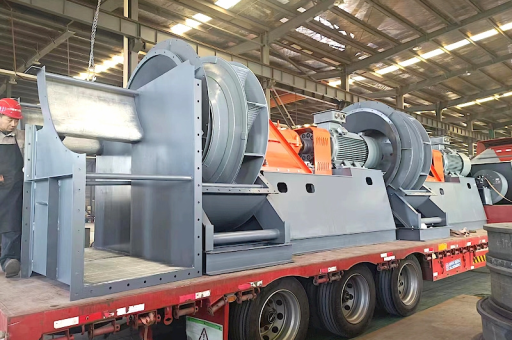
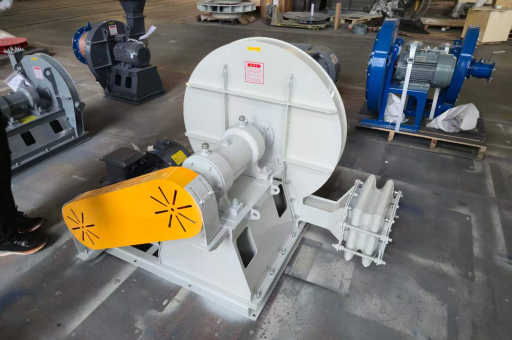
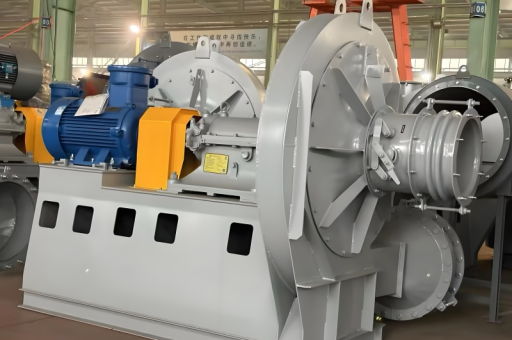
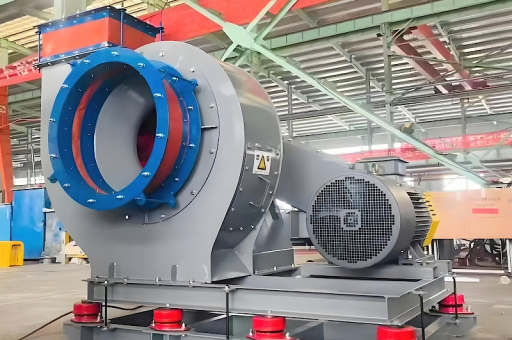
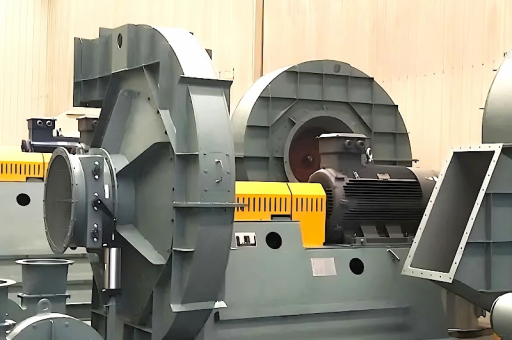
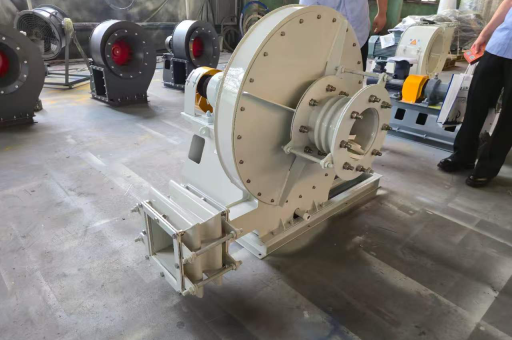
A typical 6kV centrifugal fan consists of three major components: the impeller (or rotor), the housing (volute), and the drive system (motor and coupling).
- Motor: 6kV, 3-phase, squirrel-cage induction motor. Power ratings range from 200 kW to over 3,000 kW depending on the application. The motor is typically equipped with thermal protection, vibration sensors, and bearing temperature monitors.
- Impeller: Backward-curved or forward-curved blades, manufactured from high-strength steel or abrasion-resistant alloys. The choice of blade curvature directly influences pressure-rise characteristics and efficiency.
- Housing: Heavy-gauge steel volute with reinforced inlet cones. Designed to withstand internal pressures up to 10–15 kPa for heavy-duty applications.
- Control System: Often paired with variable frequency drives (VFDs) rated for 6kV input. This allows precise flow control while maintaining high motor efficiency across the operating range.
Performance Note: At full load, a 6kV centrifugal fan operating at 1,000 kW draws approximately 96 amperes (using the formula I = P / (√3 × V × PF), assuming a power factor of 0.9). This is about 15 times lower than an equivalent 380V fan, significantly reducing I²R losses in the supply cables.
Key Applications: From Power Plants to Mining Ventilation
The 6kV centrifugal fan is not a general-purpose device. It is engineered for mission-critical roles in environments where failure is not an option.
- Thermal Power Plants: Used as Induced Draft (ID) fans to pull flue gases through the boiler, economizer, and electrostatic precipitator. Also used as Forced Draft (FD) fans to supply combustion air.
- Cement Plants: In the preheater tower and cooler sections, these fans handle high-temperature, dust-laden gases.
- Steel Mills: For blast furnace air supply and fume extraction in oxygen converters.
- Mining: Main ventilation fans for underground mines, where they must operate 24/7 and provide sufficient airflow for thousands of meters of tunnels.
- Waste-to-Energy Plants: Controlling draft in incinerators to maintain optimal combustion temperatures.
Case Insight: In a 600 MW coal-fired power plant, a single 6kV ID fan can handle up to 800,000 m³/h of flue gas at 150°C. The fan motor alone may weigh over 10 tons.
Performance Parameters: Pressure, Flow Rate, and Efficiency
To properly select a 6kV centrifugal fan, engineers evaluate several key performance indicators:
- Flow Rate (Q): Typically measured in m³/h or CFM. Large industrial fans deliver between 50,000 and 1,000,000 m³/h.
- Static Pressure (Ps): The resistance the fan must overcome. Ranges from 2 kPa (light duty) to >15 kPa (heavy dust collection).
- Fan Efficiency (η): Modern backward-curved impellers achieve peak efficiencies of 85–90%. Off-design operation caused by poor ductwork can reduce this dramatically.
- Specific Speed (Ns): A dimensionless number that determines the optimal impeller geometry. A low Ns value indicates a high-pressure, low-flow design; high Ns indicates a high-flow, low-pressure design.
Important: Running a 6kV centrifugal fan at speeds above its design point (overspeed) can cause catastrophic impeller failure. Always adhere to the manufacturer's maximum rotational speed rating.
Installation & Safety Protocols for High-Voltage Fans
Installing a 6kV centrifugal fan requires adherence to strict electrical and mechanical safety standards (IEC, NEMA, or GB standards).
Electrical Safety:
- The motor must be connected via a dedicated 6kV switchgear (circuit breaker + protection relay).
- Grounding: Use a separate earthing conductor with cross-section at least 50% of the phase conductor.
- Ensure surge arrestors are installed at the motor terminals in regions prone to lightning.
Mechanical Safety:
- Foundation: Reinforced concrete base to absorb vibration. Isolation pads are recommended.
- Coupling alignment must be within 0.05 mm radial and angular tolerance.
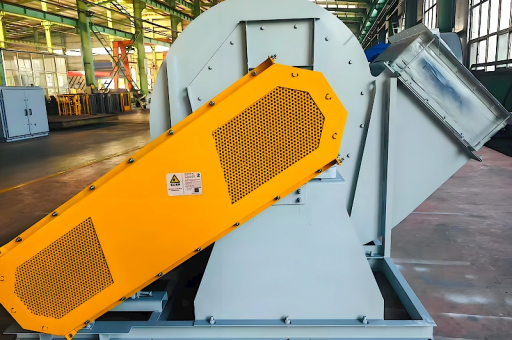
- Guards: All rotating parts, including the fan shaft and coupling, must have safety guards per OSHA standards.
- Pre-commissioning: Perform a megger test (insulation resistance) – should be >100 MΩ at 5000V DC.
Maintenance Strategies: Extending Service Life
Without regular maintenance, even the most robust 6kV centrifugal fan will suffer from premature bearing failure, impeller erosion, or motor winding breakdown.
| Maintenance Task | Frequency | Key Action |
|---|---|---|
| Bearing lubrication | Every 500 hours | Use high-temperature grease (NLGI #2). Do not overfill. |
| Vibration analysis | Monthly | Measure velocity (mm/s) at bearings. Alarm if >4.5 mm/s. |
| Impeller inspection | Every 6 months | Check for erosion, cracks, or imbalance. |
| Motor insulation test | Annually | Perform PI (Polarization Index) test. Minimum acceptable: 2.0. |
| Electrical connections | Annually | Torque-check all 6kV cable lugs and busbars. |
Critical Warning: Never start a 6kV fan after a prolonged shutdown without first measuring insulation resistance. Moisture accumulation can cause a phase-to-ground fault.
Comparative Analysis: 6kV vs. Low-Voltage Centrifugal Fans
| Parameter | 6kV Fan | 380V / 480V Fan |
|---|---|---|
| Voltage | 6,000 V | 380–480 V |
| Typical Power Range | 200 – 3,000 kW | Up to 500 kW |
| Cable Size (for 1,000 kW) | ~50 mm² (copper) | ~400 mm² (copper) |
| Motor Efficiency | 94–97% | 90–94% |
| Application | Heavy industry, continuous | Light manufacturing, HVAC |
| Initial Cost | Higher (switchgear cost) | Lower |
| Safety Complexity | Requires qualified HV technicians | Lower risk |
Verdict: While the initial capital expenditure for a 6kV centrifugal fan is higher, the total cost of ownership is lower in large-scale operations due to reduced cable costs, higher motor efficiency, and better long-distance power transmission.
Frequently Asked Questions (FAQ)
Q1: Can a 6kV centrifugal fan be driven by a variable frequency drive (VFD)?
Answer: Yes, but only with a 6kV-rated VFD (also called MV drive). These drives use multilevel inverter topologies or cascaded H-bridge designs to produce clean sinusoidal output. The VFD allows soft-start and flow modulation, reducing mechanical stress.
Q2: What is the typical lifespan of a 6kV fan motor?
Answer: With proper maintenance (regular bearing grease replacement, winding insulation testing, and vibration monitoring), the motor can operate for 20–30 years. Impeller replacement may be needed every 10–15 years depending on gas composition and abrasion.
Q3: How do I calculate the starting current for a 6kV fan?
Answer: For direct-on-line (DOL) starting, the starting current can be 6–8 times the full-load current. For example, a 1,000 kW motor (96 A full load) may draw 580–770 A during start. That is why soft-starters or VFDs are strongly recommended.
Q4: Is it safe to operate a 6kV fan in a dusty environment (e.g., cement plant)?
Answer: Yes, but the motor must have a higher IP rating (IP55 or IP66). The air intake should be filtered if possible. For the impeller, consider hard-facing or ceramic lining to resist erosion.
Q5: What is the difference between backward-curved and forward-curved impellers for high-voltage fans?
Answer: Backward-curved blades offer higher efficiency (84–90%) and are less prone to overloading the motor. Forward-curved blades produce higher flow for a given size but have lower efficiency. For 6kV applications, backward-curved is almost always chosen for energy savings.
Conclusion & Future Trends
The 6kV centrifugal fan remains the workhorse of industrial air movement due to its unmatched combination of power density, efficiency, and reliability. As global regulations push for lower carbon emissions, these fans are being integrated with smart monitoring systems (IoT sensors, predictive maintenance algorithms) and high-efficiency motors (IE4 and IE5 classes).
Additionally, the shift toward digital twin modeling allows operators to simulate fan performance under varying duct resistance, optimizing VFD setpoints in real-time. For engineers designing new plants or upgrading existing ones, investing in a 6kV centrifugal fan is not merely a technical choice—it is a strategic decision for long-term operational sustainability.
For more detailed parametric selection or to request a custom quotation, please contact your local fan manufacturer. Visit fan for product datasheets and engineering support.