This article's table of contents introduction:
- The Spec: 19000 m³/h Dust Collector Exhaust Fan
- Typical Applications (Where you'd find this fan)
- Key Engineering & Selection Factors (Critical to know)
- Summary Table
- What to do Next (If you are buying or specifying)
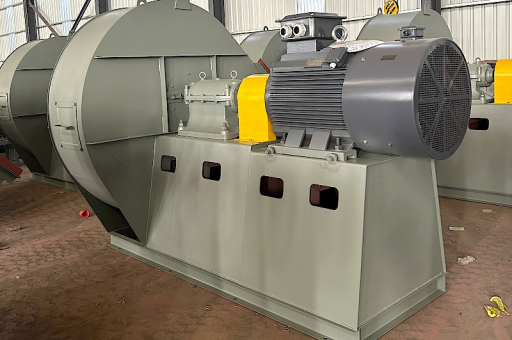
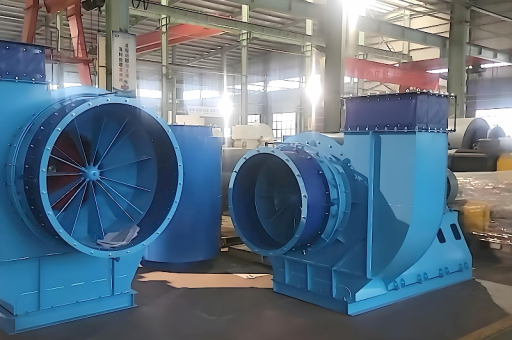
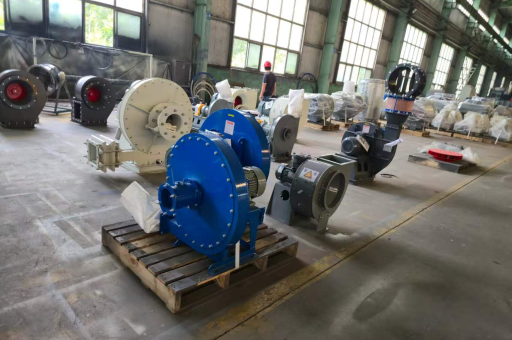
This is a specification for a large industrial exhaust fan designed for a dust collection system.
Here is a detailed breakdown of what this specification means, typical applications, and key engineering considerations.
The Spec: 19000 m³/h Dust Collector Exhaust Fan
- 19000 m³/h (Cubic Meters per Hour): This is the Airflow Rate.
- What it means: The fan moves 19,000 cubic meters of air every hour. This is a substantial volume, suitable for medium to large industrial operations.
- Conversion:
- 19,000 m³/h ≈ 11,180 CFM (Cubic Feet per Minute).
- For reference, a small home furnace fan moves about 400-600 CFM. A shop vacuum moves about 150 CFM. This fan moves 75 times more air than a shop vac.
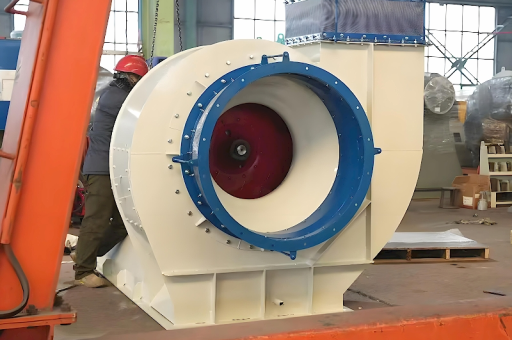
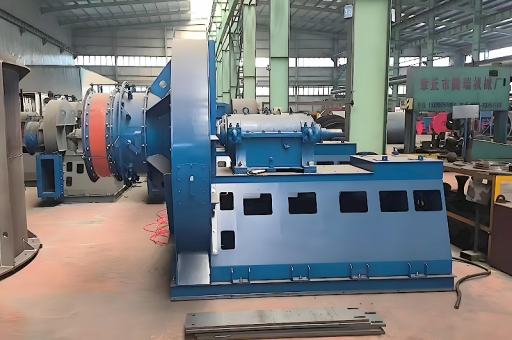
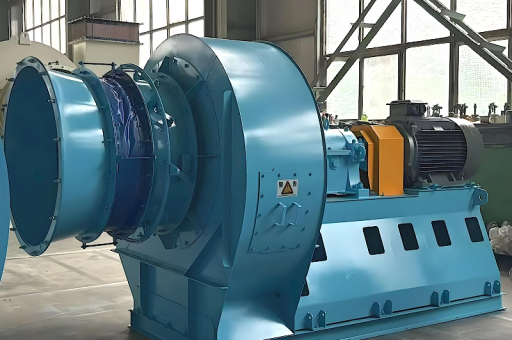
- Dust Collector Exhaust Fan: This identifies the fan's Function and Design.
- Dust Collector System: The fan is the "engine" of the dust collection system. It creates negative pressure (suction) to pull dust-laden air from hoods, machines, or processes through ductwork, into a filter (baghouse, cartridge, cyclone), and then exhausts the clean (or mostly clean) air.
- Exhaust Fan: This refers to the fan's position in the system (usually on the clean air side of the filter). It pulls air through the filter.
Typical Applications (Where you'd find this fan)
This is not a general-purpose fan. It is used in specific industrial settings:
- Woodworking & Carpentry: Large saws, planers, sanders, and CNC routers generate massive amounts of wood dust and chips.
- Metalworking: Grinding, welding, plasma cutting, and abrasive blasting produce fine metal dust, fumes, and smoke.
- Food Processing: Flour, grain, sugar, and spice dust (often in explosion-proof configurations).
- Pharmaceuticals & Chemicals: Handling fine, potentially hazardous powders.
- General Industrial Manufacturing: Plastic processing, fiberglass production, cement handling, etc.
Key Engineering & Selection Factors (Critical to know)
Simply saying "19000 m³/h" is not enough. A fan's performance is defined by both its airflow volume (m³/h) and its Static Pressure (the resistance it must overcome). You cannot select a fan without knowing the pressure.
-
Static Pressure (ΔP): This is the most common missing piece.
- What it is: The resistance the fan must overcome to move the air through the ductwork, filter media, hoods, and any other components.
- Units: Pascals (Pa), mmH₂O (millimeters of water column), or inches of water gauge ("w.g.).
- Example: A system with short, straight ducts and a low-restriction filter might require only 500-1000 Pa. A system with long, complex ductwork and a heavily loaded baghouse filter could require 2000-4000 Pa.
- Crucial Rule: A fan rated for 19000 m³/h at 1000 Pa will not move 19000 m³/h if the system resistance is 3000 Pa. It will stall or move far less air.
-
Fan Type (Wheel Design): The type of air-moving wheel dictates efficiency and suitability for dust.
- Backward-Inclined / Backward-Curved (BC): Most efficient, best for clean or slightly dusty air. Common on the exhaust side of a dust collector.
- Radial Blade (Paddlewheel): Very robust, handles heavy dust loads (but is less efficient). Often used on the dirty air side before the filter.
- Forward-Curved (FC): Low cost, can move high volume at low pressure. Less efficient and noise.
-
Motor Power (kW/hp):
- Estimation: For rough planning, a 19000 m³/h fan operating at 2000-2500 Pa requires a motor of approximately 18-22 kW (25-30 hp). This is a large, high-power industrial motor.
- Formula: Power (kW) ≈ (m³/s × ΔP (Pa)) / (1000 × Fan Efficiency × Drive Efficiency).
- m³/s = 19000 / 3600 = 5.28
- Example for 2000 Pa: (5.28 m³/s × 2000 Pa) / (1000 × 0.75) ≈ 14 kW (in reality, add margin for drive losses and motor start).
-
Construction & Standards:
- Material: Carbon steel (standard). Stainless steel (for corrosive, wet, or food-grade dust). Aluminum or spark-resistant for explosive dusts.
- Spark Resistance: CRITICAL for wood, metal, and many chemical dusts. The fan wheel must be non-ferrous (e.g., aluminum) and the housing lined or designed to prevent sparks. ATEX (in Europe) or NEC Class II (in US) explosion-proof requirements apply.
- Drive System: Direct drive (fan wheel on motor shaft - no belts) is more efficient and requires less maintenance. Belt drive (V-belts) allows for speed adjustment (changing airflow) but requires belt maintenance.
Summary Table
| Specification | Value | Notes |
|---|---|---|
| Airflow | 19,000 m³/h (11,180 CFM) | Medium-large industrial capacity |
| Application | Dust Collector Exhaust | Clean air side of filter |
| Key Missing Spec | Static Pressure (ΔP) | Must be known! |
| Typical Motor | ~18-30 kW / 25-40 hp | Dependent on system resistance |
| Safety Critical | Spark-proof design required | For combustible dusts |
What to do Next (If you are buying or specifying)
- Calculate Total System Pressure: Determine the pressure drop through the longest, most restrictive duct run plus the filter's pressure drop (usually provided by the filter manufacturer at a specific air-to-cloth ratio).
- Select Fan from Performance Curve: Look at a fan manufacturer's catalog for a model that hits both 19,000 m³/h and your required static pressure (e.g., 19000 @ 2500 Pa). The fan must operate near its Best Efficiency Point (BEP).
- Check for Explosion Requirements: If the dust is combustible (wood, grain, metal, sugar, plastic), you must specify a fan built to ATEX or NFPA standards.
In short: 19000 m³/h is the flow target, but the static pressure (resistance) is the invisible force that determines if it will actually work.