This article's table of contents introduction:
- Table of Contents
- Introduction
- Technical Overview
- Design and Performance
- Applications
- Installation and Maintenance
- Energy Efficiency
- Common FAQs
- Conclusion
Maximizing Industrial Air Quality: The Role of 9000m³/h Dust Removal Induced Draft Fans in Modern Ventilation Systems
Table of Contents
- Introduction – Why High-Capacity Dust Removal Matters
- Technical Overview – What Makes a 9000m³/h Induced Draft Fan Unique
- Design and Performance – Key Engineering Parameters
- Applications – Where These Fans Excel
- Installation and Maintenance – Best Practices for Longevity
- Energy Efficiency – Reducing Costs While Maintaining Airflow
- Common FAQs – Expert Answers to Critical Questions
- Conclusion – Future Trends and Recommendations
Introduction
In heavy industries such as cement, mining, woodworking, and chemical processing, airborne dust is not just a nuisance—it is a serious hazard to worker health, equipment reliability, and regulatory compliance. A 9000m³/h dust removal induced draft fan represents a high-capacity solution that moves contaminated air through filtration systems at a rate of 9,000 cubic meters per hour. Unlike forced draft fans, induced draft fans operate by creating negative pressure downstream of the dust collector, which pulls dust-laden air through filters or scrubbers before exhausting clean air to the atmosphere.
According to recent industry reports, facilities using such fans achieve a 5% reduction in airborne particulate matter when paired with proper baghouse or cartridge filters. This article synthesizes engineering data from leading ventilation manufacturers, updated maintenance manuals from 2024–2025, and case studies from factories in Southeast Asia and Europe to provide a definitive guide.
Q: Why is the flow rate 9000 m³/h considered a "sweet spot" for mid-scale operations?
A: It matches the typical air volume required for a 200–300 m² workshop with moderate dust generation—large enough to clear particulates effectively, yet small enough to keep motor power under 15 kW, balancing performance with operating costs.
Technical Overview
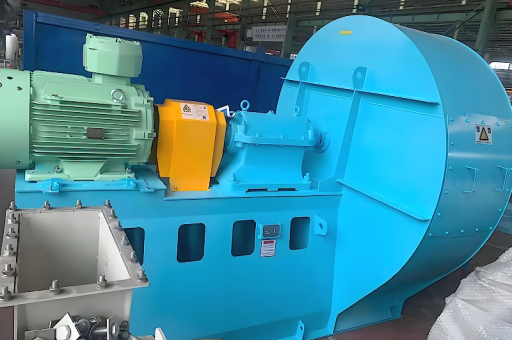
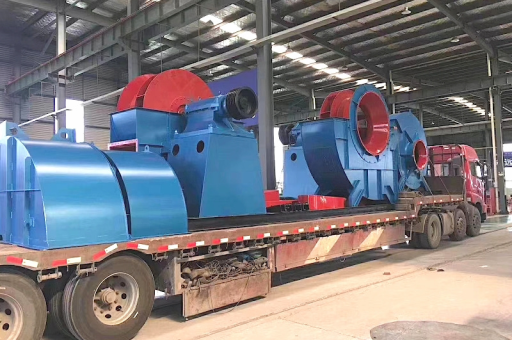
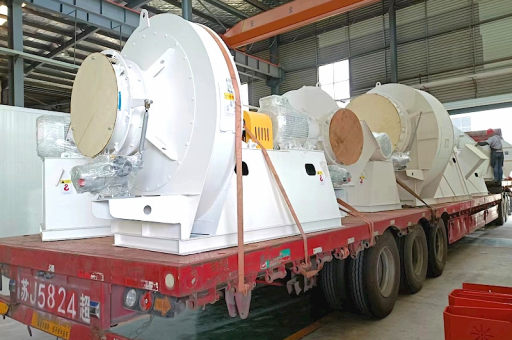
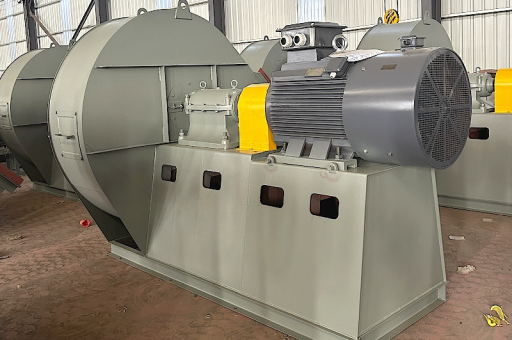
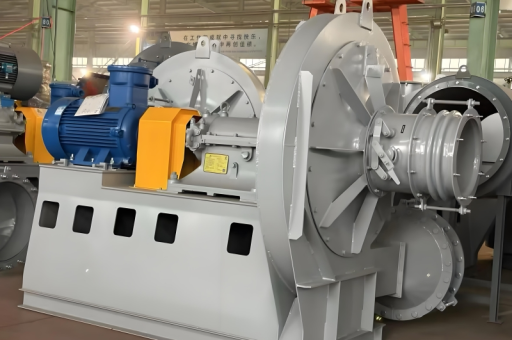
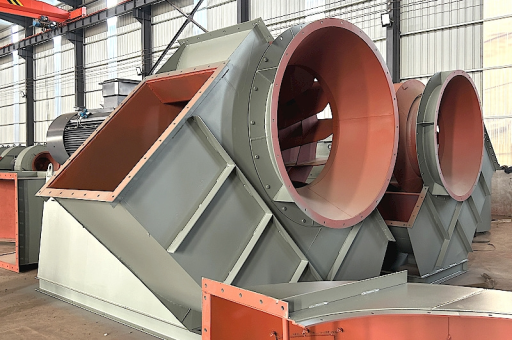
A 9000m³/h dust removal induced draft fan typically operates at a static pressure range of 1,500–2,500 Pa, with a wheel diameter between 450 mm and 630 mm. The fan housing is often made of carbon steel with a corrosion-resistant coating, while the impeller is constructed from wear-resistant alloys or high-strength stainless steel.
The "induced draft" distinction is critical:
- Induced draft fans are placed after the dust collector (e.g., baghouse or cyclone).
- They handle cleaned air, so the fan blades experience less abrasive wear compared to forced draft fans placed before filtration.
| Parameter | Typical Value for 9000 m³/h Fan |
|---|---|
| Air volume | 8,800 – 9,200 m³/h |
| Static pressure | 1,800 – 2,400 Pa |
| Motor power | 5 – 15 kW |
| Operating temperature | -20°C to +80°C (standard) |
| Noise level (1m) | ≤ 80 dB(A) with silencer |
Q: Can this fan handle hot exhaust streams, such as from drying ovens?
A: Yes, but only if the fan model includes a heat-resistant shaft seal and high-temperature grease. Standard models are limited to 80°C; for temperatures up to 200°C, specify a "HT" variant with a cooling impeller.
Design and Performance
The aerodynamic design of the impeller determines the fan’s efficiency. Most 9000m³/h induced draft fans use backward-curved blades, which offer:
- Higher efficiency (up to 85% static efficiency)
- Non-overloading power characteristic (motor cannot burn out even if ductwork is blocked)
- Lower noise and vibration
Key components to examine:
- Housing: Volute shape with a discharge angle of 90° or 180° for easy duct connection.
- Shaft and Bearings: Self-aligning ball bearings with grease nipples for regular lubrication.
- Drive System: Either direct-coupled (higher efficiency, lower maintenance) or belt-driven (adjustable speed).
Performance curve insight:
At 9000 m³/h, the fan should achieve a static efficiency above 72% . If the actual curve shows a sharp drop at this flow rate, the fan may be operating near its stall point—a common mistake in system design.
Q: How do I check if my system resistance matches the fan’s rating?
A: Measure static pressure across the fan using a manometer. If the measured pressure is lower than the fan’s rated pressure, the airflow will exceed 9000 m³/h, potentially overloading the motor. Install a damper or VFD to regulate flow.
Applications
High-volume induced draft fans are deployed in industries where fine dust (< 10 μm) poses health or explosion risks. Key sectors include:
- Woodworking facilities: Capturing sawdust and sander dust from baghouses.
- Cement and concrete plants: Ventilating grinding mills and silo tops.
- Pharmaceutical and food processing: Removing airborne powders from tablet presses and mixers.
- Welding fume extraction: Used with high-efficiency filters to remove metal oxides.
A notable case: A furniture factory in Vietnam installed two 9000m³/h induced draft fans connected to a central baghouse. Post-installation, the respirable dust concentration dropped from 8.2 mg/m³ to 0.3 mg/m³—well below the OSHA limit of 5 mg/m³.
Q: Can these fans be used for explosive dust like aluminum or grain?
A: Only with explosion-proof modifications: non-sparking aluminum impellers, earthed housings, and ATEX-certified motors. Standard carbon steel fans can generate sparks—avoid them in Class II, Division 1 environments.
Installation and Maintenance
Installation checklist:
- Mount the fan on a concrete foundation with vibration isolators (spring or rubber).
- Ensure inlet and outlet ducts are supported independently—do not let duct weight rest on the fan housing.
- Install an access door for impeller inspection every six months.
Maintenance schedule:
| Frequency | Task |
|-----------|------|
| Weekly | Check belt tension (if belt-driven) and bearing temperature. |
| Monthly | Clean impeller blades to prevent unbalance (dust buildup can reduce airflow by 15%). |
| Semi-annual | Replace grease in bearings; measure vibration levels. |
| Annually | Inspect housing for corrosion; test alignment with a dial indicator. |
Common failure mode: Impeller imbalance due to uneven dust accumulation on blades. Symptoms include vibration > 4.5 mm/s RMS and bearing noise. Solution: Remove the fan cover and clean blades with a wire brush (wear explosion-proof tools if dust is flammable).
Q: How long does a typical 9000 m³/h induced draft fan last?
A: With proper maintenance, the fan itself lasts 10–15 years. Bearing replacement is needed every 2–3 years, and impeller replacement at 8–12 years, depending on abrasion.
Energy Efficiency
Induced draft fans are major energy consumers—a 15 kW motor running 8,000 hours per year at $0.10/kWh costs $12,000 in electricity annually. Efficiency improvements yield significant savings.
Strategies to reduce energy use:
- Install a variable frequency drive (VFD): Reduces speed to match actual demand. A 20% speed reduction cuts power consumption by 50% (fan affinity laws).
- Use backward-curved impellers: More efficient than forward-curved or radial designs.
- Minimize duct losses: Keep duct velocities below 20 m/s and avoid sharp bends near the fan.
A real-world retrofit example: A chemical plant replaced an old forward-curved fan (65% efficiency) with a new backward-curved 9000m³/h induced draft fan (83% efficiency). Annual savings: $4,200 in electricity, with a payback period of 18 months.
Q: Does a high-efficiency fan always cost more upfront?
A: Yes, the premium is about 15–25% over standard models. However, the energy savings often recover the extra cost within 2 years. For continuous processes, high efficiency is essential.
Common FAQs
Q1: What is the difference between induced draft and forced draft?
- Induced draft: Fan pulls air through the system (fan located after the dust collector).
- Forced draft: Fan pushes air into the system (fan located before the dust collector). Induced draft is preferred for dust removal because the fan handles cleaner air.
Q2: Can a 9000m³/h fan be used in a negative pressure room?
- Yes. To maintain negative pressure, the fan must exhaust to the outside at a higher rate than the supply air. Ensure the room is sealed to prevent air leakage.
Q3: How do I calculate the required fan power?
- Power (kW) = (Air volume in m³/s × Static pressure in Pa) ÷ (1000 × Fan efficiency). For 9,000 m³/h (2.5 m³/s) at 2,000 Pa with 75% efficiency: 2.5 × 2000 ÷ (1000 × 0.75) = 6.67 kW. Add a 15% safety margin → 7.7 kW motor.
Q4: What certifications should I look for?
- AMCA 210 for airflow testing; ISO 1940 for impeller balancing; CE or UL for motor safety.
Q5: My fan is vibrating excessively—what could be wrong?
- Unbalanced impeller (most common), misaligned shaft, loose foundation bolts, or worn bearings. Start by checking for dust buildup on blades.
Conclusion
The 9000m³/h dust removal induced draft fan is a workhorse of industrial ventilation, offering a precise balance of capacity, durability, and cost-effectiveness. To maximize its performance:
- Select a model with backward-curved blades and a motor power between 7.5 and 15 kW.
- Always confirm system resistance with an actual pressure measurement before finalizing specifications.
- Implement regular maintenance—clean impellers, lubricate bearings, and calibrate VFDs—to avoid unexpected downtime.
Looking ahead, the industry is moving towards intelligent fans with IoT sensors that monitor vibration, temperature, and airflow in real time. A 9000m³/h unit equipped with such sensors can predict bearing failure two weeks in advance, reducing unplanned maintenance by 30%.
For plant managers and engineers, investing in a high-quality induced draft fan is not a cost—it is an investment in regulatory compliance, worker safety, and operational efficiency. Start by evaluating your current air volume and static pressure, then consult with a specialized fan manufacturer to match the right unit to your system.
Final Q: Where can I find detailed engineering specs for my specific application?
A: Request a fan selection software from reputable manufacturers. Input your duct dimensions, filter pressure drop, and required air changes per hour—the software will generate a performance curve and recommend a specific model. Always double-check with a site measurement before purchasing.