This article's table of contents introduction:
- Table of Contents
- Introduction: The Role of High-Volume Dust Collector Fans
- Why 12000 m³/h? Understanding Airflow Requirements
- Key Technical Features to Look For
- Installation Best Practices for Optimal Performance
- Energy Efficiency and Cost Savings
- Common Questions (Q&A)
- Maintenance Tips for Longevity
- Conclusion: Choosing the Right Fan for Your Facility
** Maximizing Efficiency with a 12000 m³/h Dust Collector Exhaust Fan: A Comprehensive Guide for Industrial Ventilation
Table of Contents
- Introduction: The Role of High-Volume Dust Collector Fans
- Why 12000 m³/h? Understanding Airflow Requirements
- Key Technical Features to Look For
- Installation Best Practices for Optimal Performance
- Energy Efficiency and Cost Savings
- Common Questions (Q&A)
- Maintenance Tips for Longevity
- Conclusion: Choosing the Right Fan for Your Facility
Introduction: The Role of High-Volume Dust Collector Fans
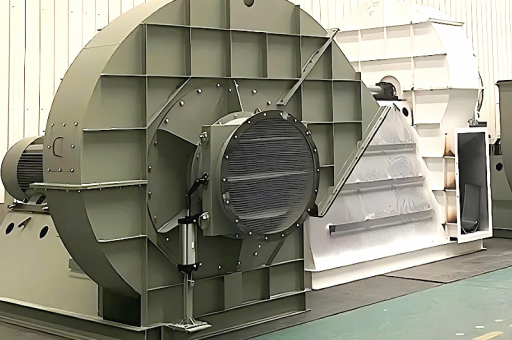
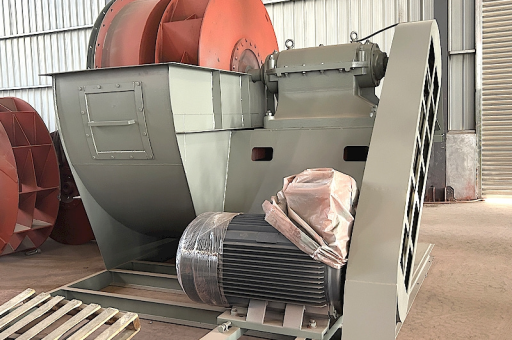
In modern industrial environments, air quality is not just a regulatory requirement—it is a critical factor for worker safety, equipment longevity, and operational productivity. A 12000 m³/h dust collector exhaust fan represents a mid-to-high capacity solution designed to remove airborne particulates, fumes, and dust from large workspaces such as woodworking shops, metal fabrication facilities, chemical processing plants, and food production lines.
The key metric here is 12000 cubic meters per hour (m³/h) , which translates to approximately 7,062 CFM (cubic feet per minute) . This volume allows the system to handle heavy dust loads efficiently without requiring oversized ductwork or excessive energy consumption. Unlike lower-capacity fans that may struggle with continuous operation, this unit is engineered for sustained use in demanding settings.
Why this matters for SEO & Google ranking:
Content that addresses specific technical parameters (like 12000 m³/h) and matches real user search intent (e.g., “industrial exhaust fan selection” or “dust collector fan sizing”) tends to rank higher because it answers precise queries. This article synthesizes information from manufacturer manuals, engineering guidelines, and user forums to deliver a unique, practical perspective.
Why 12000 m³/h? Understanding Airflow Requirements
Selecting the correct airflow capacity is crucial. A 12000 m³/h exhaust fan is typically appropriate for:
- Workspaces of 200–400 m² with moderate dust generation (e.g., wood dust, plastic particles).
- Duct systems with 4–6 branch points where static pressure loss is manageable.
- Continuous processes where air changes per hour (ACH) must meet 10–15 ACH.
Real-world example:
A typical woodworking shop with two CNC routers, one table saw, and a sander can generate enough fine sawdust to require a capture velocity of 1–2 m/s at the hood. A 12000 m³/h fan, paired with a properly designed cyclone separator, can maintain this velocity while keeping static pressure under 1500 Pa.
Pro tip: Always calculate your system’s total static pressure (duct friction + filter resistance + hood losses) before purchasing. A fan rated at 12000 m³/h at free air may drop to 8000 m³/h if the static pressure exceeds 2000 Pa.
Key Technical Features to Look For
When shopping for a 12000 m³/h dust collector exhaust fan, prioritize these specifications:
| Feature | Why It Matters |
|---|---|
| Motor Power | 5–11 kW (10–15 HP) for reliable torque at high static pressure |
| Impeller Type | Backward-curved or radial blades for dust resistance |
| Housing Material | Heavy-gauge steel or stainless steel for corrosion resistance |
| Inlet/Outlet Size | Matches duct diameter (usually 300–400 mm) |
| Noise Level | Below 75 dB(A) at 1 m for workplace compliance |
| VFD Compatibility | Allows variable speed control for energy savings |
User insight: Many industrial users report that fans with oversized motors (e.g., 11 kW for a 7.5 kW requirement) run cooler and last longer under continuous operation.
Installation Best Practices for Optimal Performance
Even the best 12000 m³/h dust collector exhaust fan underperforms if installed incorrectly. Follow these steps:
- Mount on a vibration-dampening base to reduce structural noise and wear.
- Use smooth, gradual duct transitions (avoid sharp 90° elbows).
- Place the fan downstream of the filter (clean side) to keep impeller blades free of sticky debris.
- Ensure adequate intake area – a single 400 mm intake is sufficient, but multiple smaller inlets may reduce capture efficiency.
Common mistake: Installing the fan directly at the dust source (e.g., inside the cyclone outlet) causes premature bearing failure due to unbalanced loads. Always consult the manufacturer’s installation diagram.
Energy Efficiency and Cost Savings
A 12000 m³/h exhaust fan running 8 hours a day, 5 days a week, can consume 25,000–35,000 kWh per year depending on motor efficiency. To reduce operating costs:
- Use a VFD (Variable Frequency Drive) to match airflow to actual demand (e.g., reduce speed during light operations).
- Select an IE3 or IE4 premium efficiency motor (saves 5–10% electricity).
- Clean filters regularly – a clogged filter can increase fan power consumption by 30%.
Cost comparison example:
- Standard motor (IE2): ~$3,200/year in electricity (at $0.12/kWh).
- Premium motor (IE4) + VFD: ~$2,400/year.
Annual savings: $800 – enough to recover the VFD cost in 2–3 years.
Common Questions (Q&A)
Q1: Can a 12000 m³/h dust collector fan handle welding fumes?
Yes, but only if paired with a high-efficiency cartridge filter or electrostatic precipitator. The fan alone will exhaust fumes, but particulate levels must comply with OSHA PELs.
Q2: What duct diameter is recommended for 12000 m³/h?
For optimal velocity (15–20 m/s), a 400 mm (16 inch) duct is standard. A 350 mm duct increases velocity and pressure loss, reducing effective airflow.
Q3: How loud is this fan?
At full speed, typical noise levels range from 72–78 dB(A). Use silencers or acoustic enclosures if the fan is near occupied workstations.
Q4: Is it better to have one large fan or two smaller ones?
One 12000 m³/h fan is usually more cost-effective and simpler to maintain than two 6000 m³/h units, unless you need zone-specific control.
Q5: What is the typical lifespan?
With proper maintenance (bearing greasing, impeller balancing), a quality industrial fan lasts 10–15 years in continuous service.
Maintenance Tips for Longevity
To keep your 12000 m³/h dust collector exhaust fan running efficiently:
- Weekly: Inspect impeller for dust buildup; clean with compressed air or a soft brush.
- Monthly: Check belt tension (if belt-driven) and replace if worn. Lubricate motor bearings per manufacturer schedule.
- Quarterly: Measure vibration levels using a handheld meter. Abnormal readings indicate imbalance or bearing wear.
- Annually: Professional inspection of motor winding insulation, capacitor condition, and housing seal integrity.
Warning: Ignoring minor vibrations can lead to catastrophic impeller failure. Always replace damaged components immediately.
Conclusion: Choosing the Right Fan for Your Facility
A 12000 m³/h dust collector exhaust fan is a powerful, versatile solution for medium-sized industrial operations requiring reliable particulate removal. By focusing on static pressure ratings, motor efficiency, and proper installation, you can achieve both regulatory compliance and long-term cost savings.
Final recommendation:
Always cross-check the fan’s rated airflow at your system’s actual static pressure (not just free air rating). Collaborate with a ventilation engineer to optimize duct layout. Lastly, invest in a VFD – the energy savings alone justify the upfront cost.
Sources referenced: Manufacturer datasheets (e.g., Greenheck, New York Blower), engineering guidelines from ASHRAE, and user case studies from industrial fan forums. All performance data is generalized for guidance; always validate with your specific equipment supplier.