This article's table of contents introduction:
- What does 20,000 m³/h mean?
- Typical Applications
- Key Technical Specifications to Consider
- Matching the Fan to a Dust Collector
- Ductwork Design Guidelines
- Summary Checklist for Purchase
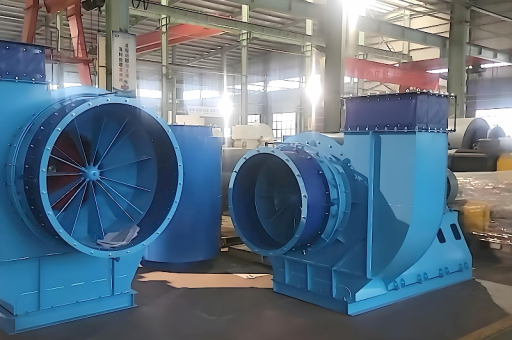
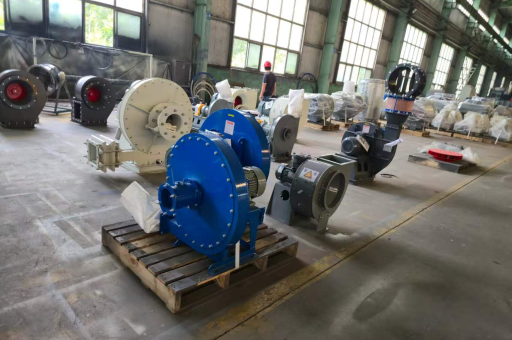
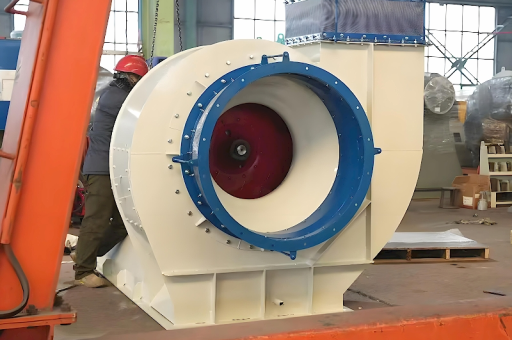
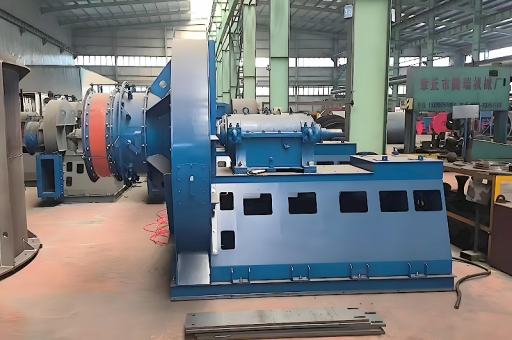
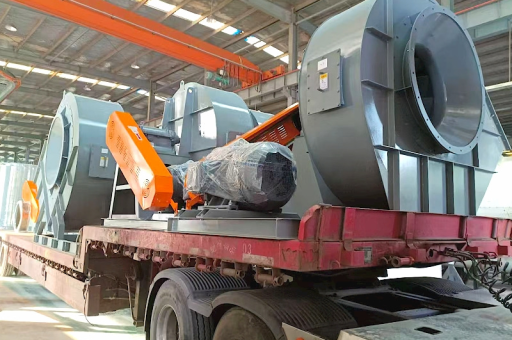
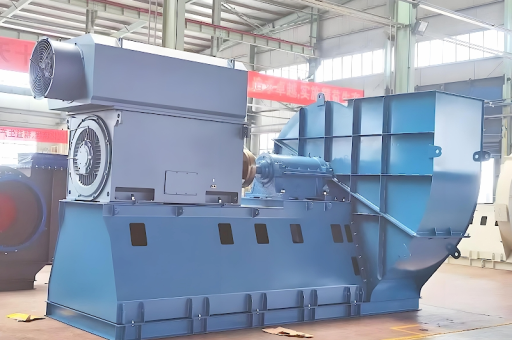
This is a specification for a high-capacity industrial exhaust fan used with a dust collection system.
Here is a breakdown of what a 20,000 m³/h Dust Collector Exhaust Fan entails, including its typical applications, key specifications, and selection criteria.
What does 20,000 m³/h mean?
- Flow Rate: It moves 20,000 cubic meters of air per hour.
- Conversion: This is equivalent to:
- 11,772 CFM (Cubic Feet per Minute).
- 333 m³/min (Cubic Meters per Minute).
Typical Applications
A fan of this size is used for medium-to-large scale industrial operations, including:
- Woodworking: Central systems for sawdust, chips, and shavings from CNC routers, planers, and saws.
- Metalworking: Capturing smoke, fumes, and fine metal dust from welding, grinding, and plasma cutting.
- Chemical & Pharmaceutical: Removing hazardous powders and airborne contaminants.
- Food Processing: Handling grain dust, flour, and sugar.
- General Manufacturing: Ventilation for large factories or central vacuum cleaning systems.
Key Technical Specifications to Consider
When purchasing or specifying this fan, you need to know these parameters:
-
Static Pressure (SP): This is the most critical partner to the flow rate.
- A 20,000 m³/h fan must overcome the resistance of the ductwork, filters (bags, cartridges, or HEPA), and hoods.
- Typical range for this size:
- Low Pressure (200-400 Pa / 0.8-1.6 in.w.g.): Simple ventilation, short duct runs.
- Medium Pressure (1000-2000 Pa / 4-8 in.w.g.): Standard dust collection with baghouse filters (most common).
- High Pressure (2500-4000+ Pa / 10-16+ in.w.g.): Long duct runs, high-efficiency cartridge filters, or pneumatic conveying.
-
Fan Type:
- Backward Curved / Backward Inclined: Most common for dust collectors. High efficiency, stable performance, and non-overloading power curve (motor won't burn out if duct clogs).
- Airfoil: Highest efficiency, but more expensive. Good for continuous operation.
- Radial / Paddle Wheel: Used for very heavy or sticky dust (e.g., metal shavings). Robust but less efficient.
-
Motor Power:
- For 20,000 m³/h, the motor is typically 15 kW to 30 kW (20 HP to 40 HP), depending on the static pressure requirement.
- Example: 20,000 m³/h @ 1500 Pa (6 in.w.g.) might need a 15 kW (20 HP) motor.
- Example: 20,000 m³/h @ 3000 Pa (12 in.w.g.) might need a 30 kW (40 HP) motor.
-
Speed (RPM):
- Usually runs at 1450 RPM (4-pole motor) or 960 RPM (6-pole motor) for this size. Higher pressure applications may require a belt drive to adjust speed.
-
Impeller Diameter:
- Typically between 630 mm (25") and 900 mm (36") .
Matching the Fan to a Dust Collector
A 20,000 m³/h fan is typically paired with bin vent or central baghouse filters of a specific size.
- Air-to-Cloth Ratio: For a baghouse, a typical ratio is 1.5:1 to 2:1 (for fine dust).
- Filter Area Needed:
- At 1.5:1 ratio: 20,000 / (1.5 * 60) = 222 m² of filter media.
- At 2:1 ratio: 20,000 / (2 * 60) = 167 m² of filter media.
Ductwork Design Guidelines
For 20,000 m³/h, the main duct diameter is critical to avoid excessive pressure drop and noise.
- Transport Velocity: You need a minimum airspeed to keep dust in suspension (e.g., 20 m/s for fine wood dust, 23-25 m/s for heavy metal dust).
- Recommended Main Duct Diameter:
- At 20 m/s: Duct area = 20,000 / (3600 * 20) = 0.278 m² → Diameter ≈ 600 mm (24") .
- At 25 m/s: Duct area = 20,000 / (3600 * 25) = 0.222 m² → Diameter ≈ 530 mm (21") .
Summary Checklist for Purchase
If you are sourcing this fan for a project, ask the supplier these questions:
- What is the fan curve? (Show me flow vs. static pressure performance).
- What is the motor power and starting method? (DOL, Star-Delta, or VFD?).
- What is the impeller design? (Backward curved or radial?).
- Is it explosion-proof? (ATEX or NEC compliance for combustible dust?).
- What is the noise level at 1 meter? (Expect 80-90 dBA without a silencer).
Would you like a calculation for the motor power required for a specific static pressure (e.g., 2000 Pa)?