This article's table of contents introduction:
- The Core Specification: 21,000 m³/h
- Critical Missing Parameters (You MUST Know)
- Recommended Fan Types for 21,000 m³/h
- Typical Motor Power Estimate
- Installation & Setup Notes
- Summary Checklist for Ordering
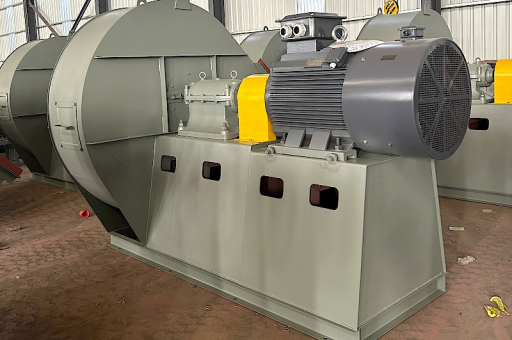
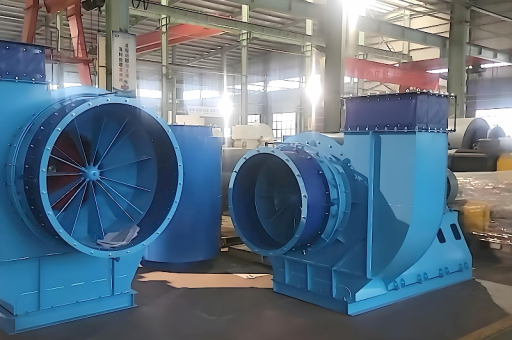
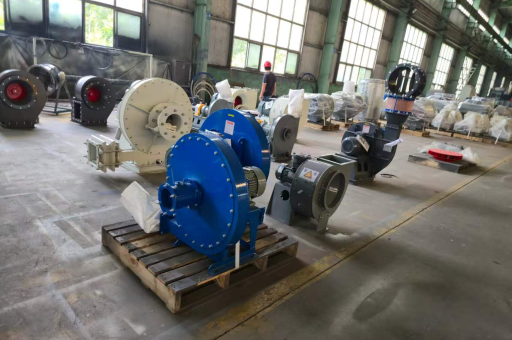
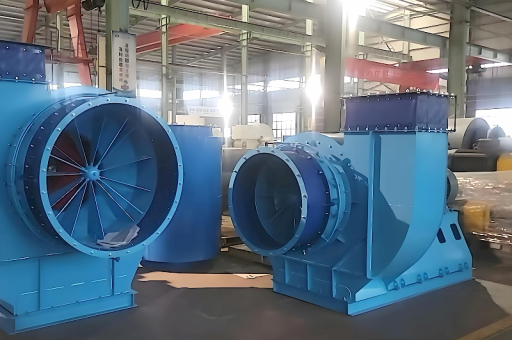
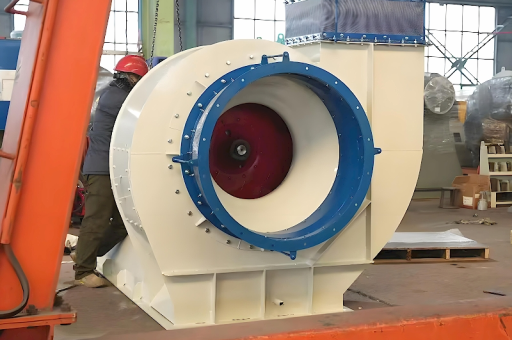
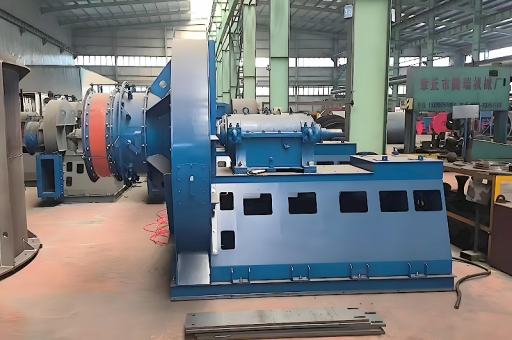
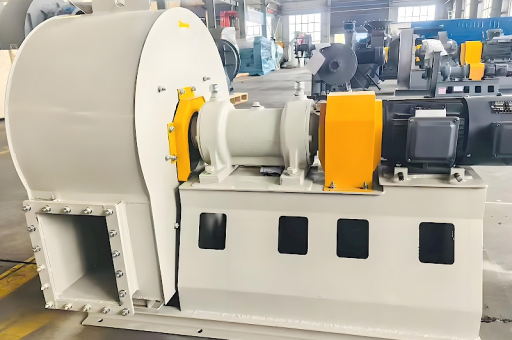
This is a specification for a large industrial dust collection system's exhaust fan. Here is a breakdown of what "21000 m³/h Dust Collector Exhaust Fan" means, and what you need to consider when selecting or using one.
The Core Specification: 21,000 m³/h
- Airflow: 21,000 cubic meters per hour.
- Equivalent: 12,357 CFM (Cubic Feet per Minute) or 350 m³/min.
- Context: This is a heavy industrial capacity. It is suitable for:
- Large woodworking shops (multiple CNC machines, planers).
- Cement or powder handling plants.
- Welding fume extraction for multiple workstations.
- Textile or chemical processing facilities.
Critical Missing Parameters (You MUST Know)
21,000 m³/h is the volumetric flow. The fan cannot be selected based on flow alone. You absolutely need the Static Pressure (SP) , usually measured in Pa (Pascals) or mmH₂O (inches of water gauge).
Here’s why: The same fan moving 21,000 m³/h against 2000 Pa is a very different (and much more powerful) machine than one moving it against 500 Pa.
Key parameters to define:
- Static Pressure (SP): The resistance of the ductwork, filters, and hoods.
- Low SP (500-1000 Pa): Short ducts, open hoods, cartridge filters (new).
- Medium SP (1500-2500 Pa): Long duct runs, small diameter pipes, cyclone pre-separators.
- High SP (3000+ Pa): Baghouse filters with heavy dust cakes, very long ducts, or pneumatic conveying.
- Air Density / Temperature: Is the air hot, cold, or humid? Standard is 20°C at sea level. Hotter air requires less motor power but more volume.
- Dust Type: Is it wood, metal, explosive dust (need ATEX/Class II compliance), or sticky dust (requires a special wheel design)?
Recommended Fan Types for 21,000 m³/h
Based on the pressure requirements, you will likely choose one of the following:
| Fan Type | Best For | Typical SP Range | Wheel Design |
|---|---|---|---|
| Backward Inclined (BI) | General dust collection, high efficiency. | 1500 – 3000 Pa | Smooth, non-clogging blades. Most common. |
| Radial Blade (Paddle Wheel) | Heavy, sticky, or abrasive dust (e.g., sanding, grinding). | 2000 – 4000+ Pa | Rugged, simple blades. Can handle impact. Lower efficiency. |
| Airfoil (AF) | Highest efficiency, clean air side. | 1000 – 2500 Pa | Hollow airfoil blades. Fragile for dirty air. |
For 21,000 m³/h, a Backward Inclined (BI) fan is the standard choice.
Typical Motor Power Estimate
This is a rough estimate. Always verify with a fan curve.
- Low Pressure (800 Pa): ~ 7.5 kW (10 HP)
- Medium Pressure (1800 Pa): ~ 18.5 kW (25 HP)
- High Pressure (3000 Pa): ~ 30 kW (40 HP)
Formula: Power (kW) = (Flow m³/s × Pressure Pa) / (1000 × Fan Efficiency)
Example: (5.83 m³/s × 2000 Pa) / (1000 × 0.75) = ~15.5 kW.
Installation & Setup Notes
- Duct Size: To move 21,000 m³/h at a reasonable velocity (e.g., 20 m/s for wood dust), the main duct diameter should be approximately 600 mm (24") .
- Inlet/Outlet: The fan will have a large inlet cone (likely DN500 to DN630) and a rectangular or round outlet.
- Vibration Isolation: This fan is heavy. It requires a concrete inertia base or heavy-duty spring isolators.
- Drive: Almost certainly V-belt driven. This allows you to change the fan speed by changing the sheave (pulley) size, which adjusts the airflow without buying a new motor.
- Motor: Standard 3-phase 400V/690V (Europe) or 460V (North America). Will likely need a Variable Frequency Drive (VFD) for soft start and fine-tuning.
Summary Checklist for Ordering
- Flow: 21,000 m³/h (CONFIRMED)
- Static Pressure: _ Pa (REQUIRED)
- Temperature: _ °C
- Dust Type: _ (e.g., Wood, Cement, Chemical)
- Motor Mount: Bearing frame or direct drive?
- Material: Mild steel (standard) or Stainless Steel (for corrosion/hygiene)?
- Compliance: ATEX? OSHA? Clean Air Act?
Bottom line: You have the size. Now you need the resistance (pressure) to choose the exact fan. If you are replacing an old unit, check the motor plate for Power (kW) and RPM. If it's a new system, a mechanical engineer or the ductwork supplier must provide the pressure drop.