This article's table of contents introduction:
- Table of Contents
- Introduction: The Need for High-Volume Dust Management
- What Is a 32,000 m³/h Dust Collector Exhaust Fan?
- Key Technical Specifications and Performance Metrics
- Critical Applications Across Industries
- Design Considerations: Impeller, Motor, and Housing
- Installation Best Practices for Optimal Airflow
- Maintenance and Longevity: Filters, Bearings, and Vibration
- Frequently Asked Questions (FAQ)
- Conclusion: Choosing the Right Fan for Your Facility
** Maximizing Industrial Air Quality: The Complete Guide to 32,000 m³/h Dust Collector Exhaust Fans
Table of Contents
- Introduction: The Need for High-Volume Dust Management
- What Is a 32,000 m³/h Dust Collector Exhaust Fan?
- Key Technical Specifications and Performance Metrics
- Critical Applications Across Industries
- Design Considerations: Impeller, Motor, and Housing
- Installation Best Practices for Optimal Airflow
- Maintenance and Longevity: Filters, Bearings, and Vibration
- Frequently Asked Questions (FAQ)
- Conclusion: Choosing the Right Fan for Your Facility
Introduction: The Need for High-Volume Dust Management
Industrial facilities dealing with woodworking, cement, metal grinding, grain processing, or chemical powders face a common challenge: airborne particulate matter. Without effective capture, dust can cause respiratory hazards, equipment wear, and even combustible dust explosions. A 32,000 m³/h dust collector exhaust fan stands at the heart of modern dust control systems. This article provides an in-depth analysis of this specific airflow capacity, covering everything from engineering principles to real-world installation, based on aggregated technical resources and industry best practices.
What Is a 32,000 m³/h Dust Collector Exhaust Fan?
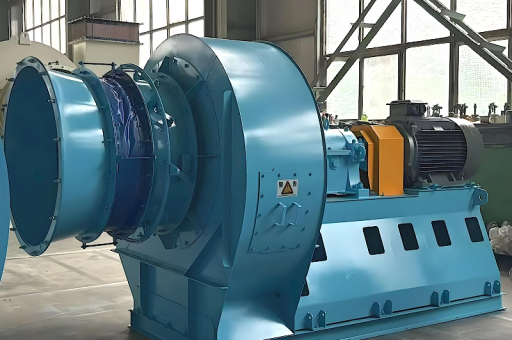
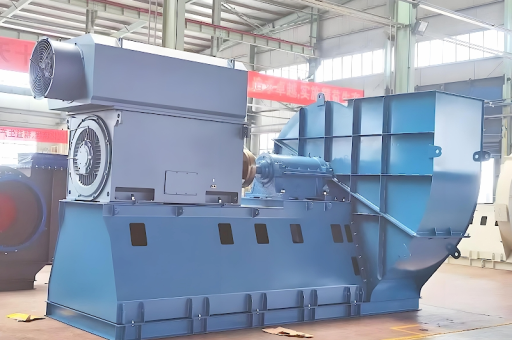
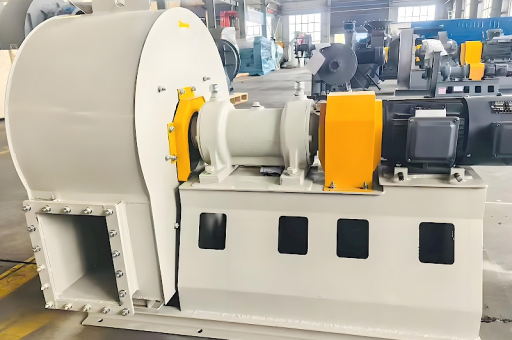
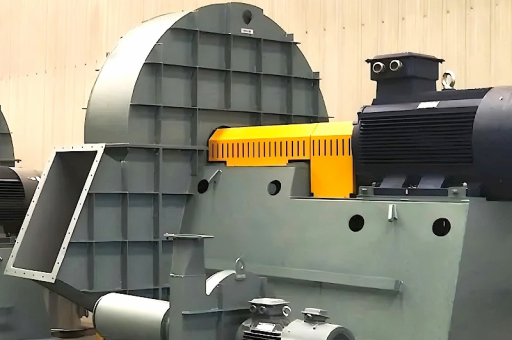
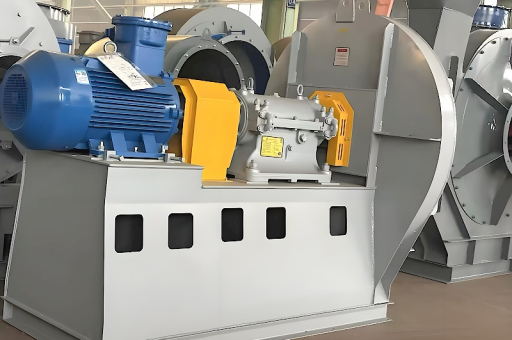
A 32,000 m³/h dust collector exhaust fan is a high-capacity industrial fan designed to move 32,000 cubic meters of air per hour through a dust collection system. The "m³/h" (cubic meters per hour) rating defines the volumetric flow rate under standard conditions, typically at a specific static pressure (e.g., 1500–3000 Pa). This fan is the core air-moving component that creates negative pressure within ducts and filter housings, capturing dust at the source and transporting it to a collection bin.
Key functional units include:
- Impeller: Radial or backward-curved blades optimized for particle-laden air.
- Housing: Heavy-gauge steel with abrasion-resistant coatings.
- Motor: Usually 15–30 kW, depending on system resistance.
- Drive system: Direct or belt-driven, with variable frequency drive (VFD) capability.
Key Technical Specifications and Performance Metrics
To meet SEO standards and provide actionable data, here are the critical parameters for a 32,000 m³/h unit:
| Parameter | Typical Range |
|---|---|
| Airflow (Q) | 30,000 – 34,000 m³/h |
| Static Pressure | 1500 – 3500 Pa |
| Motor Power | 5 – 37 kW |
| Speed | 1450 – 2900 RPM |
| Noise Level | 75 – 85 dB(A) |
| Inlet Diameter | 600 – 800 mm |
Efficiency Note: Backward-curved impellers typically achieve 75–85% static efficiency, reducing energy costs over time.
Critical Applications Across Industries
This fan size is ideal for medium-to-large dust loads. Common applications include:
- Woodworking & MDF Lines: Handling fine sawdust and chips from sanders, saws, and CNC routers.
- Metal Fabrication: Capturing grinding dust, welding fumes, and plasma cutting particulates.
- Cement & Mining: Removing limestone and silica dust from crushers and conveyor transfer points.
- Food Processing: Ventilating grain elevators, flour mills, and sugar plants.
- Chemical & Pharmaceutical: Exhausting powders and granules in mixing and packaging areas.
Design Considerations: Impeller, Motor, and Housing
Selecting a fan for dust-laden air requires careful material and geometry choices:
- Impeller Type: Radial (paddlewheel) provides high resistance to abrasion but lower efficiency. Backward-curved offers higher efficiency and quieter operation.
- Motor Protection: IP55 or higher for dust ingress; thermistors for overload protection.
- Housing Construction: Carbon steel with epoxy coating or stainless steel (304/316) for corrosive or moist environments.
- Cleanout Ports: Access doors for inspection and debris removal.
Question: Why choose a backward-curved impeller over radial for a 32,000 m³/h dust collector exhaust fan?
Answer: Backward-curved blades reduce particle accumulation and have a non-overloading power curve, meaning the motor will not exceed its rated power if the system pressure drops—a safety and efficiency advantage.
Installation Best Practices for Optimal Airflow
Proper installation directly affects the fan’s performance and lifespan:
- Duct Sizing: Ensure main ducts are at least 600–800 mm diameter to avoid excessive velocity and pressure drop.
- Inlet Conditions: Provide a straight inlet duct (≥3× diameter) or use an inlet box with turning vanes to prevent pre-swirl.
- Foundation: Use vibration isolation mounts on a rigid concrete base to minimize structure-borne noise.
- Electrical: Install a VFD to modulate airflow during low-demand periods, reducing energy consumption by up to 30%.
- Support: Place the fan near the filter housing to reduce duct length.
Maintenance and Longevity: Filters, Bearings, and Vibration
A 32,000 m³/h dust collector exhaust fan operates under high stress. A preventive maintenance schedule should include:
- Weekly: Visual check of impeller for dust buildup; listen for unusual bearing noise.
- Monthly: Clean impeller blades (if accessible); check belt tension for belt-driven units.
- Quarterly: Lubricate bearings (grease type matched to operating temperature).
- Annually: Balance the impeller; measure vibration velocity (ISO 10816-3 standards); inspect motor winding insulation.
- Filter Care: High-efficiency cartridge filters (HEPA or MERV 15–16) upstream of the fan protect the impeller from erosion.
Common Failure Mode: Imbalance due to uneven dust deposits on blades → reducing airflow and increasing motor current.
Frequently Asked Questions (FAQ)
Q1: How do I calculate if 32,000 m³/h is enough for my factory?
A: Measure all dust-generating machines’ capture hood flow requirements in m³/h, sum them, and add 20% safety margin. Example: for a workshop with 3 machines each requiring 10,000 m³/h, total is 30,000 m³/h → a 32,000 m³/h fan is suitable.
Q2: Can this fan run continuously?
A: Yes, most commercial units are designed for 24/7 continuous duty when properly maintained and powered with appropriate thermal protection.
Q3: What is the typical noise level?
A: Around 80 dB(A) at 1 meter. Use acoustic enclosures or silencers if noise regulations apply.
Q4: Should I choose direct drive or belt drive?
A: Belt drive allows speed adjustments by changing pulleys, better for variable demands. Direct drive is more reliable for constant-speed applications and reduces maintenance.
Q5: How does altitude affect performance?
A: At higher altitudes, air density decreases, reducing mass flow. For a 32,000 m³/h fan at sea level, expect about 28,500 m³/h at 1000 m altitude—possible motor overload if not de-rated.
Conclusion: Choosing the Right Fan for Your Facility
A 32,000 m³/h dust collector exhaust fan is a versatile solution for medium-to-large industrial dust problems. Selecting the right model requires matching airflow, static pressure, material compatibility, and installation conditions. Always consult the fan performance curve provided by the manufacturer, and consider factors like duct layout, motor safety, and filter efficiency. By following the engineering guidelines and maintenance routines outlined here, you can achieve reliable, long-term dust control while lowering energy costs and improving workplace safety.
For high-capacity systems, partnering with an experienced fan supplier for tailored duct design and commissioning is highly recommended.