This article's table of contents introduction:
- Table of Contents
- Introduction: The Critical Role of High-Volume Dust Collection
- Technical Breakdown: What Does "33000 m³/h" Mean?
- Key Components and Design Features
- Industrial Applications of the 33,000 m³/h Exhaust Fan
- Energy Efficiency and Operational Costs
- Frequently Asked Questions (FAQ)
- Maintenance Best Practices for Longevity
- Conclusion: Selecting the Right Fan for Your Facility
Optimizing Industrial Ventilation: The 33000 m³/h Dust Collector Exhaust Fan – Efficiency, Applications, and Technical Insights
Table of Contents
- Introduction: The Critical Role of High-Volume Dust Collection
- Technical Breakdown: What Does "33000 m³/h" Mean?
- Key Components and Design Features
- Industrial Applications of the 33,000 m³/h Exhaust Fan
- Energy Efficiency and Operational Costs
- Frequently Asked Questions (FAQ)
- Maintenance Best Practices for Longevity
- Conclusion: Selecting the Right Fan for Your Facility
Introduction: The Critical Role of High-Volume Dust Collection
In modern industrial environments, maintaining air quality is not merely a regulatory requirement—it is a fundamental pillar of operational safety and worker health. Dust, particulates, and airborne contaminants generated during processes such as woodworking, metal grinding, chemical mixing, or cement handling pose significant risks, including respiratory issues, fire hazards, and equipment damage. At the heart of an effective dust collection system lies the exhaust fan. Among the most efficient and widely adopted models in medium-to-large scale operations is the 33000 m³/h Dust Collector Exhaust Fan. This unit represents a specific performance threshold: the ability to move 33,000 cubic meters of air per hour. This article delves into the engineering, applications, and financial rationale behind deploying a 33,000 m³/h fan, providing a comprehensive guide for facility managers and engineers aiming to optimize their ventilation strategies.
Technical Breakdown: What Does "33000 m³/h" Mean?
The specification "33000 m³/h" (or approximately 19,400 CFM – Cubic Feet per Minute) defines the volumetric flow rate of the fan. This figure indicates the volume of air the fan displaces under specific static pressure conditions. For practical application, this airflow is sufficient to handle multiple dust collection points simultaneously.
A typical 33,000 m³/h fan operates with the following parameters:
- Power Consumption: Generally between 22 kW and 37 kW, depending on the static pressure (often 1500 Pa to 2500 Pa).
- Duct Diameter: Requires a main duct of approximately 500 mm to 630 mm to maintain optimal velocity without excessive friction loss.
- Noise Level: Typically ranges from 75 dB(A) to 85 dB(A), requiring acoustic enclosures in noise-sensitive environments.
This specific airflow capacity sits in a "goldilocks zone" for many applications: large enough to service a production line, yet not so large that it demands oversized infrastructure or massive energy penalties.
Key Components and Design Features
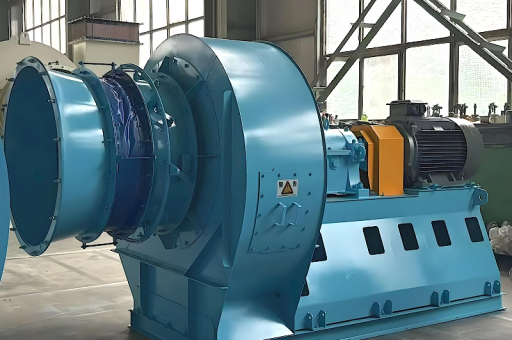
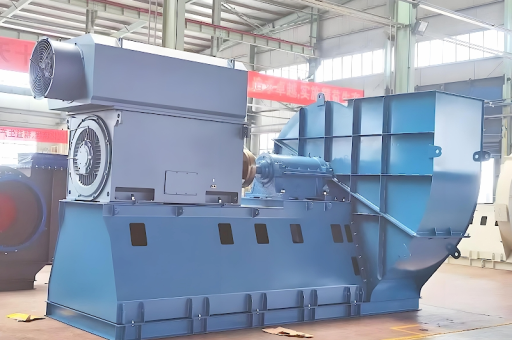
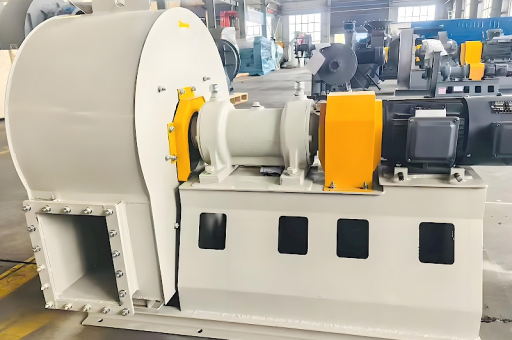
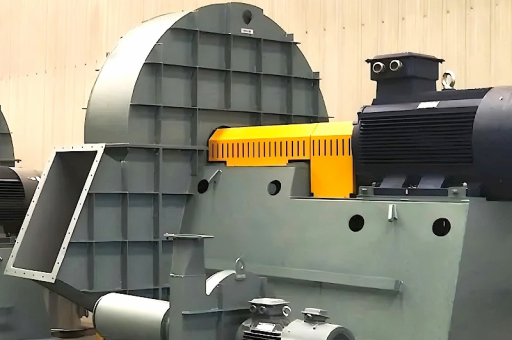
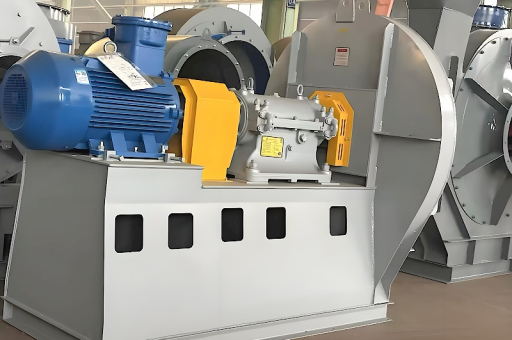
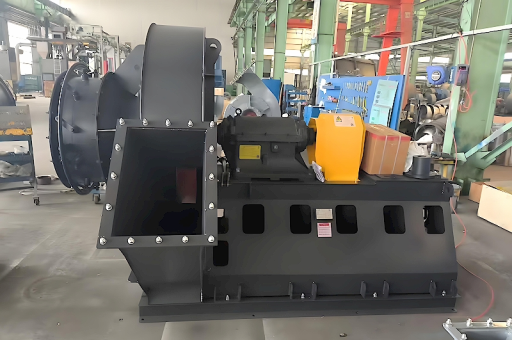
A modern 33,000 m³/h dust collector exhaust fan is not a simple box fan. It is a precisely engineered piece of rotating machinery. Key features include:
-
Impeller Design: For dust-laden air, a backward-inclined or radial-blade impeller is preferred. The backward-inclined design offers higher efficiency and is less prone to dust buildup because the blades do not form pockets where debris can accumulate. In contrast, forward-curved fans, while capable of high volumes, are more sensitive to dirty air.
-
Housing and Material: The fan housing is typically fabricated from heavy-gauge carbon steel with a powder-coated finish for corrosion resistance. For abrasive materials (e.g., sand or glass dust), the interior may be lined with replaceable wear plates or constructed from stainless steel.
-
Motor and Drive System: Most 33,000 m³/h units utilize a direct-drive or belt-drive system. Belt-drive allows for precise adjustment of fan speed (RPM) to match actual system demand. Recently, Variable Frequency Drives (VFDs) have become standard, enabling the fan to vary its airflow from 50% to 100% capacity, leading to significant energy savings.
-
Spark Resistance: In applications involving combustible dust (e.g., wood, aluminum, flour), the fan must be ATEX or NFPA compliant. This includes features like non-ferrous impellers, carbon steel housings, and shaft grounding rings to prevent static ignition.
Industrial Applications of the 33,000 m³/h Exhaust Fan
The versatility of the 33,000 m³/h dust collector fan makes it a staple across diverse industries:
- Woodworking and Furniture Manufacturing: Large CNC routers, sanding machines, and saws generate fine wood dust and chips. A single 33,000 m³/h fan can connect to a central baghouse or cartridge filter handling 4 to 6 machines simultaneously.
- Metal Fabrication: Plasma cutting, welding, and grinding produce fine metallic fumes. The high flow rate is essential for capturing plume rise from cutting tables and maintaining a safe respiratory environment.
- Pharmaceuticals and Food Processing: In these sectors, the fan is often integrated into the ventilation system to control airborne powders (like flour, starch, or active ingredients). The fan must be capable of moving air through High-Efficiency Particulate Air (HEPA) filters without losing performance.
- Chemical Plants: Ventilating reactive dust or toxic vapors demands a fan that can operate under negative pressure. A 33,000 m³/h unit provides the necessary vacuum to prevent contaminants from escaping into the workplace.
Energy Efficiency and Operational Costs
Energy cost is the primary operational expense for any dust collection system. A continuous-duty 33,000 m³/h fan running for 2,000 hours per year at 30 kW can consume 60,000 kWh annually. At an average industrial electricity rate of $0.10 per kWh, this translates to $6,000 per year just for power.
To reduce this cost, modern fans are equipped with:
- High-Efficiency Motors (IE4/IE5): These premium motors reduce energy losses by up to 20% compared to standard IE2 motors.
- VFD and Pressure Sensors: By using a VFD in conjunction with a static pressure sensor in the main duct, the fan only runs as fast as necessary to maintain dust capture velocity. When machines are idle, the fan slows down, saving 30–50% on electricity.
- Aerodynamic Optimization: Computational Fluid Dynamics (CFD) modeling has led to impeller designs that achieve higher static efficiency (often above 80%) at the design point of 33,000 m³/h.
Frequently Asked Questions (FAQ)
Q1: What is the difference between a 33,000 m³/h fan and a standard ventilation fan? A: The primary difference is static pressure capability. A standard ventilation fan moves air freely (low static pressure). A dust collector fan must overcome the resistance of filters, ducts, and elbows. A 33,000 m³/h dust collector fan is designed to generate 1500–2500 Pa of static pressure, which is critical for pulling air through a fabric or cartridge filter system.
Q2: Can I use this fan for a downdraft table? A: Yes, but sizing is critical. A 33,000 m³/h fan is typically suitable for a downdraft table measuring 4m x 2m (8 m² of surface area). For larger tables, you may need to increase airflow or use multiple fans.
Q3: How do I calculate the required airflow (m³/h) for my process? A: A general rule is to calculate the cross-sectional area of your duct (in m²) and multiply it by the required capture velocity (usually 0.5–1.5 m/s for fine dust). For a central system, sum up the airflow needs of all connected machines and add 10–20% safety factor. If the sum approaches 33,000 m³/h, this fan model is an excellent choice.
Q4: Is the 33,000 m³/h fan safe for explosive dust? A: Only if it is specifically designed for that purpose. You must ensure the fan has ATEX certification, a spark-resistant impeller (aluminum or bronze), and a housing that can withstand a deflagration. Never use a standard design for combustible dust.
Q5: What noise level should I expect? A: Expect approximately 80 dB(A) at one meter. For continuous occupancy, you will need a silencer or an acoustic enclosure. Many building codes require hearing protection above 85 dB(A).
Maintenance Best Practices for Longevity
To ensure your 33,000 m³/h dust collector fan operates at peak efficiency for 10–15 years, follow these maintenance steps:
- Weekly: Check for vibration and unusual noise. Inspect the drive belt (if belt-driven) for wear and proper tension.
- Monthly: Clean the impeller blades. Even small deposits of dust can unbalance the wheel, leading to bearing failure. Use a compressed air lance or a soft brush.
- Quarterly: Lubricate the bearings according to the manufacturer’s specifications. Over-greasing is as harmful as under-greasing.
- Semi-Annually: Verify the fan’s current draw (amperage) versus the nameplate rating. A significant increase indicates a reduction in airflow or mechanical binding.
- Annually: Perform a full system inspection. Check for duct leaks, filter pressure drop, and fan wheel balance. Replace any worn wear liners.
Conclusion: Selecting the Right Fan for Your Facility
The 33000 m³/h Dust Collector Exhaust Fan represents a strategic investment in any facility requiring robust dust control. It balances high volumetric flow with sufficient pressure to overcome filter resistance, making it indispensable for woodworking, metalworking, and bulk material processing. When selecting a fan, focus not only on the price but on the total cost of ownership, which includes energy consumption, maintenance intervals, and compliance with safety standards. By pairing this fan with a VFD and high-efficiency filtration, you can achieve a clean, safe, and cost-effective working environment. For technical specifications or a customized system design, consult a certified ventilation engineer or contact your local industrial fan supplier.