This article's table of contents introduction:
- Table of Contents
- Introduction: Why the 2 4000 m³/h Rating Matters
- Technical Specifications and Performance Parameters
- Key Components and Engineering Design
- Common Industry Applications
- Installation, Maintenance, and Safety Best Practices
- Frequently Asked Questions (FAQ)
- Conclusion: Selecting the Right System for Your Facility
** Optimizing Industrial Air Quality: The Complete Guide to the 2 4000 m³/h Dust Collector Exhaust Fan
Table of Contents
- Introduction: Why the 2 4000 m³/h Rating Matters
- Technical Specifications and Performance Parameters
- Key Components and Engineering Design
- Common Industry Applications
- Installation, Maintenance, and Safety Best Practices
- Frequently Asked Questions (FAQ)
- Conclusion: Selecting the Right System for Your Facility
Introduction: Why the 2 4000 m³/h Rating Matters
Industrial environments generate significant amounts of airborne particulates—from wood dust in carpentry shops to metal shavings in fabrication plants. A 2 4000 m³/h Dust Collector Exhaust Fan represents a high-capacity air movement system designed to handle substantial dust loads efficiently. The figure "4000 m³/h" (cubic meters per hour) indicates the volumetric airflow, a critical metric for determining whether a fan can maintain negative pressure and capture dust at source points. For large-scale operations such as cement processing, grain handling, or pharmaceutical manufacturing, this capacity ensures compliance with occupational safety standards such as OSHA and EU-OSHA. A correctly specified exhaust fan not only protects worker respiratory health but also prevents equipment damage and explosion hazards in combustible dust environments.
Technical Specifications and Performance Parameters
Understanding the technical data behind the 2 4000 m³/h Dust Collector Exhaust Fan is essential for proper system integration.
- Airflow Capacity: 4000 m³/h (≈ 2,354 CFM) at standard density (1.2 kg/m³ at 20°C).
- Static Pressure Range: Typically 1500–2500 Pa, depending on duct length and filter resistance.
- Motor Power: Usually 5.5–7.5 kW for direct-drive or belt-driven configurations.
- Sound Level: ≤ 75 dB(A) at 1 meter with acoustic enclosure, critical for indoor installations.
- Construction Material: Heavy-gauge steel with epoxy coating or stainless steel (304/316) for corrosive environments.
- Fan Type: Backward-curved centrifugal or high-pressure radial blade, both offering high efficiency and resistance to particulate buildup.
Performance Curve Interpretation: A reliable fan specification sheet provides a fan curve graph. For example, at 4000 m³/h, the fan must deliver the required static pressure (e.g., 2000 Pa) to overcome filter bag resistance and duct friction. Mismatch leads to reduced capture velocity or motor overload.
Key Components and Engineering Design
A high-quality 4000 m³/h dust collector exhaust fan includes:
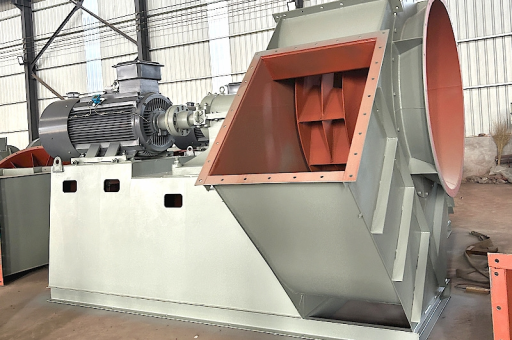
- Impeller: Precision-balanced backward-curved blades minimize vibration and wear. For abrasive dust, hardened steel or lined options extend lifespan.
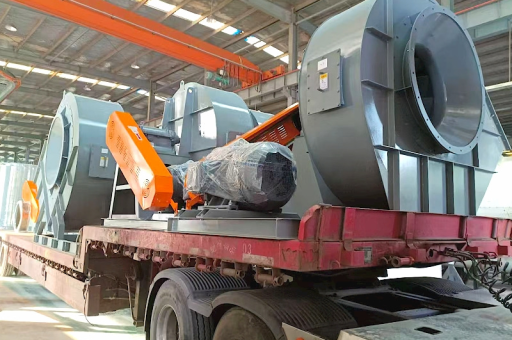
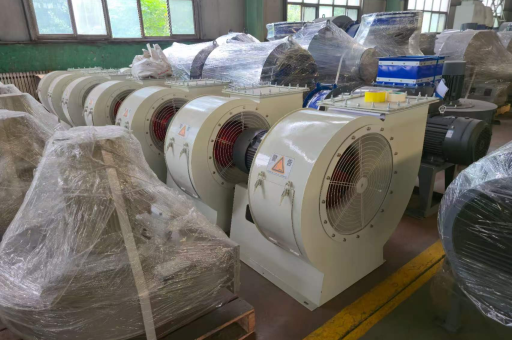
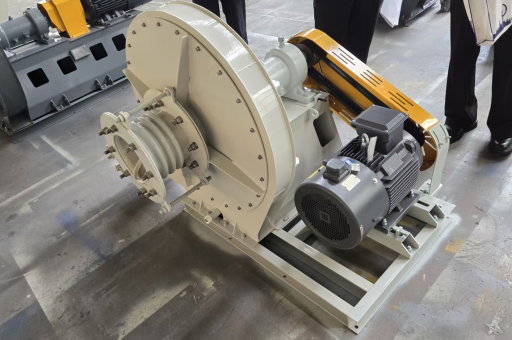
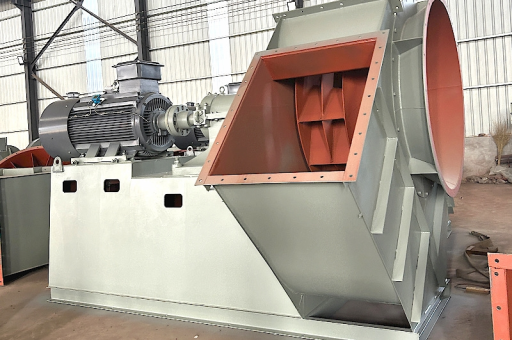
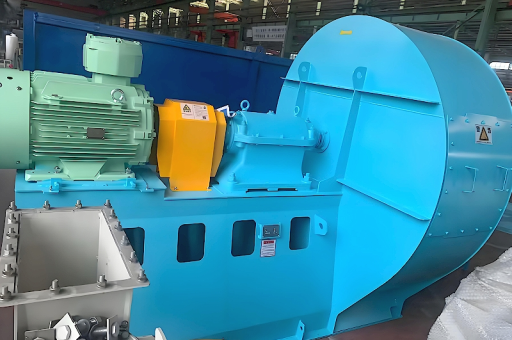
- Housing: Scroll-shaped volute casing maximizes static pressure recovery. Integrated access doors allow cleaning without disassembly.
- Drive System: Belt-driven setups offer flexibility to adjust RPM (and thus airflow) by changing pulley ratios. Direct-drive eliminates belt maintenance but limits speed adjustment.
- Inlet/Outlet Arrangements: Flanged connections simplify ductwork integration. For combustible dust, explosion-proof inlets and spark-resistant construction are mandatory.
- Dust Discharge: Rotary airlock or screw conveyor ensures continuous material removal without pressure loss.
- Motor Protection: IP55 (or higher) motors with thermal overload relays protect against dust ingress and overheating.
Engineering Note: The "2" in "2 4000 m³/h" may denote twin-fan configuration or dual-inlet design. Twin systems provide redundancy—critical for processes where downtime is unacceptable (e.g., continuous chemical drying).
Common Industry Applications
- Woodworking & Furniture Manufacturing: Captures sanding dust, sawdust, and MDF particulates. The 4000 m³/h capacity suits medium-to-large shops with 4–6 machines simultaneously running.
- Metal Fabrication & Welding: Collects grinding dust, welding fumes, and metal oxide particles. HEPA after-filters (MERV 16 or H13) may be added for fine particulates.
- Food Processing & Grain Handling: Moves flour dust, grain chaff, and spice powders. ATEX-certified fans prevent ignition in explosive atmospheres.
- Chemical & Pharmaceutical: Handles hazardous powders (e.g., active pharmaceutical ingredients). Stainless steel construction with wash-down capability ensures cleanliness.
- Recycling Plants: Extracts paper dust, plastic fines, and textile fibers. High-throughput fans maintain negative pressure in sorting stations.
Case Study: A furniture factory replaced two undersized 1500 m³/h units with one 2 4000 m³/h Dust Collector Exhaust Fan, reducing energy consumption by 18% while improving capture efficiency at table saws and routers.
Installation, Maintenance, and Safety Best Practices
Installation:
- Place the fan outdoors or in a dedicated mechanical room to isolate noise.
- Use flexible connectors at inlet/outlet to absorb vibration.
- Install a balancing damper to fine-tune airflow without motor speed change.
- Ensure electrical wiring complies with local codes (e.g., NEC Article 502 for hazardous locations).
Maintenance Schedule:
- Daily: Check differential pressure across filters; clean pre-filters.
- Weekly: Inspect impeller for dust buildup; verify belt tension (12.5 mm deflection at mid-span).
- Monthly: Lubricate bearings; test vibration levels (target < 4.5 mm/s RMS).
- Quarterly: Replace filters; inspect motor windings for dust ingress.
Safety Protocols:
- Must use explosion-proof components (ATEX II 2D or Class II Div 1) when handling combustible dust.
- Install spark detection and suppression systems (e.g., water spray or chemical extinguishing) in ductwork.
- Never block pressure relief panels—they prevent catastrophic housing rupture.
- Lock-out/tag-out procedures before any maintenance.
Frequently Asked Questions (FAQ)
Q1: What is the difference between a dust collector fan and a regular exhaust fan?
A: A dust collector fan (like the 2 4000 m³/h model) is designed to handle heavy particulate loads. It features reinforced blades, higher static pressure capability (1500+ Pa vs. 500–800 Pa for standard fans), and explosion-proof options. Regular exhaust fans clog quickly and can fail if used for dust extraction.
Q2: Can I use this fan for both dust collection and fume extraction?
A: Yes, provided the construction materials match the contaminants. For corrosive fumes (e.g., acid gases), specify a 316 stainless steel fan with PTFE coating. For oil mist, add a coalescing pre-filter upstream of the fan.
Q3: How do I calculate the required static pressure for my system?
A: Sum the resistance of ducts (friction loss per meter × total duct length), fittings (elbows, tees), and filter pressure drop (clean + dirty estimate). For 4000 m³/h, a typical system with 30 m of duct and four 90° bends may require 1800 Pa. Always add 20% safety margin.
Q4: Does the fan need a variable frequency drive (VFD)?
A: Strongly recommended. A VFD allows you to adjust airflow to match process needs (e.g., lower speed when fewer machines run), reducing energy use by up to 35% and extending motor life.
Q5: What maintenance indicates the fan needs repair?
A: Vibration exceeding 6 mm/s RMS, unusual noise (grinding or whining), or motor current draw above nameplate rating. Impeller imbalance from dust buildup is common—cleaning often resolves the issue.
Q6: Are there special considerations for outdoor installation?
A: Yes. Use weatherproof housing, TEFC (Totally Enclosed Fan-Cooled) motor, and drain holes in the scroll casing to prevent water accumulation. Wind hoods on inlet/outlet prevent rain ingress.
Conclusion: Selecting the Right System for Your Facility
The 2 4000 m³/h Dust Collector Exhaust Fan is a powerful, reliable solution for medium-to-heavy industrial dust control. To maximize return on investment, match the fan curve precisely to your ductwork and filter system. Always prioritize safety certifications (ATEX, CE, UL) for explosive environments. Regular maintenance—especially impeller cleaning and belt inspection—ensures decades of service. For custom configurations, consult with manufacturers who can offer all-welded, vibration-dampened designs or integrated PLC control for automatic filter cleaning.
For detailed sizing assistance or a quote tailored to your process, contact a reputable industrial fan supplier with experience in your specific industry.