This article's table of contents introduction:
- What It Is
- Key Applications in Natural Gas Transmission
- Critical Design & Explosion-Proof (Ex) Features
- Typical Technical Specifications
- How to Choose the Right Unit
- Advantages of Centrifugal for Transmission
- Potential Disadvantages
- Example Manufacturers (Explosion-Proof Certified)
- Safety Checklist for Installation
- Final Recommendation
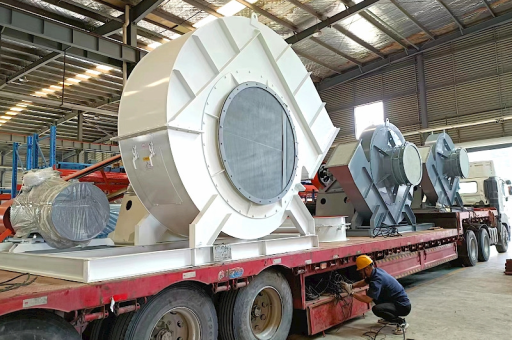
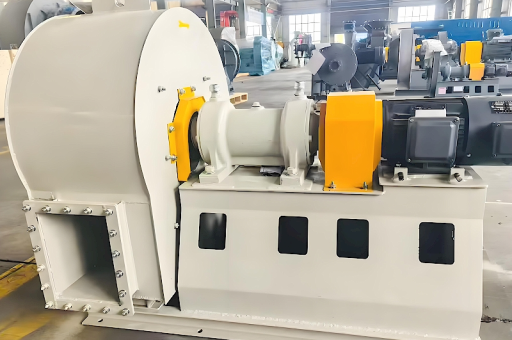
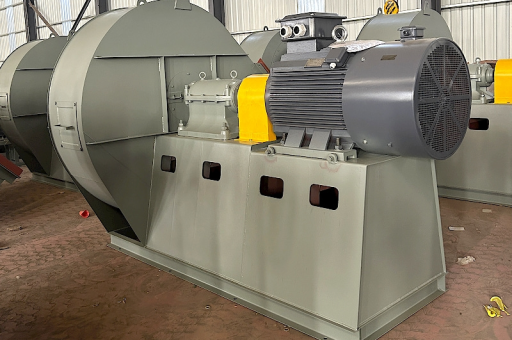
This is a highly specific and technical request. You are describing a centrifugal fan used to boost the pressure of natural gas in a transmission line, which requires an explosion-proof (Ex) design.
Below is a detailed breakdown of what this equipment is, its key specifications, and critical safety considerations.
What It Is
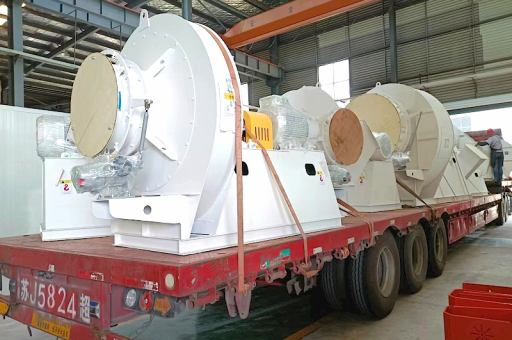
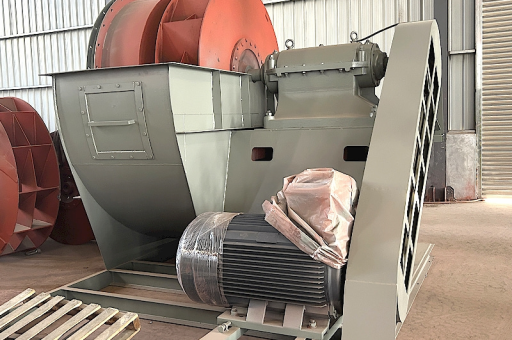
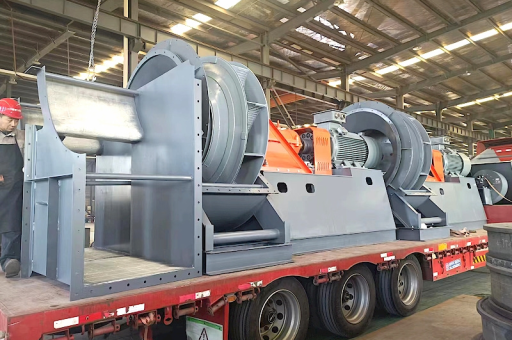
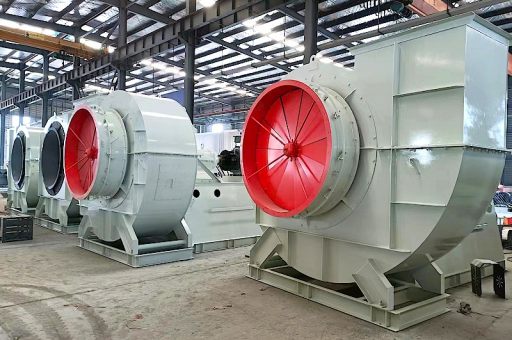
A Gas Booster Centrifugal Fan (also called a gas blower or compressor for low to medium pressure ratios) is a dynamic machine that increases the pressure of natural gas. It uses a rotating impeller to accelerate the gas outward (centrifugal force) and then decelerate it in a volute casing to convert velocity into pressure.
Key Applications in Natural Gas Transmission
- Boosting pressure from a low-pressure distribution line to a higher-pressure transmission line.
- Overcoming friction losses in long pipelines.
- Feeding gas into storage facilities (salt caverns, depleted reservoirs).
- Upstream of odorizers or metering stations to ensure consistent gas flow.
- Landfill gas or biogas upgrading systems (where the gas is similar to natural gas).
Critical Design & Explosion-Proof (Ex) Features
Because the medium is flammable natural gas (Methane, CH4, with a Lower Explosive Limit of ~4.4% volume in air), every component must be designed to prevent ignition.
| Component | Explosion-Proof Design Requirement |
|---|---|
| Motor | Ex d (Flameproof enclosure) or Ex e (Increased safety). Must have a temperature class (e.g., T3 = 200°C max surface temperature) lower than the auto-ignition temperature of methane (~537°C). |
| Electrical Connections | Sealed with Ex d or Ex e junction boxes. Cable glands must be certified gas-tight (Ex d or Ex e). |
| Sealing System | Double mechanical seals with a barrier fluid system (e.g., oil or nitrogen buffer) to prevent gas leakage to the atmosphere. |
| Casing | Cast iron or cast steel (ductile iron). No sparks allowed. Thick-walled to contain an internal gas explosion without rupturing. |
| Impeller | Non-sparking material (e.g., Aluminum bronze, Monel, or Stainless Steel with careful design to avoid friction). |
| Grounding | Continuous grounding (bonding) from fan casing to motor frame to earth to prevent static charge buildup. |
| Accessories | Pressure relief valve or rupture disc to prevent over-pressurization. Gas detection sensor recommended in the area. |
Typical Technical Specifications
- Flow Rate: 10 m³/hr to 50,000 m³/hr (depending on pipeline size).
- Pressure Rise (ΔP): 200 mbar (2.9 psi) to 5,000 mbar (72 psi). For transmission, typical is 500-3000 mbar.
- Power: 2.2 kW (3 HP) to 500 kW (670 HP).
- Speed: 2,900 RPM (direct drive) or 1,450 RPM (belt-driven for high pressure).
- Material of Construction: Steel casing (painted for corrosion resistance), Stainless Steel (SS316) or Aluminum Bronze impeller.
- ATEX / IECEx Rating: e.g., II 2G Ex d IIB T3 Gb (suitable for Gas Group B = Ethylene/Hydrogen equivalent, Temperature class T3).
How to Choose the Right Unit
- Define Gas Composition: Is it 100% Methane, or does it contain heavier hydrocarbons (Propane, Butane) or corrosive components (H2S)?
- Pressure Ratio (ΔP): For higher pressure ratios (e.g., >3 bar / 43 psi), a centrifugal compressor becomes more efficient than a simple fan.
- Temperature Rise: Calculate adiabatic temperature rise. Methane heats up when compressed. Ensure the maximum outlet temperature is below the Ex temperature class (e.g., T3 = 200°C).
- Hazardous Area Classification: The fan must match the zone (Zone 1 = likely presence, Zone 2 = occasional presence) and Gas Group (IIA = Propane, IIB = Ethylene, IIC = Hydrogen). Methane is Group IIA.
- Drive Method: Direct drive (no belts) is safer for explosion-proof applications.
Advantages of Centrifugal for Transmission
- High flow rate relative to footprint.
- Vibration-free (if well balanced) vs. reciprocating compressors.
- Oil-free (dry running or with dry gas seals) – important for clean transmission lines.
Potential Disadvantages
- Surge risk at low flow (if flow drops too low, the gas can reverse direction violently). A bypass or anti-surge valve is essential for variable flow systems.
- Narrow operating range compared to positive displacement (PD) blowers.
Example Manufacturers (Explosion-Proof Certified)
- Tuthill (USA) – Gas Boosters.
- Crowley (USA) – Gas Blowers (Ex-certified).
- Aerzen (Germany) – Delta Blowers (for low pressure boosting).
- Siemens / Dresser-Rand – Centrifugal compressors (for higher pressure transmission).
- Gardner Denver – High-pressure centrifugal.
Safety Checklist for Installation
- [ ] Motor and electrical components are ATEX, IECEx, or NEC Class 1 Div 1/2 certified.
- [ ] Inlet filter (to protect impeller from debris).
- [ ] Non-return valve on discharge (to prevent backflow when stopped).
- [ ] Pressure relief valve (set below casing MAWP).
- [ ] Gas-tight sealing system (double mechanical seals).
- [ ] Continuous grounding (ΔR < 10 Ohms to earth).
- [ ] Gas detection alarm in the enclosure/room.
Final Recommendation
If you are boosting pressure for a transmission line (e.g., from 0.5 bar to 2 bar), a centrifugal booster fan is a good choice for high volumes. However, for high-pressure ratio applications (>3:1), consider a reciprocating or screw gas compressor.
Key phrase to search for suppliers: "ATEX certified natural gas centrifugal blower" or "explosion-proof booster fan for methane transmission."
Please consult a certified gas engineering specialist and the local hazardous area authority (e.g., ATEX notified body, UL, CSA) for the exact certification requirements in your jurisdiction.