This article's table of contents introduction:
- What is an Inconel 625 Fan?
- Why Inconel 625? (Material Properties)
- Typical Technical Specifications
- Critical Design Considerations
- Common Applications
- Selection Checklist (When Ordering)
- Alternatives to Full Inconel 625 (to reduce cost)
- Summary
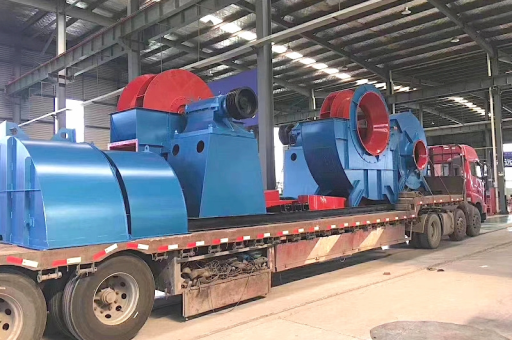
Based on your query for an Inconel 625 High-Temperature Corrosion Resistant Fan, you are likely looking for a specialized industrial fan designed to handle extreme heat (up to 1800°F / 980°C) and highly corrosive or oxidizing environments (chemical, marine, or exhaust gases).
Here is a detailed breakdown of what this product is, its specifications, why Inconel 625 is used, and typical applications.
What is an Inconel 625 Fan?
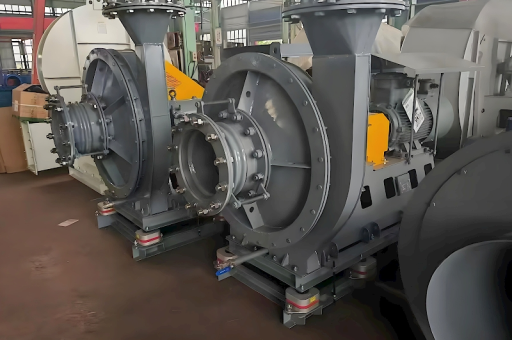
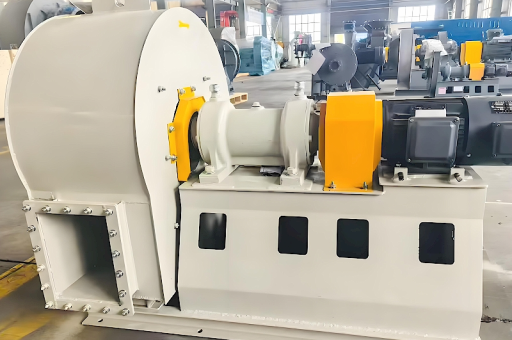
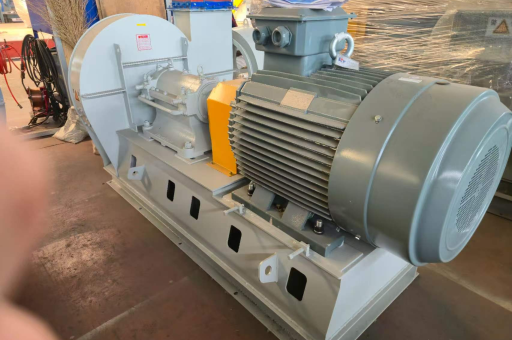
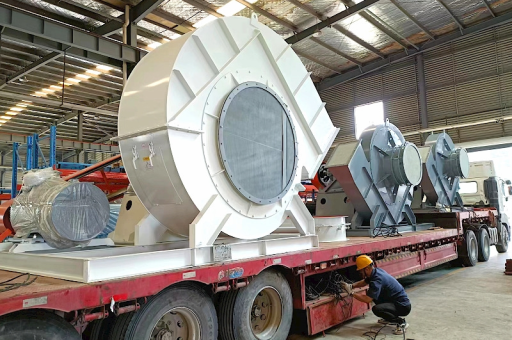
It is a centrifugal or axial fan where the impeller (wheel), housing, and shaft are manufactured from UNS N06625 (Inconel 625).
- Key Features: It withstands high temperatures without losing structural integrity (creep resistance) and resists pitting, crevice corrosion, and stress-corrosion cracking from chlorides, sulfides, and other aggressive chemicals.
Why Inconel 625? (Material Properties)
Standard stainless steel (304/316) or carbon steel fails in high-temp corrosive environments. Inconel 625 excels because:
- High Strength & Creep Resistance: Maintains mechanical strength up to 1800°F (980°C) – crucial for preventing fan blades from deforming or "creeping" under centrifugal stress.
- Oxidation Resistance: Forms a tenacious oxide layer that resists scaling and spalling even during thermal cycling (heating/cooling).
- Chloride Resistance: Resists pitting and stress-corrosion cracking (SCC) from chlorides, making it ideal for waste incineration or marine exhaust.
- Fatigue Strength: Resists thermal fatigue cracking.
Typical Technical Specifications
| Parameter | Specification / Value |
|---|---|
| Material | ASTM B443 / UNS N06625 (Inconel 625) |
| Max Temp | Continuous: 1800°F (980°C) / Intermittent: 2000°F+ |
| Fan Type | Centrifugal (Forward/Backward curved), Axial, Plug Fan |
| Wheel Design | Radial tip, Paddle wheel, or Airfoil (stress-relieved) |
| Shaft | Inconel 625 (sometimes 718 for higher strength) |
| Housing | Inconel 625 or 625-clad steel (to reduce cost) |
| Cooling | Shaft cooling fins or purge air system for bearing protection |
| Max Pressure | Up to 40" w.g. (10 kPa) depending on design |
| Bearings | External, water-cooled or high-temp grease (Teflon/Fluoro) |
Critical Design Considerations
- Thermal Expansion: Inconel expands significantly at high temps. The housing must allow for radial and axial growth (sliding feet, expansion joints).
- Wheel Welding: All welds must be made with Inconel 625 filler metal and stress-relieved (post-weld heat treatment) to prevent intergranular attack.
- Resonance & Vibration: At high temperature, the material's stiffness drops. Finite Element Analysis (FEA) is essential to ensure no blade resonance at operating RPM.
- Cost: Inconel 625 is expensive (often 10-15x the cost of mild steel). Some OEMs offer Inconel cladding over carbon steel housing for budget-friendliness.
Common Applications
- Waste-to-Energy (WTE) Incineration: Induced draft (ID) fans handling hot, acidic (HCl, SOx) flue gas.
- Chemical Processing: Fans moving chlorine, hydrogen fluoride, or nitric acid vapors at high temperatures.
- Metal Treating / Heat Treating: Forced air fans in furnaces.
- Semiconductor / CVD Furnaces: Handling corrosive dopant gases.
- Marine / Offshore: Engine room exhaust fans handling salt-laden, hot air.
- Biomass / Coal Power: ID fans handling high-sulfur, fly-ash-laden exhaust.
Selection Checklist (When Ordering)
When sourcing an Inconel 625 fan from a manufacturer (e.g., New York Blower, Robinson, Howden, Cincinnati Fan, or custom fabricators), provide these:
- Gas Composition: % Chlorine, Sulfur, HF, HCl (water vapor content?).
- Operating Temp: Continuous? Max surge temp?
- Airflow (CFM/m³/hr) & Static Pressure (in.w.g./Pa) .
- Altitude / Density (affects horsepower).
- Abrasive Content: Will fly ash erode the blades? (May require hardfacing).
- Bearing Cooling Method: Shaft cooling disc vs. water jacket? Ambient temperature matters.
Alternatives to Full Inconel 625 (to reduce cost)
If your temperature is below 1600°F, consider:
- RA 253 MA (UNS S30815): Alloy with rare earth metals; cheaper, but less corrosion resistance.
- Hastelloy C-276 (UNS N10276): Better for low-temp (wet) chlorides, but weaker at high-temp.
- Inconel 600 (UNS N06600): Lower cost, good for oxidation, but less creep strength than 625.
- Coex (Ceramic + Alloy): Ceramic-coated 309S or 310S fan impellers (often cheaper but more brittle).
Summary
If you need a fan that will survive in an inferno of corrosive gas (e.g., incinerator ID fan handling HCl at 1600°F), an Inconel 625 high-temperature fan is the correct engineering solution. However, due to the high cost (often $50,000+ for a large unit), ensure you have a precise performance specification to avoid over-engineering.
Would you like a recommendation on how to write the RFQ (Request for Quotation) for this fan, or do you need help comparing Inconel 625 vs. alternative alloys for your specific gas and temperature?