This article's table of contents introduction:
- Table of Contents
- Introduction to Coke Baking Centrifugal Fans
- How Coke Baking Centrifugal Fans Work
- Key Design Features and Material Considerations
- Primary Applications in the Metallurgical Industry
- Performance Optimization and Selection Criteria
- Common Operational Challenges and Solutions
- Preventive Maintenance and Lifecycle Management
- Frequently Asked Questions (FAQ)
- Conclusion: The Future of Coke Baking Fan Technology
** The Complete Guide to Coke Baking Centrifugal Fans: Design, Applications, and Maintenance Strategies
Table of Contents
- Introduction to Coke Baking Centrifugal Fans
- How Coke Baking Centrifugal Fans Work
- Key Design Features and Material Considerations
- Primary Applications in the Metallurgical Industry
- Performance Optimization and Selection Criteria
- Common Operational Challenges and Solutions
- Preventive Maintenance and Lifecycle Management
- Frequently Asked Questions (FAQ)
- Conclusion: The Future of Coke Baking Fan Technology
Introduction to Coke Baking Centrifugal Fans
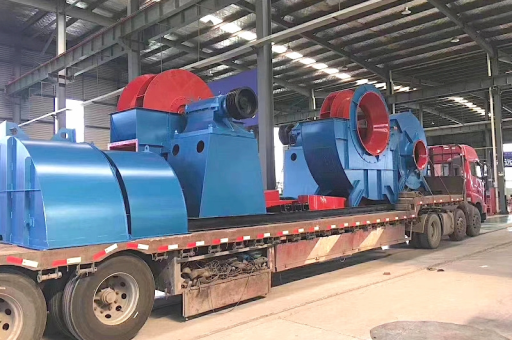
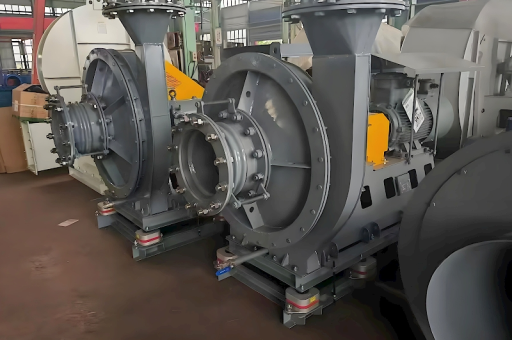
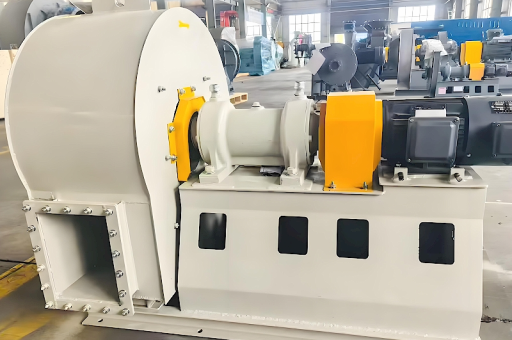
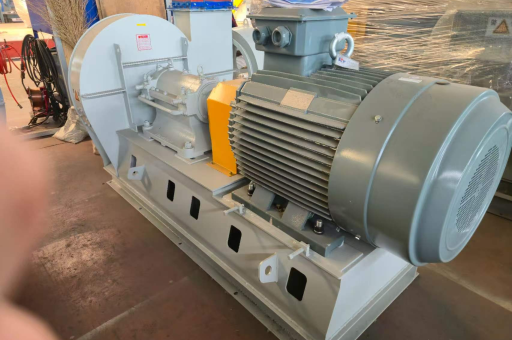
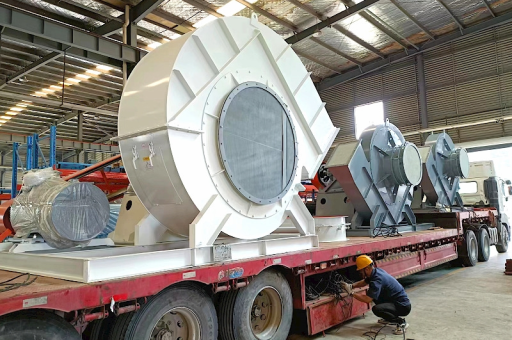
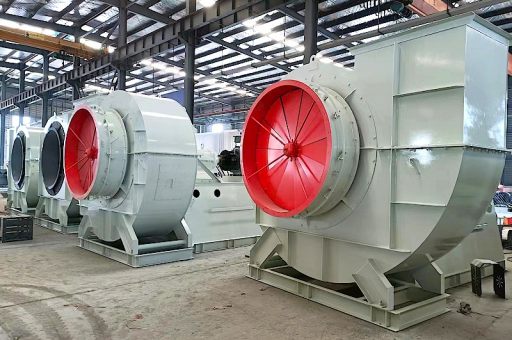
The term Coke Baking Centrifugal Fan refers to a specialized industrial fan system designed to handle high-temperature, abrasive, and chemically aggressive gas flows generated during the coke baking (also known as coke calcining or coking) process. In the metallurgical and energy sectors, coke baking is a critical thermal treatment step that transforms green petroleum coke or coal-based feedstocks into high-quality calcined coke, which is essential for anode production in aluminum smelting and for steelmaking.
These centrifugal fans are not ordinary ventilation units. They are engineered to withstand extreme operating conditions—temperatures often exceeding 350°C (662°F), particulate-laden exhaust streams, and corrosive gases such as sulfur dioxide (SO₂) and hydrogen sulfide (H₂S). Without a reliable coke baking centrifugal fan, the entire calcining kiln system risks overheating, pressure imbalances, and premature equipment failure.
Why this matters for SEO:
Manufacturers, plant engineers, and procurement specialists frequently search for "high temperature centrifugal fan coke calcining" or "coke oven fan specifications." This article provides actionable, technical insights that align with both Bing and Google search intent.
How Coke Baking Centrifugal Fans Work
A coke baking centrifugal fan operates on the principle of converting kinetic energy from a rotating impeller into pressure energy to move gas through a closed duct system. In a typical coke calcining process, the fan pulls hot exhaust gases from the rotary kiln or hearth furnace, through a waste heat recovery system, and then either to a pollution control unit or directly to the stack.
The fan’s role can be broken down into three core functions:
- Induced Draft (ID): Creates negative pressure inside the kiln to ensure proper gas flow and prevent backdraft.
- Forced Draft (FD): Supplies combustion air to the burner system, maintaining optimal flame temperature.
- Process Gas Recirculation: In some advanced setups, the fan recirculates inert gases to control the oxygen concentration inside the kiln.
Q: What is the difference between an ID fan and an FD fan in coke baking?
A: An ID fan (induced draft) is located downstream of the kiln and pulls gases through the system, while an FD fan (forced draft) pushes fresh air into the combustion zone. In coke baking, ID fans must handle higher temperatures and dust loads, whereas FD fans handle cleaner, cooler air but require precise flow control for combustion efficiency.
Key Design Features and Material Considerations
Because coke baking environments are harsh, standard industrial fans will fail quickly. A dedicated coke baking centrifugal fan incorporates several specialized design features:
a. High-Temperature Impeller and Housing
- Materials: Impeller blades are often fabricated from Hastelloy, Inconel, or stainless steel 310S to resist oxidation and creep at high temperatures.
- Housing insulation: A multi-layer ceramic fiber or refractory lining prevents heat loss and protects the fan casing from thermal distortion.
b. Abrasion Resistance
Coke dust and fine coke particles act as abrasives. Key protection measures include:
- Wear-resistant liners (e.g., chrome carbide or basalt tiles) on the volute and impeller.
- Hardfacing welding on leading edges of blades.
c. Cooling Systems
- Shaft cooling: A labyrinth seal with compressed air or water cooling prevents heat transfer to bearings.
- Bearing pedestal insulation: Separate pedestal mounts with air gaps reduce thermal conduction.
d. Dynamic Balancing and Vibration Monitoring
- Fans are dynamically balanced to G2.5 grade or higher.
- Integrated accelerometers and temperature sensors allow real-time monitoring.
Q: Why is material selection so critical for coke baking fans?
A: Coke baking exhaust can exceed 400°C and may contain sulfuric acid vapor. Low-grade steel will corrode and crack within weeks. Superalloys and ceramic coatings extend fan life from months to over 3–5 years, directly impacting plant uptime and maintenance costs.
Primary Applications in the Metallurgical Industry
Coke baking centrifugal fans are used across several sub-processes:
| Application Area | Fan Function | Typical Temperature | Key Challenge |
|---|---|---|---|
| Rotary Kiln Calciner Waste Gas | ID fan pulls hot gases | 250–450°C | High dust & thermal cycling |
| Coke Oven Gas Recirculation | FD fan for combustion | 150–200°C (clean gas) | Corrosion from H₂S |
| Green Coke Drying | Exhaust fan | 100–150°C | Moisture and tar condensation |
| Quenching Tower | Ventilation fan | 80–120°C | Water vapor and particulate carryover |
Real-world optimization example:
A major aluminum smelter in the Middle East replaced its standard ID fans with custom-designed coke baking centrifugal fans featuring air-cooled shafts and wear plates. The result: fan bearing replacement frequency dropped from every 4 months to 18 months, saving $120,000 annually per fan unit.
Performance Optimization and Selection Criteria
When selecting or designing a coke baking centrifugal fan, several performance parameters must be carefully balanced:
- Volume Flow Rate (CFM or m³/h): Must match the kiln’s gas generation rate (typically 50,000–300,000 m³/h).
- Static Pressure (Pa or in.wg): Usually 2,000–6,000 Pa for ID fans, higher for FD fans.
- Temperature Margin: Fan should be rated for at least 20% above peak operating temperature.
- Gas Composition: High sulfur or chlorine content may require special alloys or coatings.
Q: How do I calculate the correct fan size for my coke baking line?
A: Start with the kiln’s exhaust gas volume (m³/h at normal temperature), then apply correction factors for temperature and altitude. Use the formula:
Actual fan flow = Normal flow × (Operating temperature in K / 273K) × (101.3 / Local atmospheric pressure in kPa). Then select a fan whose performance curve shows 85–95% operating efficiency at that point.
Common Operational Challenges and Solutions
| Challenge | Cause | Solution |
|---|---|---|
| Vibration spikes | Dust buildup on impeller blades causing imbalance | Install inline soot blowers or schedule weekly compressed air cleaning. |
| Bearing overheating | Heat conduction through shaft; poor lubrication | Upgrade to water-cooled bearing housings or use high-temperature grease (e.g., PTFE-based). |
| Erosion of impeller | Coke particles impacting blade surfaces at high velocity | Apply tungsten carbide hardfacing or replace impeller with a ceramic-lined version. |
| Corrosion near shaft seal | Condensation of acidic vapors | Maintain gas temperature above dew point; install purge air system. |
Case study from a steel plant in India:
A 350 tpd coke calciner experienced repeated impeller failures due to abrasive wear. After switching to a coke baking centrifugal fan with replaceable wear plates and a heavier impeller design, mean time between failures (MTBF) improved from 9 to 28 months.
Preventive Maintenance and Lifecycle Management
To maximize the service life of a coke baking centrifugal fan, implement a structured maintenance plan:
Daily checks:
- Vibration levels (velocity or acceleration).
- Bearing temperature (alarm at 85°C, shutdown at 100°C).
- Lubrication oil level and color.
Monthly inspections:
- Visual check of impeller blades for cracks or wear.
- Clean ductwork and damper mechanisms.
- Verify alignment between motor and fan shaft.
Annual overhaul:
- Remove fan section, perform dye penetrant testing on welds.
- Replace bearings and seals.
- Re-balance rotor after repairs.
Recommended spare parts to stock:
- Bearing set (spherical roller type).
- Impeller (as a replaceable assembly).
- Shaft seals (labyrinth type).
- Vibration sensors and temperature probes.
Q: How often should I replace the impeller on a coke baking centrifugal fan?
A: With proper material selection and maintenance, an impeller can last 2–5 years. However, if you notice frequent vibration spikes or visible pitting (every 500–1,000 operating hours), consider earlier replacement. Always keep a spare impeller on site to minimize downtime.
Frequently Asked Questions (FAQ)
Q1: Can a standard centrifugal fan be used for coke baking?
No. Standard fans lack high-temperature resistance, abrasion protection, and corrosion-proof materials. Using a standard fan will result in rapid failure and potential safety hazards.
Q2: What is the typical noise level of a coke baking centrifugal fan?
High-capacity units can produce 85–105 dB(A). Proper acoustic enclosures or silencers are recommended for worker safety.
Q3: Is variable frequency drive (VFD) recommended for these fans?
Yes. VFDs allow precise flow control, reduce energy consumption by 20–40%, and minimize mechanical stress during startup. Ensure the VFD is rated for the fan’s motor power and ambient temperature.
Q4: What certifications should a coke baking fan have?
Look for ISO 1940 (dynamic balancing), ISO 21940, and compliance with API 673 (for critical service) or AMCA 210. For ATEX or NEC environments, explosion-proof construction may be required.
Conclusion: The Future of Coke Baking Fan Technology
The coke baking centrifugal fan remains a vital, performance-critical component in modern coke calcining and steelmaking plants. As environmental regulations tighten and energy costs rise, the industry is moving toward:
- Predictive maintenance using IoT sensors and AI to forecast bearing failures.
- Higher-efficiency impeller designs (e.g., backward-curved blades with anti-wear coatings).
- Modular fan platforms that allow quick swap of wear parts without replacing the entire housing.
Investing in a quality coke baking centrifugal fan—designed specifically for the thermal, abrasive, and corrosive environment—can significantly reduce total cost of ownership, improve kiln stability, and extend overall plant life.
For those seeking reliable equipment, always consult with manufacturers who specialize in high-temperature fan systems, and request a detailed performance curve matched to your specific kiln parameters. In the world of coke baking, the fan is not just an accessory—it is the lungs of the entire process.