This article's table of contents introduction:
- What is it Exactly?
- Key Features & Design
- Applications
- Advantages & Disadvantages
- A Note on the Component
This appears to be a search for information about a Steel-Lined PTFE Fan.
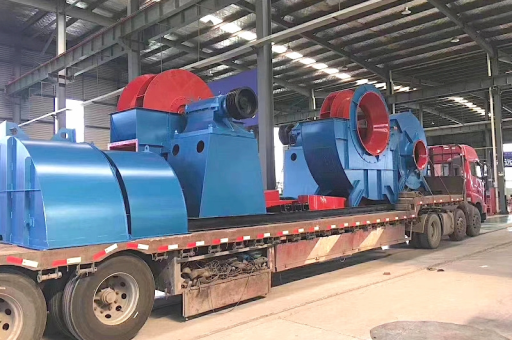
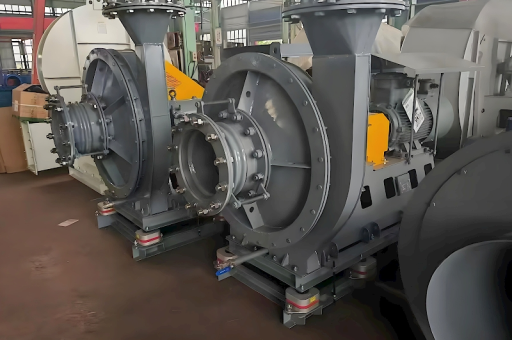
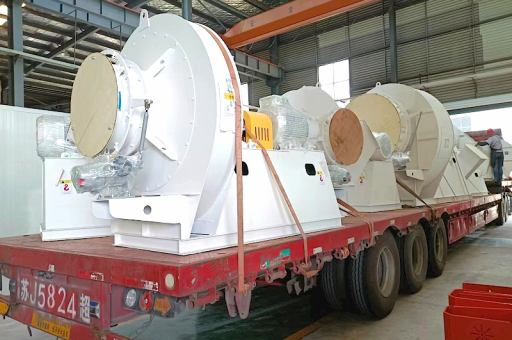
This is a very specific piece of industrial equipment, often found in chemical processing, pharmaceutical, or semiconductor manufacturing facilities. It is a hybrid solution designed to solve a specific problem: moving corrosive gases at moderate temperatures.
Here is a breakdown of what this is, how it works, and its typical applications.
What is it Exactly?
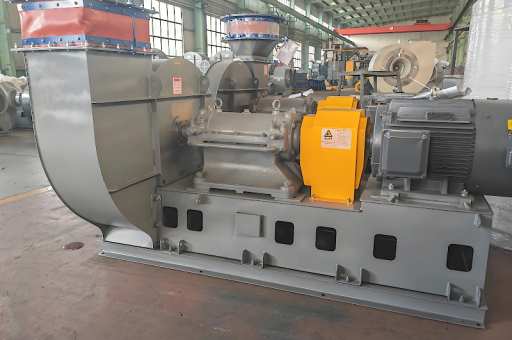
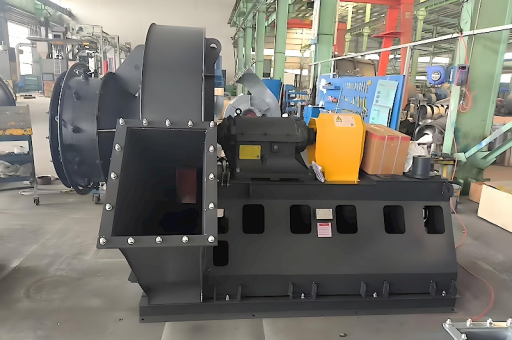
- Steel-Lined: The outer structure (housing, shaft, wheel hub) is made of steel (typically carbon steel or stainless steel 304/316). This provides the mechanical strength to handle high RPMs, pressure differentials, and torque from the motor.
- PTFE (Polytetrafluoroethylene): The steel components are entirely covered with a thick layer of PTFE (commonly known as Teflon™). This provides the chemical resistance.
In short: It is a powerful steel fan that will not rust or corrode because the acid never touches the steel.
Key Features & Design
- Not a Lining, But a Coating: In quality manufacturing, the PTFE is applied via electrostatic spraying (powder coating) or as a pre-formed sheet that is bonded and sintered. It is not like paint; it is a thick, impervious layer (typically 0.5mm to 2mm thick).
- Pinhole-Free: The critical requirement. Any tiny hole in the PTFE coating would allow the corrosive gas to attack the steel, leading to rapid failure. High-quality manufacturers use spark testing to ensure 100% integrity.
- Temperature Limitations: This is the biggest limitation of PTFE. The continuous operating temperature is usually limited to 150°C (302°F) , with peaks up to 200°C (392°F). Above this, PTFE will degrade and release toxic fumes.
- Good Chemical Resistance: PTFE is resistant to almost all acids (hydrochloric, sulfuric, nitric), bases, and organic solvents.
- Non-Stick Surface: The PTFE layer is very smooth and non-stick, which helps prevent dust or residue from building up on the fan blades (reducing imbalance).
- Mechanical Strength: Unlike a fan made entirely of solid PTFE or other plastics, the steel substrate allows for larger diameters, higher pressure, and higher shaft speeds. The steel impeller (wheel) can be welded, balanced, and then coated, resulting in a robust, high-performance unit.
Applications
You find these fans in places where you need to move air that would eat through a standard steel fan, but where a completely plastic fan (like a solid PP, PVC, or FRP fan) isn't strong enough for the pressure or size required.
- Chemical Industry: Exhaust systems for acid fumes (HCl, H₂SO₄, HF, HNO₃), chlorine gas, and various other corrosive gases.
- Pharmaceuticals: Ventilation of chemical synthesis reactors and fume hoods.
- Semiconductor Manufacturing: Exhaust for "wet bench" processes that use strong acids and solvents.
- Metal Finishing / Plating: Exhaust from acid pickling lines, anodizing tanks, and electroplating baths.
- Wastewater Treatment: Ventilation from chambers where hydrogen sulfide (H₂S) or methane (CH₄) gas is present.
- Food Processing: Ventilation for areas requiring non-stick surfaces and resistance to cleaning chemicals (though PTFE is less common here than other plastics).
Advantages & Disadvantages
| Feature | Advantage | Disadvantage |
|---|---|---|
| Chemical Resistance | Excellent against almost all chemicals. | Very poor against molten alkali metals and fluorine gas. |
| Temperature | Handles moderate heat (up to 150°C). | Cannot handle high temperatures of steel-only fans (300-700°C). |
| Strength | Much stronger than all-plastic fans. | More expensive than solid polypropylene (PP) or PVC fans. |
| Manufacturing | Welded steel base is robust. | Requires expert application; poor coating leads to delamination or pinholes. |
A Note on the Component
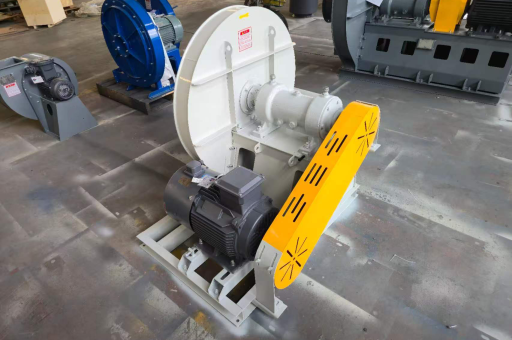
A fan in this context almost always refers to a centrifugal fan (sometimes called a "blower" in the industry). You would likely not find an axial fan (like a desk fan) lined with PTFE, as axial fans are harder to coat evenly and less common in corrosive service. The term usually implies a centrifugal (squirrel-cage or radial-blade) impeller.
Summary for Procurement/Engineering:
"A steel fan body and impeller coated with a thick, pinhole-free layer of PTFE. Used for moving highly corrosive gases at temperatures below 150°C where a solid plastic fan lacks the required mechanical strength."