This article's table of contents introduction:
- Critical Applications in a Cement Plant
- Key Design Challenges (Why they are "High Pressure")
- Common Types of High-Pressure Fans
- Critical Selection Parameters
- Materials & Coatings
- Drives & Control (Critical for Energy)
- Maintenance & Monitoring
- Top Manufacturers (Cement Specific)
- Summary Recommendation
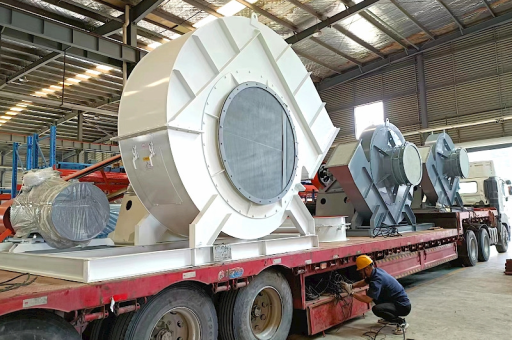
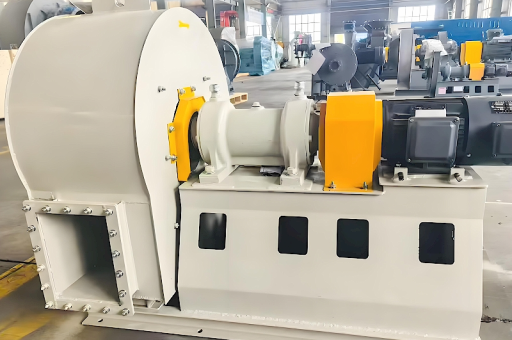
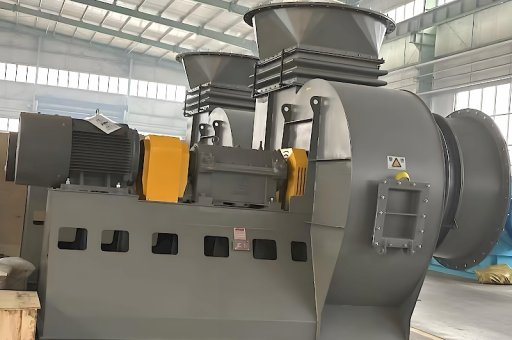
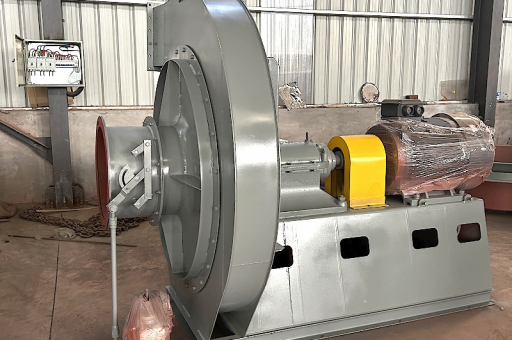
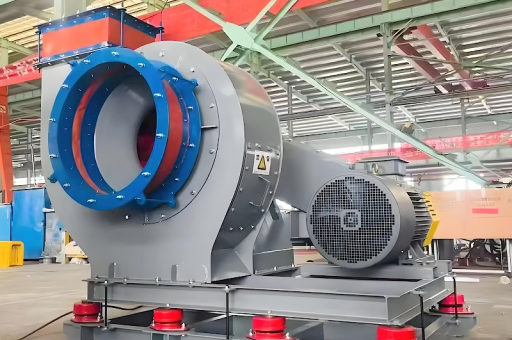
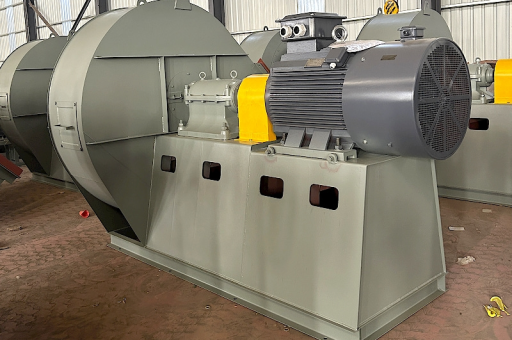
This is a comprehensive guide to High-Pressure Fans used in Cement Plants. These are often referred to as ID Fans (Induced Draft), FD Fans (Forced Draft), Kiln Fans, or Raw Mill Fans.
Because cement manufacturing involves moving massive volumes of hot, abrasive, and corrosive gas, these fans are the most critical and expensive rotating equipment in the plant.
Here is a breakdown of types, applications, key design challenges, and selection criteria.
Critical Applications in a Cement Plant
High-pressure fans are used in the three main stages of production:
| Application | Fan Type | Typical Pressure (mmWG) | Gas Characteristics |
|---|---|---|---|
| Kiln System | ID Fan (Main) | 700 – 1,000 | Very hot (350-400°C), dusty, high CO |
| Raw Mill | ID Fan (VRM) | 800 – 1,200 | Warm, high dust load (up to 800 g/Nm³) |
| Cement Mill | Bag House Fan | 600 – 800 | Warm, fine cement dust (abrasive) |
| Cooler | Clinker Cooler Fan | 500 – 1,500 | Clean air (but high volume, high static) |
| Coal Mill | Mill Fan / Exhauster | 700 – 900 | Hot, potentially explosive (coal dust) |
Key Design Challenges (Why they are "High Pressure")
Unlike standard HVAC fans, cement fans face three specific challenges:
A. Abrasion (Erosion)
- Issue: Raw meal, clinker, and coal dust are highly abrasive.
- Solution: Hardfacing on impeller blades (chrome carbide overlays). Use of wear plates (liners) in the casing (e.g., AR400, Hardox, or ceramic tiles). Radial blade designs (less efficient but more robust) are preferred over backward-curved blades.
B. High Temperature
- Issue: Kiln ID fans handle gas up to 400°C.
- Solution: Water-cooled bearings, high-temperature shaft seals, and hot air recirculation (to prevent cold air ingress which can cause condensation and dust build-up). Impeller material must be creep-resistant (e.g., Corten or stainless steel).
C. Dust Build-Up & Vibration
- Issue: Sticky dust cakes on the impeller, causing dynamic imbalance.
- Solution: Self-cleaning impeller designs (scrapers or hollow blades). Continuous vibration monitoring (ISO 10816-3) is mandatory.
Common Types of High-Pressure Fans
A. Single Inlet, Single Width (SISW)
- Use: Most common for raw mill and cement mill circuits.
- Pressure: Up to ~1,200 mmWG.
- Impeller: Often radial tip (RT) or backward-inclined (BI) with heavy gauge.
B. Double Inlet, Double Width (DIDW)
- Use: High-volume, low-to-medium pressure applications (e.g., cooler fans, main baghouse fans).
- Pressure: Up to ~800 mmWG.
C. High Pressure Radial Bladed (R & RTE) (Most common for Kiln)
- Pressure: 1,000 – 1,800 mmWG.
- Design: Simple radial blades (R) or radial tipped (RTE) with a curved inlet.
- Pros: Robust, easy to repair, good for abrasive dust.
- Cons: Lower efficiency (50-65%).
D. Backward Curved / Backward Inclined (BC / BI)
- Pressure: Up to 1,200 mmWG.
- Pros: Higher efficiency (75-85%), non-overloading power curve (safer for motors).
- Cons: More susceptible to wear than radial blades.
Critical Selection Parameters
When ordering or replacing a cement plant fan, you must specify:
- Volume Flow (m³/hr or m³/s): At actual inlet conditions (hot gas expands – you must specify actual volume, not normalized).
- Total Static Pressure (mmWG or Pa): Include system losses (ducting, baghouse, preheater).
- Gas Temperature (°C): Maximum continuous and peak excursion (e.g., 380°C normal, 450°C emergency).
- Gas Composition: Dust type, dust concentration (g/Nm³), moisture content, CO (for explosion protection).
- Altitude: Affects air density and motor power.
- Correction Factors:
- Safety Factor: 5-10% on flow, 10-15% on pressure.
- Erosion Allowance: Thicker blades required.
Materials & Coatings
- Impeller: Corten A/B (for high temp), Hardox 400/450 (abrasion), or Stainless Steel 310S (for hot, corrosive kiln gas).
- Shaft: EN8, EN24 (high tensile steel) or 410 Stainless Steel (for kiln).
- Coating: Ceramic Epoxy or Tungsten Carbide HVOF spray on impeller for extreme abrasion (e.g., for clinker cooler fans).
- Housing: Mild steel with wear-resistant liners (bolt-on replaceable plates) on the scroll.
Drives & Control (Critical for Energy)
Cement fans are large power consumers. Control is vital:
- VFD (Variable Frequency Drive): Preferred – allows for precise control of speed/flow, saves 20-40% energy vs. dampers. Essential for kiln ID fans to control draft.
- Inlet Guide Vanes (IGV): Mechanical control, cheaper than VFD but less efficient.
- Louvers / Dampers: Least efficient, high pressure drop. Only used as back-up.
Maintenance & Monitoring
Because failure means a plant shutdown, these fans require:
- Vibration Sensors: Dual (X/Y) accelerometers on bearing housings. High vibration shutdown (usually >11 mm/s RMS).
- Bearing Temperature: RTDs (PT100) with high-temp alarms.
- Thermography: Quarterly checks on motor and fan coupling.
- Thickness Measurement: Annual ultrasonic mapping of impeller blades (wear check).
- Rotor Balancing: In-situ dynamic balancing is common; allow for access ports.
Top Manufacturers (Cement Specific)
- Howden (Global leader, especially for kiln fans)
- FLSmidth (Often supplied as part of their EPC kiln systems)
- ABB (Drives + Fan packages)
- TLT-Babcock (High pressure axial fans for coolers)
- Ziehl-Abegg (For European retrofit projects)
- Local/Regional: Everest, Kruger, Chicago Blower (for smaller units)
Summary Recommendation
For a Cement Plant Kiln ID Fan:
- Type: Double Inlet, Radial Bladed (RT) with hardfacing.
- Material: Corten A for impeller, 310S for inlet cone if >350°C.
- Drive: VFD (Siemens, ABB, or Danfoss).
- Max Temp: Specify 400°C continuous with 450°C emergency rating.
- Safety: Include a barring/creep drive (to slowly rotate the fan during cooling to prevent shaft sag).
Do you have a specific stage in the cement plant you are designing for? (e.g., Kiln, Raw Mill, Coal Mill). That will let me give you exact pressure/flow specs and materials.