This article's table of contents introduction:
- Table of Contents
- Introduction to SCR Denitrification Technology
- What is an SCR Denitrification Fan?
- Core Design Principles and Operational Parameters
- Energy Consumption and Efficiency Optimization
- Common Challenges and Troubleshooting
- Q&A Section
- Conclusion and Future Trends
Table of Contents
- Introduction to SCR Denitrification Technology
- What is an SCR Denitrification Fan?
- Core Design Principles and Operational Parameters
- Energy Consumption and Efficiency Optimization
- Common Challenges and Troubleshooting
- Q&A Section
- Conclusion and Future Trends
Introduction to SCR Denitrification Technology
Selective Catalytic Reduction (SCR) is one of the most mature and widely adopted technologies for reducing nitrogen oxide (NOx) emissions from industrial flue gas. In power plants, steel mills, cement kilns, and waste incinerators, SCR systems inject a reducing agent—typically ammonia or urea—into the flue gas stream, passing it over a catalyst bed to convert NOx into harmless nitrogen and water vapor.
However, the SCR system’s performance is not solely dependent on the catalyst or the reagent injection strategy. A key mechanical component—the SCR Denitrification Fan—ensures proper gas flow, pressure balance, and optimal reaction conditions. Without a correctly designed and maintained fan, even the most advanced catalyst can fail to meet emission targets.
What is an SCR Denitrification Fan?
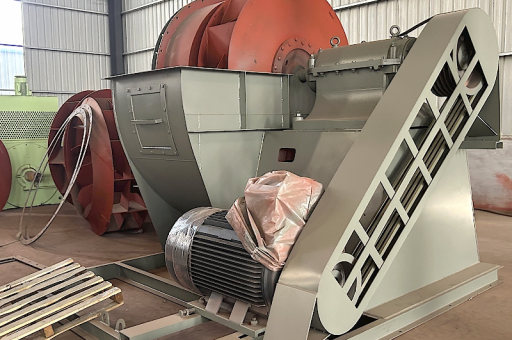
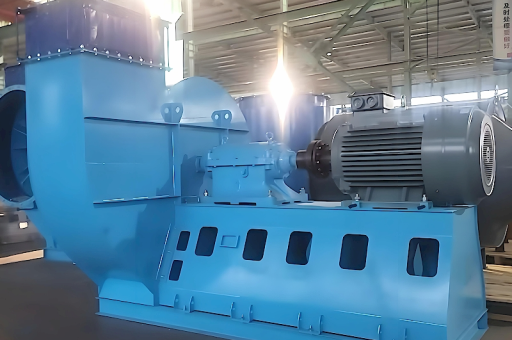
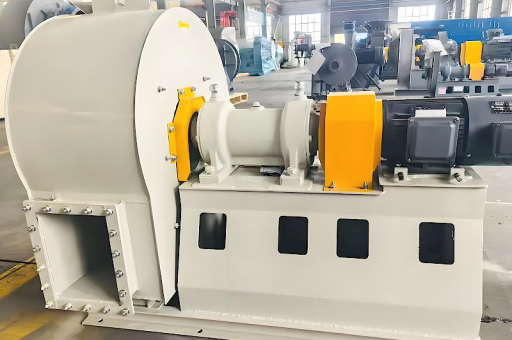
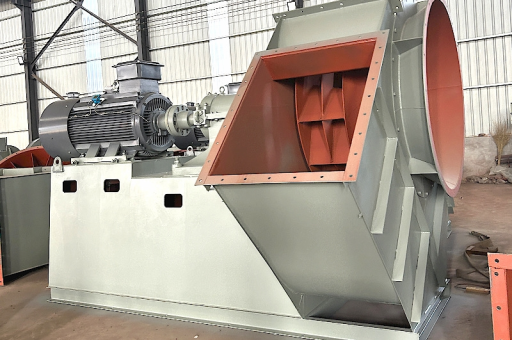
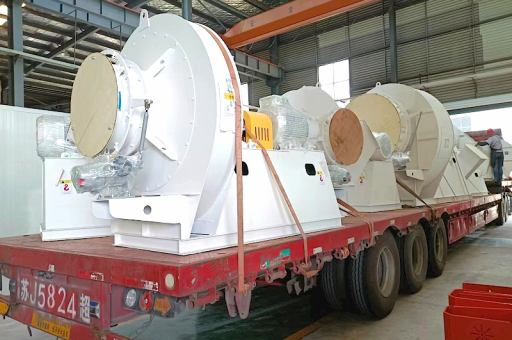
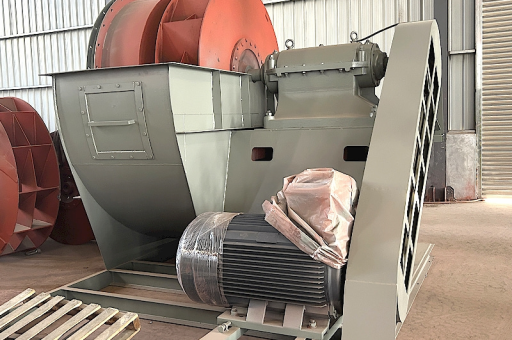
The SCR Denitrification Fan, also commonly referenced in engineering literature as the SCR booster fan or flue gas recirculation fan in certain configurations, is a heavy-duty industrial fan installed within the SCR reactor ductwork. Its primary function is to overcome the system pressure drop—which can range from 1,500 to 4,000 Pa depending on catalyst layers and duct geometry—and ensure uniform distribution of flue gas across the catalyst surface.
Key characteristics of an SCR Denitrification Fan include:
- High temperature resistance – Handles flue gas temperatures between 300°C and 420°C.
- Abrasion and corrosion protection – Flue gas often contains fly ash, sulfur compounds, and moisture.
- Variable speed drive (VSD) compatibility – Allows precise flow control in response to load changes.
- Low leakage design – Prevents ammonia slip and unreacted gas bypass.
Note: Many engineers mistakenly refer to the induced draft fan (ID fan) as the SCR fan, but the SCR Denitrification Fan is specifically positioned between the economizer outlet and the air preheater inlet, or as a booster fan in the SCR reactor zone.
Core Design Principles and Operational Parameters
Designing an SCR Denitrification Fan requires a deep understanding of both fluid dynamics and chemical reaction engineering. The fan must not only move gas but also maintain a velocity profile that avoids stagnation zones and channeling.
Critical design parameters:
- Flow rate (Q) – Typically 50% to 120% of the boiler Maximum Continuous Rating (MCR) flue gas volume.
- Static pressure rise (ΔP) – Must include the catalyst pressure drop, duct losses, and future margin for catalyst fouling.
- Operating temperature – Affects gas density and fan power consumption.
- Material selection – Corten steel or stainless steel for blades and casing; sometimes ceramic coatings for extreme abrasion.
Computational Fluid Dynamics (CFD) analysis is now standard practice to verify gas uniformity. A well-designed fan installation can achieve a velocity deviation of less than ±15% across the catalyst face, which is critical to preventing localized ammonia slip and catalyst deactivation.
Energy Consumption and Efficiency Optimization
The SCR Denitrification Fan can account for 1% to 3% of the total plant auxiliary power consumption. In a 600 MW coal-fired power plant, this translates to roughly 1.5–3.0 MW of fan power. Optimizing fan efficiency therefore yields significant operational savings.
Efficiency improvement methods:
- Using inlet guide vanes (IGV) instead of dampers – IGV reduces part-load losses by vortex pre-swirl.
- Variable frequency drives (VFD) – Can reduce fan energy by 20–40% compared to fixed-speed operation with damper control.
- Regular blade cleaning – Fly ash buildup reduces aerodynamic efficiency dramatically.
- Leveraging advanced blade profiles – Airfoil blades offer higher static efficiency than flat or radial blades.
Case example: A 300 MW coal plant in Germany replaced an old radial SCR fan with an airfoil design equipped with VFD. The annual electricity savings exceeded 1,200 MWh, with a payback period of under 18 months.
Common Challenges and Troubleshooting
Despite robust design, SCR Denitrification Fans frequently encounter operational issues:
-
Vibration and bearing failure – Often caused by unequal thermal expansion or rotor imbalance from ash deposition.
- Solution: Install real-time vibration monitoring; schedule periodic rotor cleaning.
-
Erosion of impeller blades – Typical in high-ash coal plants.
- Solution: Use chromium carbide overlay or replace with wear-resistant alloy.
-
Ammonia bisulfate fouling – Sticky deposits form at temperatures below 320°C, choking the fan and catalyst.
- Solution: Maintain flue gas temperature above the acid dew point; use soot blowers before the fan inlet.
-
Surge operation – Occurs when flow drops below the fan’s surge limit.
- Solution: Ensure minimum flow recirculation or install anti-surge control logic.
Q&A Section
Q1: Can the SCR Denitrification Fan be replaced by the main ID fan?
Not directly. While the ID fan handles the overall flue gas path, the SCR Denitrification Fan is dedicated to precisely controlling flow through the reactor. Using the ID fan alone often results in uneven velocity distribution and higher pressure drop penalties across the catalyst.
Q2: What is the typical lifespan of an SCR Denitrification Fan?
With proper maintenance and under moderate conditions, the fan can last 15–20 years. Key components like bearings and blades may need replacement every 4–6 years depending on erosion and fouling severity.
Q3: How does the SCR Denitrification Fan affect ammonia slip?
Inadequate or uneven gas flow from the fan can create zones of high NH3/NOx ratio, causing ammonia slip. Precise fan speed and guide vane control are essential to maintain the desired stoichiometry.
Q4: Is it necessary to use a variable frequency drive on the SCR fan?
It is strongly recommended for load-following plants. Fixed-speed fans waste energy during low loads and provide less control over NOx removal efficiency. VFD installation also reduces inrush current during startup.
Q5: What are the signs that the SCR Denitrification Fan needs immediate inspection?
Unusual vibration increase (>4.5 mm/s RMS), abnormal noise (grinding or whining), overheating of bearing housings, and a rise in motor current without a change in damper position are all indicators.
Conclusion and Future Trends
The SCR Denitrification Fan is the unsung hero of modern emission control systems. It ensures that flue gas reaches every catalyst channel uniformly, enabling high NOx reduction rates while minimizing ammonia slip and energy penalty.
Looking ahead, fan manufacturers are integrating IoT sensors and AI-based predictive maintenance into new designs. Dry gas seals, magnetic bearings, and adaptive blade pitch control are emerging as next-generation features that will further reduce downtime and operating costs.
For plant operators, understanding the SCR Denitrification Fan’s performance characteristics is no longer optional—it is a compliance and profitability necessity. Investing in fan efficiency, condition monitoring, and smart controls will pay dividends in both regulatory adherence and bottom-line energy savings.
For more technical specifications on industrial fans, visit fan (Note: domain placeholder).