This article's table of contents introduction:
- Table of Contents
- Introduction: The Triad of Air Quality Management
- Dilution: Principles, Applications, and Limitations
- Oxidation: The Chemical Pathway to Clean Air
- The Fan: The Engine of Air Movement
- Synergistic Integration: How Dilution, Oxidation, and Fan Work Together
- Critical Q&A: Resolving Common Misconceptions
- Best Practices for System Design and Maintenance
- Conclusion: Optimizing Safety and Efficiency
** The Interplay of Dilution, Oxidation, and Fan Systems in Industrial Ventilation and Environmental Control
Table of Contents
- Introduction: The Triad of Air Quality Management
- Dilution: Principles, Applications, and Limitations
- Oxidation: The Chemical Pathway to Clean Air
- The Fan: The Engine of Air Movement
- Synergistic Integration: How Dilution, Oxidation, and Fan Work Together
- Critical Q&A: Resolving Common Misconceptions
- Best Practices for System Design and Maintenance
- Conclusion: Optimizing Safety and Efficiency
Introduction: The Triad of Air Quality Management
In modern industrial environments, managing airborne contaminants is not just a regulatory requirement—it’s a fundamental pillar of occupational safety and operational efficiency. Three concepts stand at the core of this discipline: Dilution, Oxidation, and Fan technology. While often discussed separately, their true power emerges when they are integrated into a cohesive system. This article explores the scientific and engineering principles behind each element, examines their interaction, and provides actionable insights for engineers, facility managers, and safety professionals. Written with a focus on SEO best practices, this guide addresses frequently asked questions and debunks common myths, helping you build a ventilation strategy that is both effective and compliant.
Dilution: Principles, Applications, and Limitations
What is Dilution?
Dilution ventilation is the process of introducing fresh air into a contaminated space to reduce the concentration of pollutants to below permissible exposure limits (PELs). It is a classic method used in warehouses, laboratories, and manufacturing facilities where contaminants are of low toxicity or where source capture is impractical.
Key Design Criteria
- Ventilation Rate: Typically expressed in air changes per hour (ACH). For example, a space requiring 6 ACH means the entire volume of air is replaced six times per hour.
- Mixing Factor: Real-world systems rarely achieve perfect mixing. Engineers apply a mixing factor (1 to 10) to account for short-circuiting or dead zones.
Limitations You Must Know
- Not for High-Toxicity Substances: Dilution does not eliminate pollutants; it only reduces their concentration. For highly toxic or reactive chemicals, dilution is insufficient.
- Energy Inefficiency: Heating or cooling large volumes of make-up air can significantly increase energy costs.
- Ineffectiveness for Local Sources: A worker standing directly next to a chemical release may face dangerous exposure even if average room levels are safe.
When Dilution Works Best: For general welding fumes, solvent vapors in large bays, or odor control in non-critical zones.
Oxidation: The Chemical Pathway to Clean Air
What is Oxidation?
Oxidation in air treatment refers to chemical reactions that transform harmful gaseous contaminants (volatile organic compounds, or VOCs, and odorous species) into less harmful compounds, typically carbon dioxide and water. It goes beyond mere dilution—it actually destroys the pollutant.
Key Technologies
- Thermal Oxidizers: Heat air-pollutant mixtures to 700–1000°C to break down contaminants. Recuperative and regenerative designs exist for heat recovery.
- Catalytic Oxidizers: Use precious metal catalysts to lower the required temperature to 300–500°C, reducing fuel consumption.
- Photocatalytic Oxidation (PCO): Uses UV light and a catalyst (e.g., TiO₂) to generate hydroxyl radicals that attack pollutants.
Advantages Over Dilution Alone
- Complete Destruction: Oxidation converts VOCs gases into inert byproducts, eliminating the need for exhaust dispersal.
- Volumetric Reduction: Because contaminants are destroyed, the required exhaust volume can be lower than in a dilution-only system.
Considerations
- Pre-treatment Required: Particulate matter can poison catalysts.
- High Capital Cost: Initial investment for oxidizer equipment is significant.
The Fan: The Engine of Air Movement
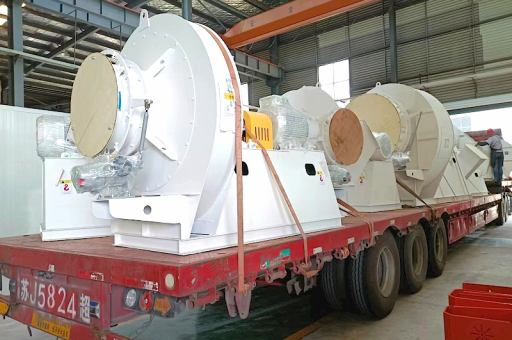
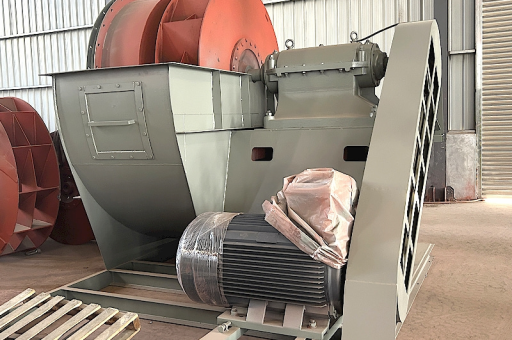
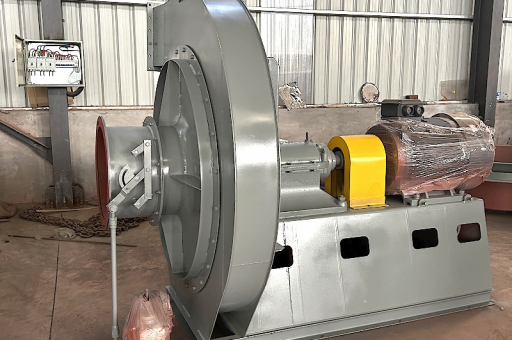
Without a fan, neither dilution nor oxidation can function. The fan provides the mechanical energy to move air through ducts, filters, oxidizers, and exhaust stacks.
Fan Types for Industrial Use
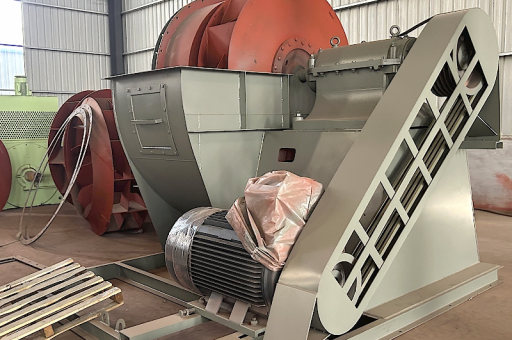
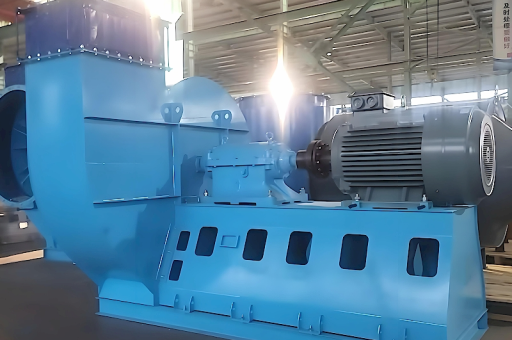
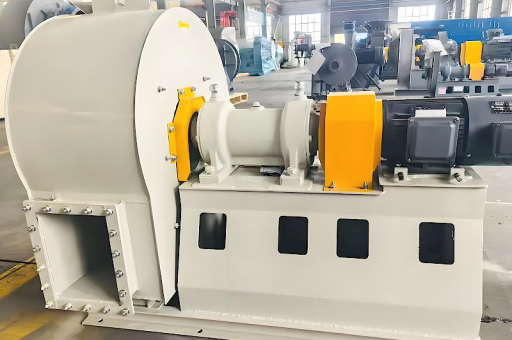
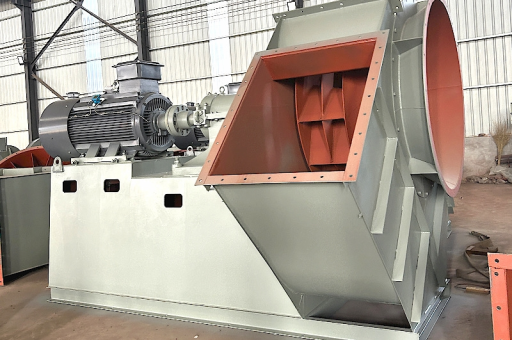
- Centrifugal Fans (Radial): Best for high static pressure and handling particulate-laden air. They are the workhorses for oxidizer inlet and exhaust duties.
- Axial Fans: Suitable for large volumes of air at low pressure, ideal for general dilution cooling or wall exhaust.
Critical Selection Parameters
- Flow Rate (CFM): Must match the engineering calculations for dilution or oxidizer capacity.
- Static Pressure: Includes duct friction losses, pressure drop across heat exchangers, oxidizer chambers, and filters.
- Material Construction: For corrosive environments (e.g., acid fumes in oxidation processes), fans must be made from stainless steel or coated fiberglass.
Energy Efficiency Note: Variable frequency drives (VFDs) allow fans to modulate flow based on real-time contaminant levels, reducing power consumption by up to 40%.
Synergistic Integration: How Dilution, Oxidation, and Fan Work Together
The most effective air quality management systems do not rely on one technique alone. Here’s a typical integrated scenario:
- Source Capture: A local hood captures concentrated fumes from a process (e.g., a paint spray station).
- Fan Transport: A centrifugal fan draws the captured air through ducts to the treatment system.
- Oxidation: The air passes into a catalytic or thermal oxidizer, where VOCs are destroyed.
- Post-Treatment Dilution: The cleaned, hot exhaust may be diluted with ambient air (often via a secondary fan and mixing chamber) to cool it to allowable discharge temperatures before release to the atmosphere.
- Background Dilution: In the same facility, a separate axial fan system provides background dilution for areas not directly under source capture.
Key Synergy: The fan’s speed can be controlled by sensors that measure VOC concentration. If levels rise, the fan increases speed, feeding more air to the oxidizer. This closed-loop system optimizes both energy use and safety.
Critical Q&A: Resolving Common Misconceptions
Q1: Can dilution replace oxidation for paint spray booths?
A: No. Paint spray fumes often contain isocyanates and other reactive compounds. Dilution alone does not meet OSHA permissible exposure limits because it does not destroy the contaminant. Oxidation (or carbon adsorption) is required.
Q2: Do I always need a massive fan for an oxidizer?
A: Not necessarily. A well-designed oxidizer with internal heat recovery can handle smaller flow rates at higher concentration. The fan sizing depends on the required airflow and static pressure, not the oxidizer’s physical size.
Q3: Is it safe to dilute flammable solvent vapors with an exhaust fan?
A: Yes, but only if the concentration is kept below 25% of the lower flammable limit (LFL). The fan motor must be explosion-proof, and the system must include continuous monitoring.
Q4: Can oxidation be achieved without a fan?
A: No. Even passive oxidation methods (e.g., biofilters) rely on natural convection fan or low-pressure fans to move air through the media.
Best Practices for System Design and Maintenance
- Conduct a Contaminant Inventory: List every chemical used, its vapor pressure, toxicity, and LFL.
- Choose Dilution or Oxidation Based on Source Strength: Low-emission processes (e.g., normal office exhaled CO₂) → dilution. High-emission processes (e.g., solvent cleaning, resin curing) → oxidation.
- Fan Redundancy: Install redundant fans for critical processes. If one fan fails, the other automatically starts to maintain negative pressure.
- Regular Commissioning: Verify actual airflow (CFM) against design values every 6 months. Use pitot tubes or anemometers.
- Monitor Pressure Drop: A rising pressure drop across the oxidizer or fan indicates fouling. Clean heat exchangers and replace filters promptly.
- Optimize with VFDs: Replace fixed-speed fan drives with VFDs connected to VOC sensors. This reduces energy waste during periods of low activity.
Conclusion: Optimizing Safety and Efficiency
The successful management of industrial air quality hinges on understanding the distinct roles and interactions of Dilution, Oxidation, and Fan technology. Dilution offers a low-cost solution for low-hazard environments, but it cannot substitute for the destructive capability of oxidation. Meanwhile, the fan is the silent workhorse that makes both strategies physically possible. By integrating these three elements—carefully selecting fan types and pressure ratings, applying dilution only where appropriate, and employing oxidation for high-concentration toxics—facility operators can achieve both regulatory compliance and energy efficiency. Remember: A well-designed system uses dilution to handle background contamination, oxidation to destroy process emissions, and a properly sized fan to deliver the right volume of air at the right pressure. The result is a safer, more sustainable workplace.