This article's table of contents introduction:
- What is a 5.5 kW Centrifugal Fan with VFD?
- Typical Applications
- Key Benefits of VFD Control on a Centrifugal Fan
- Important Specifications & Considerations
- Installation & Commissioning Checklist
- Common Problems & Troubleshooting
- Summary of Setup Parameters (Example)
It sounds like you're referring to a 5 kW Centrifugal Fan controlled by a Variable Frequency Drive (VFD) . This is a very common industrial setup for HVAC, dust collection, or process air handling.
Here is a breakdown of what that entails, key specifications, and things to consider for installation or troubleshooting.
What is a 5.5 kW Centrifugal Fan with VFD?
- 5 kW (Kilowatt): This is the motor power rating. In horsepower (HP), this is roughly 5 HP (since 1 HP = 0.746 kW).
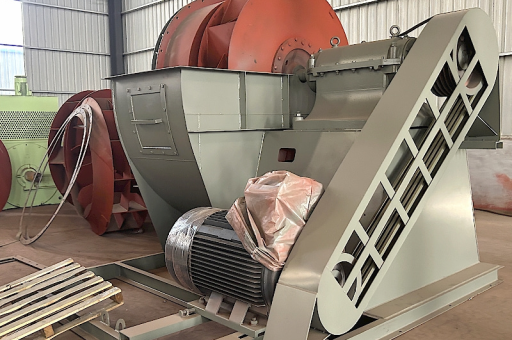
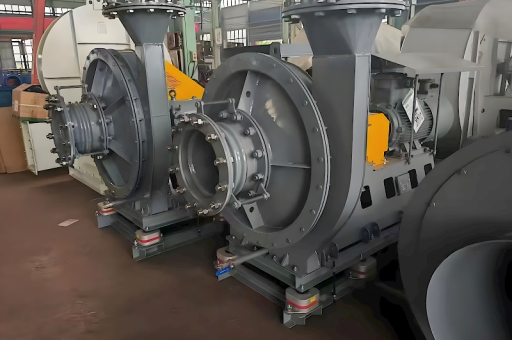
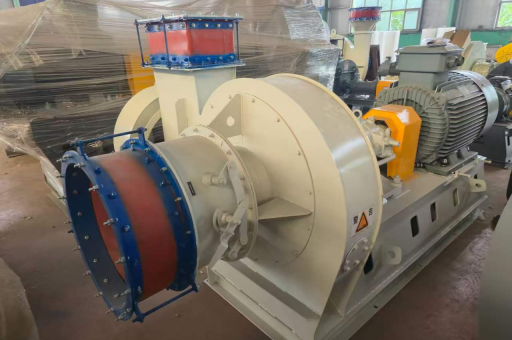
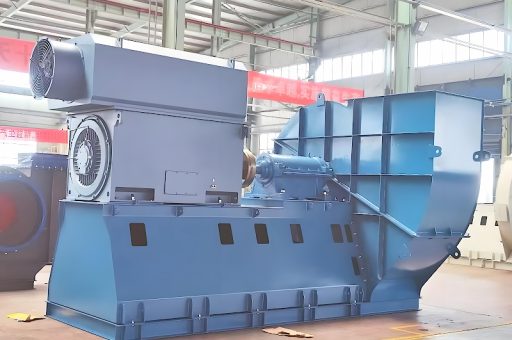
- Centrifugal Fan: A fan that uses a rotating impeller to increase the velocity of air, creating a pressure difference. Common types include Forward Curved (for high volume, low pressure) and Backward Curved (for high efficiency, medium pressure).
- VFD (Variable Frequency Drive): An electronic controller that varies the frequency (Hz) and voltage supplied to the motor, thereby controlling the fan's speed (RPM) . Instead of using a damper or valve to reduce airflow (which wastes energy), a VFD slows the motor down.
Typical Applications
- HVAC Systems: Air handling units (AHU), supply/exhaust fans.
- Industrial Ventilation: Fume extraction, dust collection, paint booths.
- Process Air: Oven drying, cooling towers, pneumatic conveying.
Key Benefits of VFD Control on a Centrifugal Fan
- Energy Savings: This is the biggest advantage. Fan power is proportional to the cube of the speed. Reducing speed by 20% reduces power consumption by nearly 50%.
- Soft Start: The VFD ramps the motor up slowly, eliminating high inrush current (reducing electrical stress) and mechanical shock (reducing belt/ bearing wear).
- Precise Control: You can set the exact airflow or pressure required via a feedback signal (e.g., 0-10V, 4-20mA from a pressure sensor).
- Reduced Maintenance: Less mechanical stress on belts, bearings, and motor.
Important Specifications & Considerations
To ensure proper operation, you need to pay attention to these parameters:
| Parameter | Consideration for 5.5 kW System |
|---|---|
| Motor Type | Must be a 3-phase induction motor (typically 400V / 480V). Single-phase motors are not VFD-compatible without a special (and expensive) phase converter VFD. |
| Motor Nameplate | Check the Full Load Amps (FLA) . A 5.5 kW motor at 400V is typically ~10-12 Amps. The VFD must be sized for this current, not just the kW power. |
| VFD Sizing | Choose a VFD rated for at least 5.5 kW (or 110-125% of the motor FLA). Never undersize a VFD for a fan. Common brands: ABB, Siemens, Schneider, Danfoss, Delta, WEG. |
| Cable Length | Long motor cables (>50m) can cause voltage spikes from the VFD. You may need a motor choke or sine wave filter to protect the motor windings. |
| PWM Frequency | Standard is 4-8 kHz. Higher frequency (16 kHz) reduces motor noise but increases heat in the VFD (may require derating). |
| Braking | Centrifugal fans have high inertia. Unless you need to stop the fan in <60 seconds, you usually do not need a braking resistor (the fan coasts to a stop). |
| Control Mode | Set the VFD to V/Hz (Volts per Hertz) or Flux Vector mode. For simple fan control, V/Hz is sufficient and robust. |
Installation & Commissioning Checklist
- Electrical Supply: Ensure the supply voltage (e.g., 3-phase 380-415V) matches the VFD input.
- Wiring: Follow the VFD manual exactly. Use shielded cable for the control signals (speed reference).
- Motor Parameters: Enter the motor nameplate data into the VFD:
- Rated Power (5.5 kW)
- Rated Voltage (e.g., 400V)
- Rated Current (FLA)
- Rated Frequency (usually 50Hz or 60Hz)
- Rated Speed (RPM)
- Motor Cos φ (Power Factor)
- Minimum Frequency: Set a minimum speed (e.g., 15-20 Hz) to ensure the fan still provides enough cooling for the motor at low speeds (if the motor fan is on the shaft).
- Acceleration / Deceleration Time: Start with 30-60 seconds for acceleration (to avoid overcurrent fault) and 60-120 seconds for deceleration (to avoid overvoltage fault from the fan's inertia).
Common Problems & Troubleshooting
- VFD trips on Overcurrent (OC):
- Cause: Acceleration time too short, or a mechanical blockage (dirt on impeller, seized bearing).
- VFD trips on Overvoltage (OV):
- Cause: Deceleration time too short. The fan's inertia generates energy that pumps back into the DC bus of the VFD.
- Motor Vibrates or Runs Roughly:
- Cause: If running at a specific speed (e.g., 25 Hz), you may have hit the resonant frequency of the fan/duct system. Use the VFD's Skip Frequency parameters to avoid that speed band.
- Motor Overheating at Low Speed:
- Cause: The motor's internal fan moves less air. If the fan runs below 20 Hz for long periods, the motor may need forced external cooling (a separate blower motor).
Summary of Setup Parameters (Example)
| Parameter | Setting Value |
|---|---|
| Motor Rated Power | 5 kW |
| Motor Rated Current | (e.g., 11.2 A) |
| Maximum Frequency | 50 Hz |
| Acceleration Time | 45 seconds |
| Deceleration Time | 90 seconds |
| Skip Frequency Band | 22-26 Hz (example) |
| Motor Overload Protection | On (VFD provides thermal protection) |
Would you like more specific advice on a particular VFD brand (like ABB, Danfoss, or Siemens) or help with a specific fault code?