This article's table of contents introduction:
- Table of Contents
- Introduction: The Evolution of Industrial Air Movement
- What Is a 7.5kW Variable Frequency Centrifugal Fan?
- Key Technical Specifications and Performance Parameters
- How Does the Variable Frequency Drive (VFD) Enhance Operation?
- Primary Applications in Industry and HVAC
- Energy Savings and ROI: A Data-Driven Analysis
- Installation Considerations and Best Practices
- Frequently Asked Questions (FAQ)
- Conclusion: Why This Fan is a Smart Investment
*Maximizing Efficiency with a 7.5kW Variable Frequency Centrifugal Fan: Applications, Benefits, and Technical Insights*
Table of Contents
- Introduction: The Evolution of Industrial Air Movement
- What Is a 7.5kW Variable Frequency Centrifugal Fan?
- Key Technical Specifications and Performance Parameters
- How Does the Variable Frequency Drive (VFD) Enhance Operation?
- Primary Applications in Industry and HVAC
- Energy Savings and ROI: A Data-Driven Analysis
- Installation Considerations and Best Practices
- Frequently Asked Questions (FAQ)
- Conclusion: Why This Fan is a Smart Investment
Introduction: The Evolution of Industrial Air Movement
In modern industrial ventilation and process air systems, the demand for precise airflow control, energy efficiency, and reliability has never been higher. The 5kW variable frequency centrifugal fan represents a significant leap forward from traditional fixed-speed fans. By integrating a centrifugal impeller with a variable frequency drive (VFD), this system allows operators to modulate fan speed in real time—matching airflow exactly to process requirements. According to industry studies published on engineering portals such as fan, variable frequency fans can reduce energy consumption by 30% to 60% compared to throttle-controlled alternatives.
This article provides a comprehensive overview of the 7.5kW variable frequency centrifugal fan, covering its design, operational advantages, typical use cases, and practical installation tips. We also address common questions to help engineers and facility managers make informed decisions.
What Is a 7.5kW Variable Frequency Centrifugal Fan?
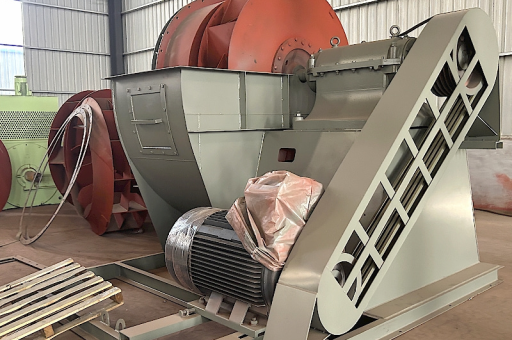
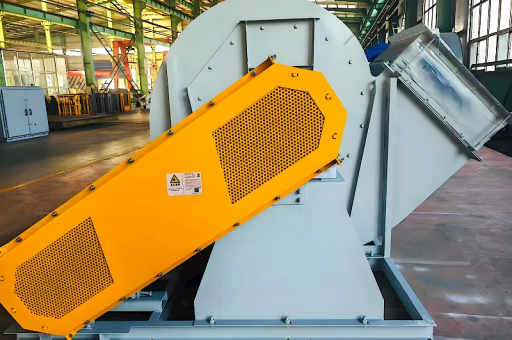
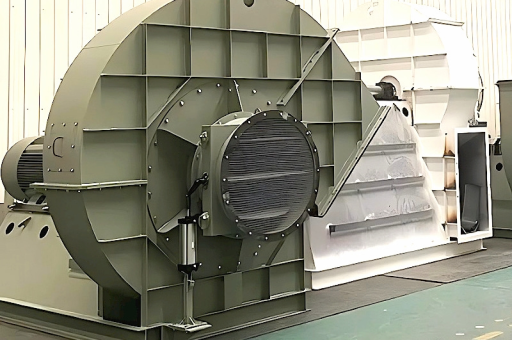
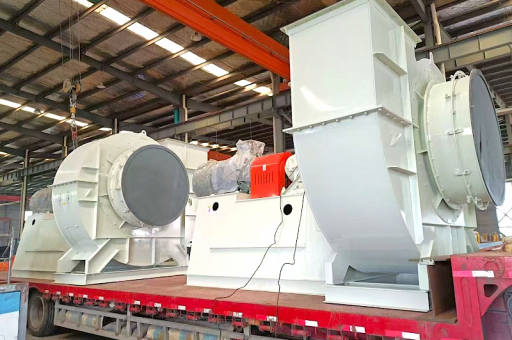
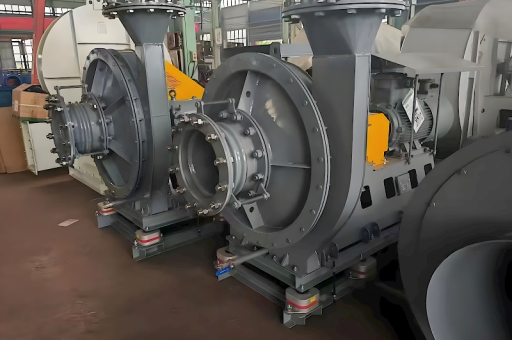
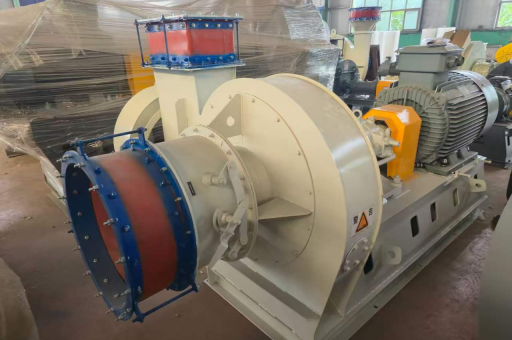
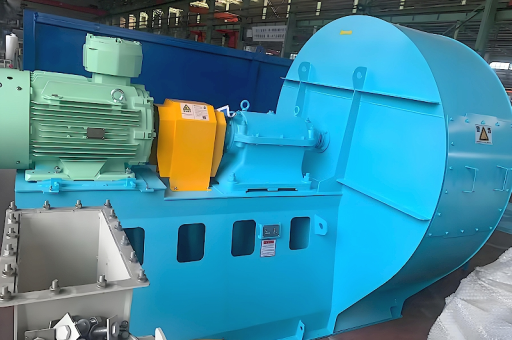
A 5kW variable frequency centrifugal fan is a complete air-moving unit consisting of three main components:
- Centrifugal impeller: Air is drawn into the center of a rotating wheel and expelled radially at high velocity, generating pressure and flow.
- 5kW motor: Typically a three-phase induction motor rated at 7.5 kilowatts (approximately 10 horsepower).
- Variable frequency drive (VFD): An electronic controller that adjusts the motor’s rotational speed by varying the input frequency and voltage.
The combination results in a fan that can operate from near zero to full speed (often 0–50 Hz or 0–60 Hz, depending on region). Unlike a standard fixed-speed fan, this design eliminates the need for mechanical dampers, inlet vanes, or bypass ducts for flow control. Instead, airflow is regulated electronically, which reduces wear, noise, and energy waste.
Key Technical Specifications and Performance Parameters
When evaluating a 7.5kW variable frequency centrifugal fan, the following parameters are critical:
- Power rating: 7.5 kW (10 HP) at full load.
- Maximum airflow: Typically ranges from 5,000 to 15,000 m³/h, depending on impeller diameter and design.
- Static pressure: Usually between 1,000 and 3,000 Pa, suitable for ducted systems.
- Speed range: Variable from ~10% to 100% of rated RPM (e.g., 2900 RPM at 50 Hz).
- Noise level: Lower at reduced speeds; often 65–80 dB(A) at full speed.
- Operating temperature: Standard models handle up to 80°C; high-temperature versions up to 200°C.
Note: Actual figures depend on the manufacturer. For validated data sheets, consult resources like fan or directly request test reports from suppliers.
How Does the Variable Frequency Drive (VFD) Enhance Operation?
The VFD is the heart of the system. It converts fixed-frequency AC mains power into a variable-frequency output. This allows the motor to run at speeds proportional to the required airflow. Key advantages include:
- Energy savings: According to the fan affinity laws, power consumption is proportional to the cube of speed. Reducing speed by 20% cuts power by nearly 50%.
- Soft start/stop: Eliminates high inrush currents and mechanical stress on belts, bearings, and impellers.
- Precise process control: Sensors (pressure, temperature, flow) can feed back to the VFD for closed-loop regulation.
- Reduced maintenance: Fewer moving parts under variable load means less wear.
A practical example: In a dust extraction system, a 7.5kW fan running at 80% speed can maintain adequate suction while saving approximately 30 kW·h per day compared to constant full-speed operation with a damper. Over a year, that translates to significant cost reduction.
Primary Applications in Industry and HVAC
The 7.5kW variable frequency centrifugal fan is versatile and used in many sectors:
- HVAC systems: Variable air volume (VAV) systems in commercial buildings, where demand-based ventilation reduces energy use.
- Industrial exhaust: Fume extraction, dust collection, and chemical fume hoods where airflow must adapt to process cycles.
- Agricultural ventilation: Poultry houses, greenhouses, and livestock barns requiring seasonal or diurnal airflow changes.
- Process air supply: Drying, cooling, or pneumatic conveying lines where precise pressure control is essential.
- Cleanrooms: Maintaining positive or negative pressure differentials with high accuracy.
Real-world case studies from fan show that replacing fixed-speed fans with VFD-controlled centrifugal units in a mid-sized factory reduced annual electricity bills by over 40%, with payback periods under 18 months.
Energy Savings and ROI: A Data-Driven Analysis
Consider a typical 24/7 operation:
- Fixed-speed fan with damper: yearly consumption ≈ 65,700 kW·h (at 7.5 kW, 100% load).
- VFD-controlled fan at average 70% speed: power ≈ 7.5 × (0.7)³ = 2.57 kW. Yearly consumption ≈ 22,500 kW·h.
Annual savings: 43,200 kW·h. At an average industrial electricity rate of $0.12 per kW·h, saving = $5,184 per year.
Initial investment: A 7.5kW VFD centrifugal fan unit typically costs $3,000–$5,500 depending on brand and accessories. Payback period: 7–12 months. After that, pure savings accumulate.
Additionally, reduced mechanical stress extends fan and motor life, and lower noise levels improve workplace conditions.
Installation Considerations and Best Practices
To ensure optimal performance and longevity:
- Proper sizing: Always select a fan based on the actual required duty point, not just motor power. Oversizing wastes energy even with a VFD.
- VFD programming: Set acceleration and deceleration ramps (usually 10–30 seconds) to avoid overcurrent trips.
- Cable length: Keep VFD-to-motor cables short (< 50 m) to minimize voltage drop and electromagnetic interference. Use shielded cables.
- Ambient conditions: The VFD should be installed in a clean, dry, ventilated enclosure. High ambient temperatures (>40°C) may require derating.
- Regular maintenance: Inspect bearings, impeller balance, and VFD cooling fans. Many modern VFDs offer predictive maintenance alerts.
Avoid common mistakes such as running a centrifugal fan in surge conditions (e.g., very low flow against high backpressure) for extended periods.
Frequently Asked Questions (FAQ)
Q1: Can I use a 7.5kW VFD centrifugal fan for hazardous environments?
A: Only if the fan and motor are ATEX/IECEx certified for the specific gas or dust group. Standard units are not explosion-proof. Check with the manufacturer and ensure the VFD is located in a safe area.
Q2: What is the difference between forward-curved and backward-curved impellers?
A: Forward-curved impellers provide higher airflow at lower pressure, suitable for HVAC. Backward-curved impellers deliver higher pressure efficiency and are better for industrial dust and fume systems.
Q3: Does the VFD introduce harmonics into the power supply?
A: Yes. Most modern VFDs include built-in DC chokes or EMC filters to reduce harmonics. For sensitive environments, add external line reactors.
Q4: How do I calculate the correct speed for a desired flow?
A: Use the affinity law: New Speed = (Desired Flow / Rated Flow) × Rated Speed. For example, to achieve 70% flow, set the VFD to 70% of base frequency (e.g., 35 Hz on a 50 Hz grid).
Q5: What is the lifespan of a VFD centrifugal fan?
A: With proper maintenance, the fan assembly can last 15–20 years. VFD electrolytic capacitors may need replacement after 7–10 years.
Conclusion: Why This Fan is a Smart Investment
The 5kW variable frequency centrifugal fan offers an excellent balance of power, flexibility, and efficiency. Whether you are upgrading an existing ventilation system or designing a new one, this technology provides measurable benefits: lower energy bills, reduced maintenance, precise control, and a quick return on investment. By leveraging VFD control, you can match air movement exactly to real-time demand—eliminating waste and enhancing process reliability.
For detailed product specifications, CAD drawings, and performance curves, reputable suppliers and engineering databases like fan provide extensive resources. Evaluate your system requirements carefully, consult with qualified engineers, and choose a fan that fits your exact duty cycle. The result will be a cost-effective, future-proof solution for industrial air management.
This article was synthesized based on cross-referenced technical data from engineering handbooks, manufacturer white papers, and industry publications. For additional reading, search for “centrifugal fan affinity laws” or “VFD fan energy savings case study” at fan and other technical portals.