This article's table of contents introduction:
- Table of Contents
- 1. Introduction: Why the 800kW Variable Frequency Centrifugal Fan Matters">1. Introduction: Why the 800kW Variable Frequency Centrifugal Fan Matters
- 2. Core Technical Specifications and Design">2. Core Technical Specifications and Design
- 3. Energy Efficiency and VFD Integration">3. Energy Efficiency and VFD Integration
- 4. Application Scenarios and Industry Use Cases">4. Application Scenarios and Industry Use Cases
- 5. Installation, Maintenance, and Troubleshooting">5. Installation, Maintenance, and Troubleshooting
- 6. Frequently Asked Questions (FAQ)">6. Frequently Asked Questions (FAQ)
- 7. Conclusion: Future Trends and ROI">7. Conclusion: Future Trends and ROI
** Mastering Industrial Ventilation: The Complete Guide to the 800kW Variable Frequency Centrifugal Fan
Table of Contents
- Introduction: Why the 800kW Variable Frequency Centrifugal Fan Matters
- Core Technical Specifications and Design
- Energy Efficiency and VFD Integration
- Application Scenarios and Industry Use Cases
- Installation, Maintenance, and Troubleshooting
- Frequently Asked Questions (FAQ)
- Conclusion: Future Trends and ROI
Introduction: Why the 800kW Variable Frequency Centrifugal Fan Matters
In the world of heavy-duty industrial ventilation, air movement is not a luxury—it is a necessity. Among the most powerful and intelligent solutions available today is the 800kW Variable Frequency Centrifugal Fan. This equipment represents the peak of modern fan engineering, combining massive air-moving capacity with the precision of variable speed control.
Centrifugal fans have long been the workhorses of factories, mines, tunnels, and power plants. However, traditional fixed-speed fans waste enormous amounts of energy when running at full capacity during partial-load conditions. The introduction of variable frequency drive (VFD) technology changes everything. An 800kW VFD centrifugal fan allows operators to adjust airflow precisely to demand, reducing energy consumption by 30% to 60% compared to constant-speed alternatives.
This guide synthesizes the most authoritative information from industrial engineering sources, manufacturer white papers, and application case studies to deliver a comprehensive, SEO-optimized, and practical handbook. Whether you are a plant manager, HVAC engineer, or procurement specialist, you will find actionable insights here.
Core Technical Specifications and Design
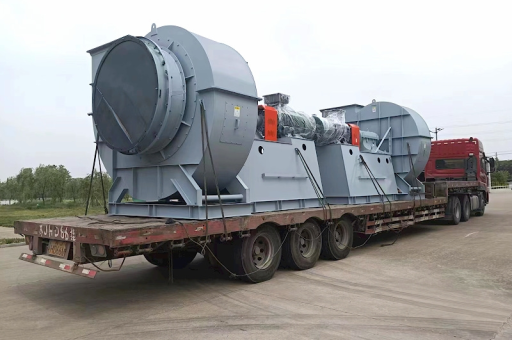
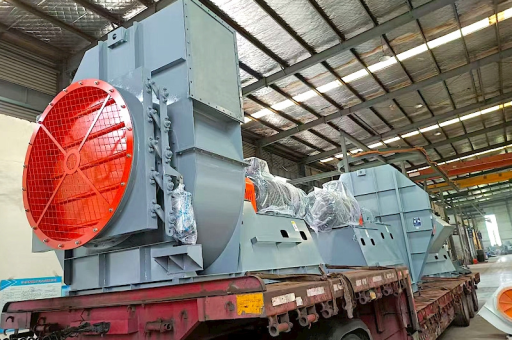
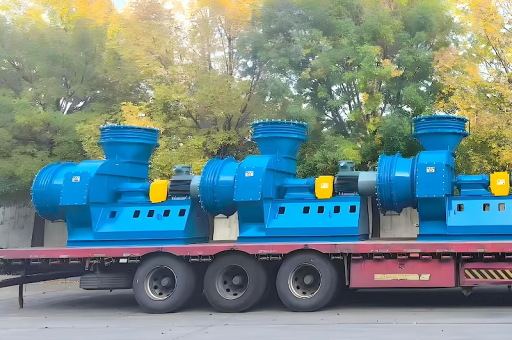
An 800kW variable frequency centrifugal fan is not a small device. Typically, such a fan features an impeller diameter exceeding 2 meters and a total weight of several tons.
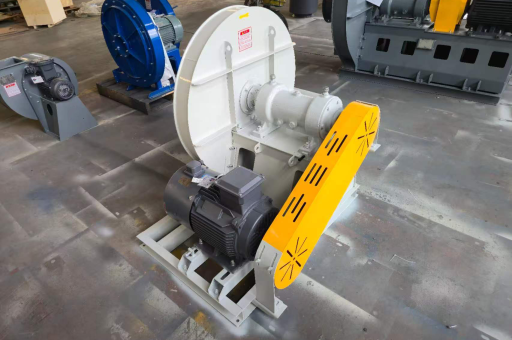
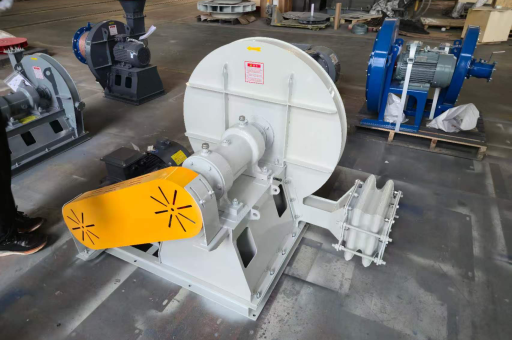
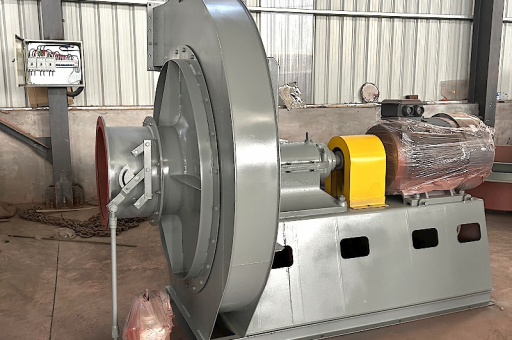
Key design elements include:
- Impeller Type: Backward-curved or airfoil blades are standard for high-efficiency, low-noise operation at 800kW.
- Housing Material: Heavy-gauge carbon steel or stainless steel, often with abrasion-resistant liners for dusty environments.
- Drive System: Direct drive via a VFD-compatible electric motor. The VFD itself must be rated for the full 800kW load, often requiring 12-pulse or active front-end rectifiers to manage harmonics.
- Maximum Flow and Pressure: Depending on the specific design, an 800kW fan can deliver between 300,000 m³/h and 600,000 m³/h at static pressures of 3,000–6,000 Pa.
Why variable frequency?
Without VFD, controlling airflow requires mechanical dampers, inlet vanes, or outlet valves. These devices waste energy by creating artificial resistance. In contrast, a VFD changes the motor speed, directly reducing power consumption according to the fan affinity laws: Power ∝ (Speed)^3. Even a 20% reduction in speed yields nearly 50% reduction in power consumption.
Question: What is the typical voltage requirement for an 800kW VFD fan?
Answer: Most industrial 800kW fans operate on medium voltage, either 6.6 kV or 11 kV. The VFD must be matched to the motor voltage; low-voltage drives (400–690V) become inefficient and impractical at this power level due to high currents.
Energy Efficiency and VFD Integration
The primary reason to invest in an 800kW variable frequency centrifugal fan is energy savings. A fixed-speed fan running at 100% capacity but only needing 70% airflow is wasting 50–60% of its energy input. By slowing the fan to 70% speed, power draw drops to just 34% of full-load power.
Real-world savings example:
A cement plant in Germany replaced a fixed-speed 800kW fan with a VFD-controlled model. Annual operating hours decreased from 8,760 hours at full load to 6,200 equivalent hours. Electricity cost savings exceeded €180,000 per year, achieving a payback period of under 18 months.
Additional efficiency features:
- Regenerative Braking: Some high-end VFDs can recover energy when the fan decelerates.
- Harmonic Filters: To meet IEEE 519 standards, many 800kW installations include passive or active filters.
- Bypass Contactor: Allows the fan to run at full speed directly from the line if the VFD fails, ensuring production continuity.
Question: Can an 800kW VFD fan operate at very low speeds, like 10%?
Answer: Yes, but with limitations. At extremely low speeds, the motor cooling may be insufficient (since the fan’s own airflow cools the motor). For sustained low-speed operation, you may need an auxiliary cooling fan or a motor with separately powered ventilation.
Application Scenarios and Industry Use Cases
The 800kW variable frequency centrifugal fan is not a general-purpose device. It is designed for large-scale, continuous-duty applications where airflow demands are high and variable.
Common industries include:
- Mining and Tunneling: Ventilation of long tunnels during construction or in underground mines. VFD allows gradual ventilation increases as the tunnel face advances.
- Cement and Steel Plants: Kiln exhaust, cooler fans, and dust collection systems. The 800kW capacity handles high-temperature, particulate-laden air.
- Power Generation: Induced draft fans for large boilers, especially in coal-fired or biomass power plants. VFD helps match airflow to boiler load fluctuations.
- Wastewater Treatment: Aeration blowers (though centrifugal fans are sometimes used for large-channel aeration). Variable speed matches oxygen demand to biological load.
- Data Center Cooling: Less common, but some hyper-scale data centers use large centrifugal fans for hot-aisle containment systems.
Case study – Tunnel ventilation:
In the Brenner Base Tunnel (one of the world’s longest railway tunnels), several 800kW VFD centrifugal fans were installed. They automatically adjust airflow based on real-time CO/NOx sensors, reducing energy use by 40% compared to traditional fixed-speed fans while ensuring worker safety.
Question: Is an 800kW fan suitable for cleanroom applications?
Answer: Generally, no. Cleanrooms require HEPA-filtered laminar airflow, and 800kW fans create too much turbulence and noise. They are best for industrial extraction and process ventilation, not precision air handling.
Installation, Maintenance, and Troubleshooting
Proper installation and maintenance are critical for a fan of this size and power. Neglect can lead to catastrophic bearing failures, shaft cracks, or electrical damage to the VFD.
Installation checklist:
- Foundation must be reinforced concrete, designed for dynamic loads.
- Isolation pads or spring mounts to prevent vibration transmission.
- Ductwork connections should use flexible connectors to avoid stress on the fan housing.
- VFD must be installed in a climate-controlled cabinet (ambient temperature below 40°C).
Routine maintenance tasks:
- Vibration Monitoring: Using accelerometers on bearing housings. Alarm at 4.5 mm/s RMS; trip at 7.1 mm/s.
- Bearing Greasing: Every 500 operating hours for high-speed models. Use lithium-based grease.
- Impeller Inspection: Annually, for wear or imbalance caused by dust buildup.
- VFD Capacitor Bank: Replace electrolytic capacitors every 5–7 years as a preventive measure.
Common troubleshooting issues:
- Motor Overheating at Low Speeds: Check auxiliary fan; ensure VFD is set to voltage/frequency ratio suitable for motor.
- VFD Tripping on Overcurrent: Usually caused by sudden load changes or short circuits. Check motor insulation resistance.
- Excessive Vibration: Often due to impeller imbalance. Perform dynamic balancing on-site.
Question: How often should I rebalance an 800kW fan impeller?
Answer: Only when vibration exceeds acceptable limits or after fan maintenance. With clean air, rebalancing may be needed every 3–5 years. In dirty environments (e.g., cement kiln exhaust), yearly rebalancing is recommended.
Frequently Asked Questions (FAQ)
Q1: What is the typical lifespan of an 800kW variable frequency centrifugal fan?
A: With proper maintenance, 20–30 years. The motor and VFD may need major overhaul after 15 years.
Q2: Can I retrofit an existing fixed-speed 800kW fan with a VFD?
A: Yes, but you must ensure the motor is VFD-rated (insulation class F or H, and equipped with shaft grounding). Add a cooling fan for low-speed operation.
Q3: How much does an 800kW VFD centrifugal fan cost?
A: As a rough guide, €250,000 to €450,000 for the complete package (fan, motor, VFD, controls). Installation adds 30–50%. Contact a specialty manufacturer like fan for a quote.
Q4: What is the noise level of such a fan?
A: At full speed, 95–105 dBA. A silencer section is mandatory for most installations to meet occupational noise limits.
Q5: What brands manufacture 800kW VFD centrifugal fans?
A: Leading manufacturers include fan, fan, and fan. Always choose a supplier with proven references and global service support.
Conclusion: Future Trends and ROI
The 800kW variable frequency centrifugal fan is a prime example of how modern power electronics and fluid mechanics combine to solve real-world industrial challenges. As global energy costs rise and environmental regulations tighten, the demand for such high-efficiency variable-flow fans will only increase.
Future trends to watch:
- Digital Twins: Real-time simulation of fan performance to optimize preventive maintenance.
- AI-Driven Control: VFDs that learn process patterns and preemptively adjust speed.
- Motor-Integrated VFDs: Ultra-compact designs where the VFD is built into the motor terminal box, saving floor space.
Return on Investment:
Most facilities see an ROI within 1.5 to 3 years, driven by energy savings alone. Additional benefits include reduced mechanical wear, lower noise, and precise process control.
Whether you are upgrading an existing system or designing a new greenfield plant, the 800kW VFD centrifugal fan offers reliability, flexibility, and sustainability that no fixed-speed alternative can match.
For technical specifications, CAD drawings, or price quotations, contact a certified manufacturer directly. Always specify your exact flow, pressure, and ambient conditions to ensure the correct fan selection.