This article's table of contents introduction:
- Introduction: What Is a 30kW Variable Frequency Centrifugal Fan?
- Core Technical Specifications and Performance Characteristics
- How Variable Frequency Drive (VFD) Technology Optimizes Fan Operation
- Key Application Scenarios: Where This Fan Excels
- Energy Savings and ROI: Real-World Data Analysis
- Installation and Maintenance Best Practices
- Frequently Asked Questions (FAQs)
- Conclusion: Why This Fan Is a Smart Investment for Industrial Ventilation
** The Ultimate Guide to the 30kW Variable Frequency Centrifugal Fan: Efficiency, Applications, and Technical Insights
Table of Contents (导读)
- Introduction: What Is a 30kW Variable Frequency Centrifugal Fan?
- Core Technical Specifications and Performance Characteristics
- How Variable Frequency Drive (VFD) Technology Optimizes Fan Operation
- Key Application Scenarios: Where This Fan Excels
- Energy Savings and ROI: Real-World Data Analysis
- Installation and Maintenance Best Practices
- Frequently Asked Questions (FAQs)
- Conclusion: Why This Fan Is a Smart Investment for Industrial Ventilation
Introduction: What Is a 30kW Variable Frequency Centrifugal Fan?
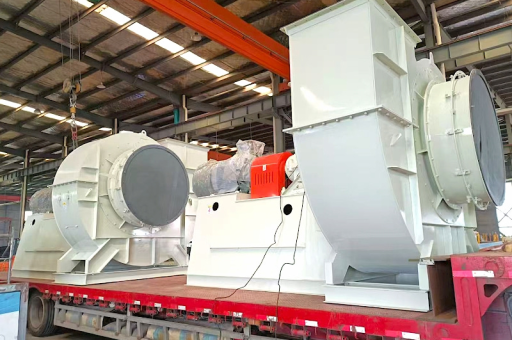
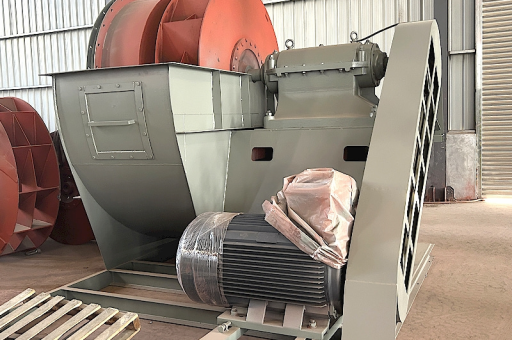
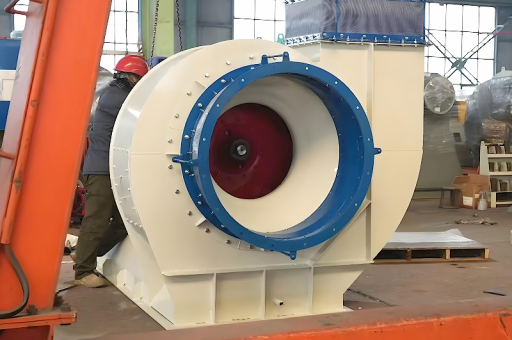
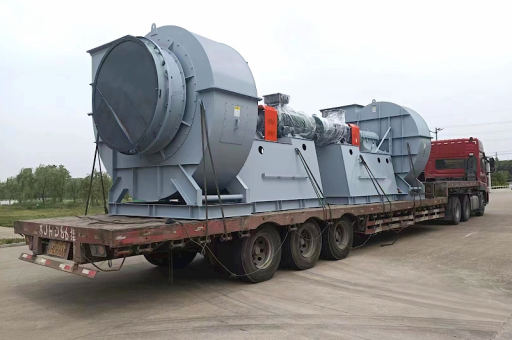
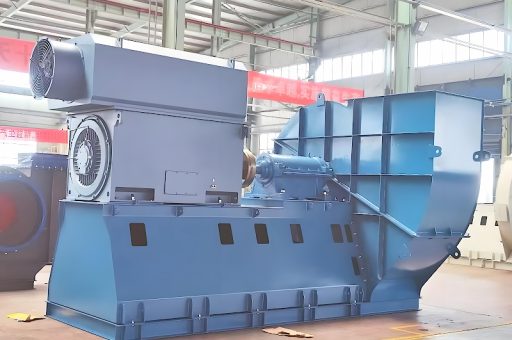
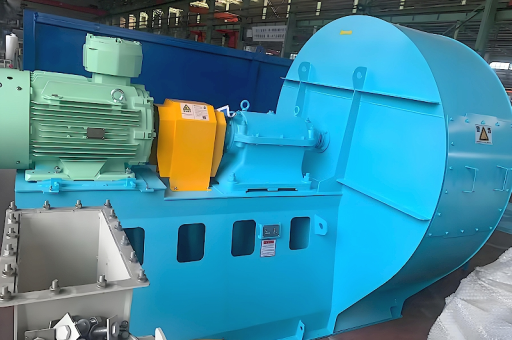
A 30kW variable frequency centrifugal fan is a high-capacity, electrically driven air-moving device that combines a centrifugal impeller with a variable frequency drive (VFD) to deliver precise, adjustable airflow and pressure. The "30kW" designation refers to the motor power rating—30 kilowatts—which typically translates to an airflow range of 30,000 to 60,000 m³/h and a static pressure of 2,000 to 5,000 Pa, depending on the fan design and system resistance.
Unlike traditional fixed-speed fans that run at full speed continuously, this unit can vary its rotational speed from near zero to maximum, matching output exactly to demand. This feature alone can reduce energy consumption by 30% to 60% compared to conventional throttling methods (e.g., damper or inlet vane control), making it a cornerstone of modern energy-efficient ventilation systems. The fan is commonly used in industrial factories, commercial HVAC systems, tunnel ventilation, dust collection, and drying processes where both high volume and controlled pressure are required.
Core Technical Specifications and Performance Characteristics
When evaluating a 30kW variable frequency centrifugal fan, engineers and procurement specialists should examine the following parameters:
- Motor Power: 30 kW (typically 3-phase, 380–480V AC, 50/60 Hz compatible)
- Impeller Type: Backward-curved, forward-curved, or radial blades. Backward-curved impellers offer high efficiency (up to 85%) and non-overloading power characteristics, ideal for variable speed applications.
- Max Airflow: 35,000–60,000 m³/h (depending on impeller diameter and RPM)
- Max Static Pressure: 2,000–5,000 Pa (can be higher for specialized high-pressure models)
- Speed Range: 300 – 2,900 RPM (controlled by VFD)
- Noise Level: 75–90 dB(A) at full speed, reduced significantly at lower speeds
- Operating Temperature: -20°C to +60°C (standard), up to +200°C with special materials
Key Performance Curve: The fan's performance curve is relatively flat near the best efficiency point (BEP), which ensures stable operation across a wide speed range. When combined with a VFD, the system avoids surge and stall conditions that plague throttle-controlled systems at low flow.
How Variable Frequency Drive (VFD) Technology Optimizes Fan Operation
The core advantage of the 30kW variable frequency centrifugal fan lies in its integrated VFD (also called an inverter or variable speed drive). The VFD converts fixed-frequency AC power into variable-frequency AC power, which controls the motor speed. According to the Affinity Laws for centrifugal fans:
- Flow ∝ Speed (RPM)
- Pressure ∝ Speed²
- Power ∝ Speed³
This means that reducing fan speed by 20% reduces power consumption by about 50% (0.8³ = 0.512). In practice, this allows the fan to operate at partial load—often 60% to 80% of full speed—during normal conditions, with massive energy savings.
The VFD also offers:
- Soft start/stop: Reduces mechanical stress on belts, bearings, and motor, extending equipment life.
- Closed-loop control: Can integrate with pressure sensors, temperature sensors, or flow meters to maintain a precise setpoint automatically.
- Harmonic filtering: Modern VFDs include built-in filters to reduce electrical harmonics, meeting IEEE 519 standards.
- Remote monitoring: Many models support Ethernet, Modbus, or BACnet connectivity for building management systems (BMS).
Key Application Scenarios: Where This Fan Excels
The 30kW power class places this fan in the medium-to-large industrial category. Typical applications include:
- Industrial Factory Ventilation: Removing heat, fumes, dust, and volatile organic compounds (VOCs) from large manufacturing floors. The VFD allows nighttime or low-occupancy periods to run at reduced speed, saving thousands of dollars annually.
- Tunnel and Underground Ventilation: Subway, rail, and road tunnels require massive airflow to maintain air quality and exhaust vehicle emissions. Variable speed compensates for changing traffic density and external wind conditions.
- Dust Collection Systems: In woodworking, cement, and metal processing plants, centrifugal fans pull particulate-laden air through baghouses or cyclones. The VFD prevents bag overloading and reduces filter cleaning frequency.
- Data Center Cooling: High-density server rooms use 30kW fans to push air through cooling coils. Speed modulation ensures the exact temperature setpoint is maintained without overcooling.
- Drying and Dehydration: Food processing, paper mills, and textile drying require consistent airflow regardless of changes in product moisture content. Variable speed keeps the process stable.
Energy Savings and ROI: Real-World Data Analysis
To understand the financial impact, consider a real-world scenario: A factory runs a 30kW fan for 8,000 hours per year (24/7 operation). With traditional inlet vane control, the fan consumes roughly 28 kW on average (due to throttling losses). With a VFD, the average speed demand is 70% of max, consuming only 10.3 kW (30 kW × 0.7³).
- Traditional annual energy: 28 kW × 8,000 h = 224,000 kWh
- VFD annual energy: 10.3 kW × 8,000 h = 82,400 kWh
- Annual savings: 141,600 kWh
At an industrial electricity rate of $0.10/kWh, that's $14,160 per year saved. Assuming the premium cost of a VFD-equipped fan is about $3,000 more than a fixed-speed unit, the payback period is roughly 2.5 months. Over a 10-year lifespan, total savings exceed $140,000.
Additionally, reduced motor and belt wear, lower thermal stress on windings, and fewer mechanical failures often yield another 15–20% in maintenance cost reductions.
Installation and Maintenance Best Practices
To maximize the performance and longevity of a 30kW variable frequency centrifugal fan, follow these guidelines:
- Correct Foundation: The fan base should be a reinforced concrete slab or a heavy steel frame to absorb vibration. Use vibration isolation pads or spring mounts to prevent structural noise transmission.
- Electrical Installation: Ensure the VFD is properly sized (30 kW or slightly oversized). Use shielded VFD-rated cables between the drive and motor to minimize electromagnetic interference (EMI). Follow the manufacturer's grounding instructions.
- Ductwork Design: Avoid sharp bends, sudden contractions, or expansions near the fan inlet/outlet. Maintain at least 3–5 duct diameters of straight run before and after the fan to maintain uniform airflow and avoid turbulence that causes efficiency loss.
- Bearings and Lubrication: Check bearing grease intervals every 2,000 hours or as specified. Use high-temperature lithium-complex grease for extended bearing life.
- Impeller Inspection: Annually inspect the impeller for dust buildup, corrosion, or imbalance. Even a small unbalanced condition can reduce bearing life drastically.
- VFD Parameter Tuning: Set ramp-up and ramp-down times appropriately (e.g., 10–20 seconds). Enable sleep/auto-start functions to stop the fan when zero demand is detected.
Frequently Asked Questions (FAQs)
Q1: Can a 30kW variable frequency centrifugal fan run continuously at 50 Hz (or 60 Hz)?
A: Yes, it can run at full speed (50 Hz or 60 Hz) continuously, as the motor and VFD are rated for that duty. However, most applications benefit from running at 70–85% speed to save energy. Running at full speed for extended periods will increase wear and electrical consumption.
Q2: What is the difference between a backward-curved and forward-curved impeller in a 30kW fan?
A: A backward-curved impeller is more efficient (up to 85%) and has a non-overloading power curve (power consumption decreases as pressure decreases). A forward-curved impeller is smaller and slower at the same flow but has lower efficiency (50–70%) and can overload the motor at low pressure. For VFD applications, backward-curved is almost always preferred.
Q3: Do I need a separate VFD controller, or is it integrated?
A: Most modern 30kW variable frequency centrifugal fans come with an integrated VFD mounted directly on the fan frame or a wall-mounted panel. Some models offer remote VFD boxes. Always verify with the supplier whether the VFD is included in the price.
Q4: What is the maximum cable length between the VFD and motor?
A: For a 30kW drive, the maximum recommended cable length is 50–100 meters for unshielded cable and up to 150 meters for shielded cable. Beyond these lengths, consider adding output reactors to prevent motor insulation damage from voltage spikes.
Q5: How loud is a 30kW variable frequency centrifugal fan at 50% speed?
A: Sound pressure roughly follows the fifth power of speed (noise ∝ RPM⁵). At 50% speed, the noise level is about 15–20 dB(A) lower than at full speed. For example, if the fan is 85 dB(A) at 100% speed, it will be roughly 65–70 dB(A) at 50% speed, which is more acceptable in most work environments.
Q6: Can the fan be used in explosive environments (ATEX)?
A: Yes, but you must specify an ATEX- or IECEx-certified version. This requires special impeller material (e.g., aluminum or stainless steel), spark-proof construction, grounding rings, and a certified VFD enclosure. The cost is typically 30–50% higher than standard models.
Q7: What maintenance does the VFD require?
A: VFD maintenance is minimal but important: keep the cooling fan and heatsink clean from dust, check capacitors for bulging or leakage every 3–5 years, and periodically inspect terminal connections for tightness. Most VFDs have a self-diagnosis feature that alerts you to component aging.
Q8: Can I use a 30kW variable frequency centrifugal fan for suction applications?
A: Yes, centrifugal fans can be configured for either blowing or suction. For suction (i.e., pulling air into the fan inlet), ensure the ductwork is sealed correctly to prevent leakage. The fan's performance curve remains the same, but inlet filters may be necessary to protect the impeller from debris.
Conclusion: Why This Fan Is a Smart Investment for Industrial Ventilation
The 30kW variable frequency centrifugal fan represents a pivotal upgrade over traditional fixed-speed fans. By leveraging the Affinity Laws and modern VFD technology, it delivers precise airflow control, substantial energy savings (30–60%), lower noise levels, and extended equipment life. Whether your requirement is factory ventilation, tunnel exhaust, dust collection, or data center cooling, this fan class offers a fast return on investment—often under six months—while enabling compliance with stricter energy regulations (e.g., EU Ecodesign, US DOE efficiency standards).
If you are evaluating a new ventilation system or retrofitting an existing one, prioritize a 30kW variable frequency centrifugal fan with a backward-curved impeller, IP55 motor protection, and fully integrated VFD control. For optimal performance, work with an experienced system integrator to select the correct impeller diameter, static pressure rating, and ductwork configuration. With proper sizing and installation, this fan will provide many years of reliable, cost-effective operation.
For further technical assistance or to request a performance curve for your specific application, please contact your local fan manufacturer or visit an industrial ventilation specialist website for detailed product pages and engineering manuals.