This article's table of contents introduction:
- Core System Components
- How a VFD Controls the Fan (The Magic)
- Key Advantages of a 55kW VFD Centrifugal Fan
- Critical Selection & Application Considerations
- Typical Applications
- Operational & Maintenance Tips
- Safety Warnings
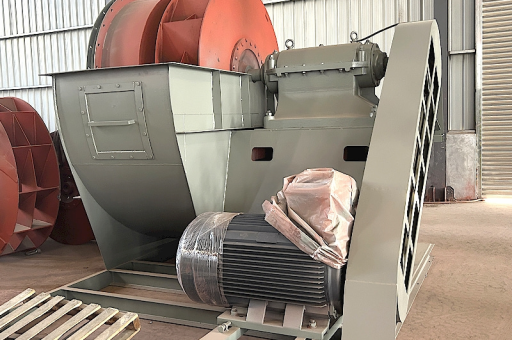
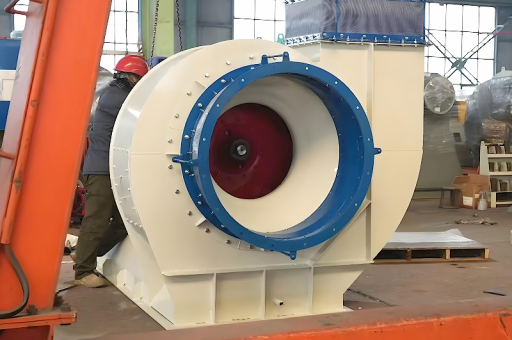
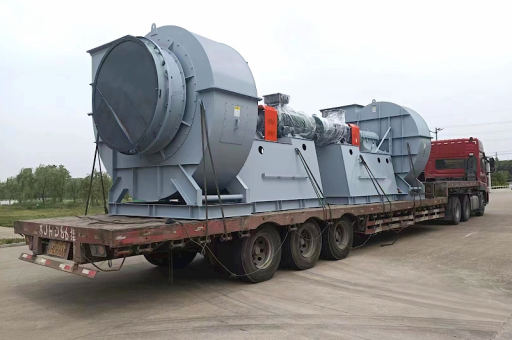
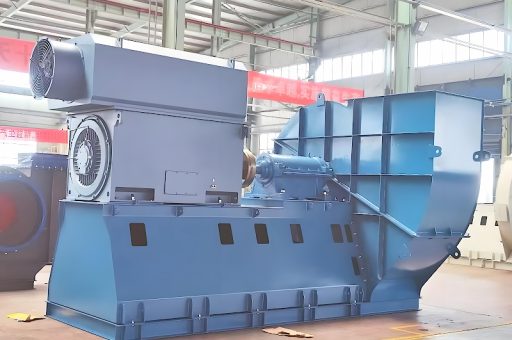
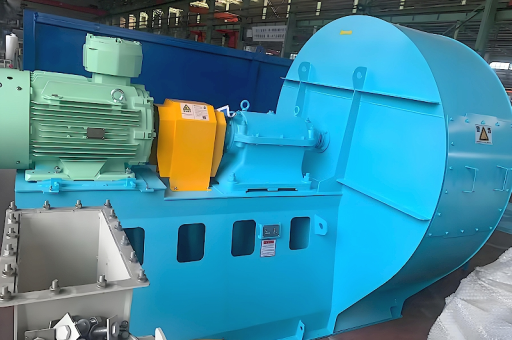
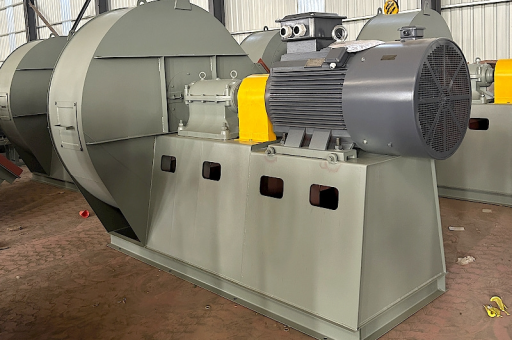
This is a very common and important piece of industrial equipment. A 55kW variable frequency centrifugal fan is a high-powered air movement system used in demanding applications like HVAC, industrial ventilation, pneumatic conveying, and process air supply.
Here is a comprehensive breakdown of what this system is, its key components, how it works, and critical considerations for selection and operation.
Core System Components
-
Centrifugal Fan (The Air Mover):
- Rotor/Impeller: The rotating part that flings air outward using centrifugal force. For a 55kW fan, this is typically a heavy-duty, backward-curved, or airfoil blade design for high efficiency.
- Housing/Scroll: The spiral casing that collects the high-velocity air from the impeller and converts its velocity into pressure.
- Inlet/Outlet: Connections to the ductwork. Inlet often has a cone or damper.
-
55kW Motor (The Prime Mover):
- Type: Usually a 3-phase, squirrel-cage induction motor (IE3 or IE4 efficiency class is standard for new installations).
- Speed: Typically a 2-pole (approx. 2900 RPM) or 4-pole (approx. 1450 RPM) motor. 4-pole is more common for larger fans due to lower noise and vibration.
- Cooling: Forced air cooling (TEFC – Totally Enclosed Fan Cooled) is standard.
-
Variable Frequency Drive (VFD) (The Speed Controller):
- Purpose: Receives AC mains power (e.g., 380V, 400V, 480V 3-phase) and converts it to a variable frequency and voltage output to control the motor's speed.
- Features: PLC integration, PID control, motor overload protection, ramp-up/down times, and multiple control modes (local panel, remote 4-20mA, Modbus/Profibus).
-
Drive Transmission (Coupling):
- Direct Drive: Motor shaft is directly coupled to the fan impeller shaft (using a flexible coupling). This is the most efficient and low-maintenance setup.
- Belt Drive: A pulley on the motor drives a belt which turns a larger pulley on the fan. This allows for speed adjustment (by changing pulleys) and softer starts. Less common with VFDs but still used for very high speeds or special layouts.
How a VFD Controls the Fan (The Magic)
The key relationship for a centrifugal fan is the Affinity Laws:
- Flow (Q) ∝ Speed (N) : Doubling the speed doubles the airflow.
- Pressure (P) ∝ Speed² : Doubling the speed quadruples the pressure.
- Power (kW) ∝ Speed³ : Doubling the speed octuples the power requirement.
Why VFD is so effective: Without a VFD, you control flow using dampers or inlet vanes (which waste energy by creating resistance). With a VFD, you simply reduce the motor speed.
- Example: Running the fan at 80% speed provides 80% flow, but only requires about 51% of the power (0.8³ = 0.512). On a 55kW fan running continuously, this saves a massive amount of electricity.
Key Advantages of a 55kW VFD Centrifugal Fan
- Massive Energy Savings: The most significant benefit.
- Precise Process Control: Maintains exact pressure or airflow setpoints (e.g., in a boiler or cleanroom).
- Soft Start/Stop: Eliminates high inrush current, reducing stress on the motor, fan, and electrical grid.
- Reduced Mechanical Stress: No sudden jerks on belts, bearings, or the impeller shaft.
- Low Noise at Partial Load: The fan is quieter when running slower.
- Extended Equipment Life: Bearings, belts (if any), and motor insulation last longer.
Critical Selection & Application Considerations
-
VFD Sizing: The VFD must be sized for the motor's full-load current (FLA) , not just the power. A 55kW motor at 400V might draw ~100A. The VFD needs to handle this current, plus allow for some overhead. A good practice is to oversize the VFD by one frame size for reliability.
-
Harmonics: VFDs can inject harmonic distortion back into the power supply. For a 55kW drive, you likely need an input line reactor or a DC choke to reduce harmonics. In some buildings, a 6-pulse or 12-pulse drive with a harmonic filter is mandatory.
-
Cable Length & Type:
- VFDs produce high-frequency switching noise. Use shielded, low-inductance motor cables (e.g., VFD-specific cable with symmetrical ground conductors).
- Long cable runs (e.g., >100 meters) can cause voltage reflection issues. The VFD and the cable must be rated for this. You may need a dv/dt filter or a sine-wave filter at the VFD output.
-
Motor Compatibility:
- "Inverter Duty" Motor: Standard motors (with standard insulation) can be damaged by the high-voltage spikes (dV/dt) from a VFD. Ensure the 55kW motor is rated as "Inverter Duty" (with reinforced insulation and often a separate cooling fan or a constant-speed cooling motor). This is critical for longevity.
- Bearings: High-frequency currents can circulate through motor bearings, causing "fluting" (damage). Use shaft grounding rings or insulated bearings on the motor.
-
Fan Type and Application:
- Backward-Curved Fans: Ideal for VFD control. They have a non-overloading power curve.
- Axial Fans: Usually fine, but careful with the minimum speed (stall region).
- Applications: Dust collection (consider explosion-proof motors/fans), fume extraction (corrosive materials), clean rooms (precise pressure), or large Air Handling Units (AHUs).
-
Braking: Most centrifugal fans coast to a stop naturally. However, if your process requires a very fast stop (e.g., emergency stop), you will need a dynamic braking resistor or regenerative drive. A 55kW fan has a lot of inertia (rotational mass), so a braking resistor is a large, expensive unit. Coasting is usually preferred.
Typical Applications
- Large HVAC Systems: Office buildings, hospitals, shopping malls.
- Industrial Ventilation: Warehouses, factories, parking garages.
- Process Air: Boiler forced draft (FD) or induced draft (ID) fans.
- Dust Collection: Woodworking, cement, mining.
- Pneumatic Conveying: Moving materials like grain, pellets, or powders.
Operational & Maintenance Tips
- VFD Programming: Set the minimum frequency (e.g., 10-15 Hz) to avoid the fan operating in a resonant or stall zone, which can cause vibration and overheating.
- PID Control: If maintaining pressure or flow, set the PID parameters carefully to avoid hunting (oscillation).
- Environmental: Keep the VFD in a clean, cool (ideally <40°C / 104°F), dry environment. Dust is a killer of VFDs.
- Periodic Checks:
- Motor bearings: Listen for noise. Grease per schedule.
- Fan bearings: Lubricate per manufacturer spec.
- Belt tension (if applicable): Check for wear and tension.
- Fan impeller: Clean to prevent imbalance.
- VFD: Check for error logs, cooling fan operation, and loose connections.
Safety Warnings
- Lockout/Tagout (LOTO): The impeller of a 55kW fan can coast for minutes after power-off. Never open a maintenance door until it has fully stopped and secured.
- High Voltage: The DC bus inside the VFD can hold a lethal charge (over 500V DC for a 400V drive) for several minutes after disconnect. Wait for the "DC Bus" LED to go out.
- Runaway: If a VFD loses control (e.g., due to a fault), the fan can overspeed. Install an overspeed protection switch (e.g., a centrifugal switch or a dedicated speed monitor) on the fan shaft.
- Explosion Protection: In flammable atmospheres (e.g., paint booths, grain elevators), the entire fan, motor, and VFD must be rated for the appropriate Zone (Zone 1, Zone 2, etc.).
In summary, a 55kW VFD centrifugal fan is a sophisticated, high-efficiency system that demands careful engineering, proper component selection (especially the motor), and rigorous safety procedures. Its advantages in energy savings and process control are immense, but it is not a simple "plug-and-play" device.