This article's table of contents introduction:
- What is it?
- Typical Applications
- Key Technical Specifications (Typical for this size)
- Advantages of Using a VFD on this Fan
- Critical Considerations for Installation & Selection
- Typical OEMs / Manufacturers for this size equipment
- Summary
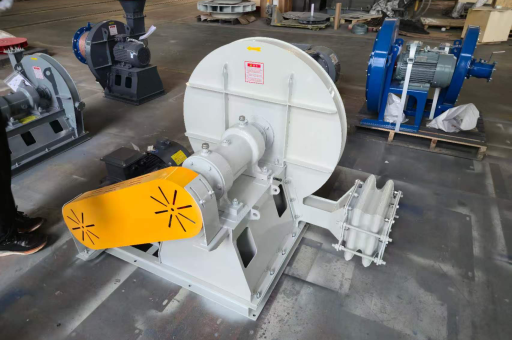
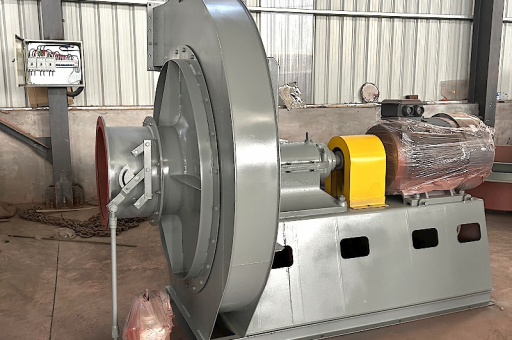
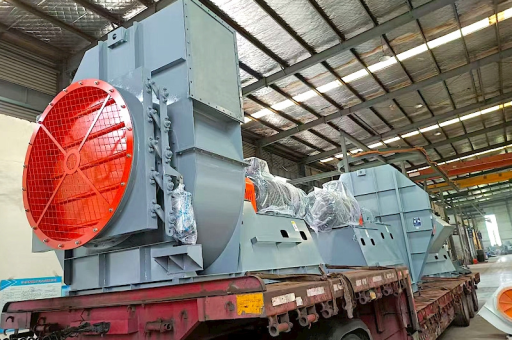
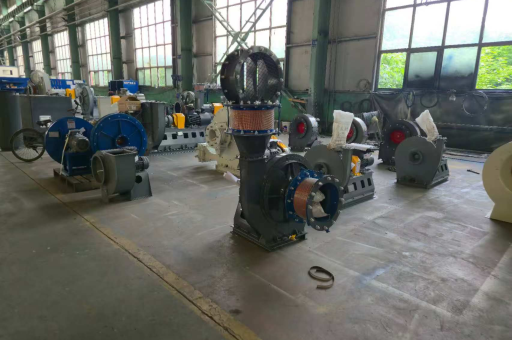
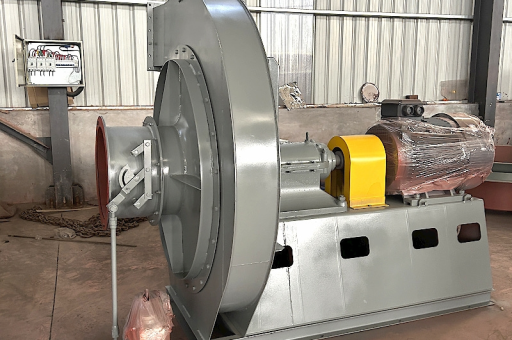
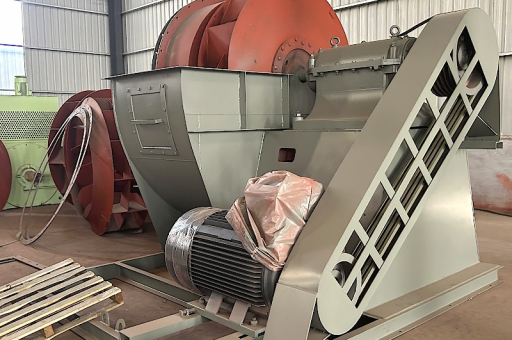
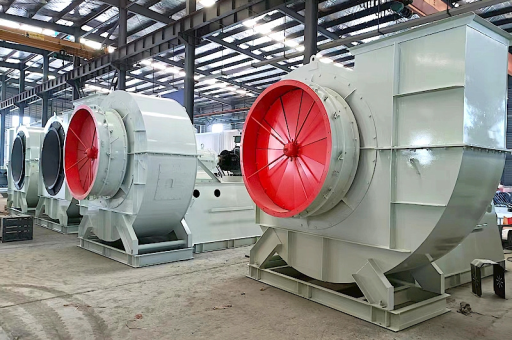
Based on the parameter you provided (610kW Variable Frequency Centrifugal Fan), this indicates a large-scale, high-powered industrial fan system. Here is a detailed breakdown of what this typically means, its applications, specifications, and key considerations.
What is it?
- Centrifugal Fan: Uses a rotating impeller to increase the velocity and pressure of air/gas. Air enters axially and exits radially.
- Variable Frequency Drive (VFD): An electronic controller that varies the frequency (and thus speed) of the motor. This allows precise control of airflow and pressure, rather than just turning the fan on/off or using mechanical dampers.
- 610kW Motor: This is a very large motor (approx. 818 HP). It requires high-voltage power (typically 3-phase, 380V-690V, 3kV, 6kV, or 10kV) and significant electrical infrastructure.
Typical Applications
A fan of this size is not for small buildings. It is used for heavy industrial processes:
- Power Plants (Coal, Biomass, Gas):
- Induced Draft (ID) Fans: Pulls combustion gases through the boiler and out to the stack.
- Forced Draft (FD) Fans: Pushes air into the furnace for combustion.
- Primary Air (PA) Fans: Delivers pulverized coal to the burners.
- Mining & Tunneling:
Main ventilation fans for underground mines or long road/rail tunnels.
- Cement Plants:
Kiln ID fans, raw mill fans, cooler fans.
- Steel Mills:
Furnace exhaust, dust collection systems.
- Large HVAC Systems:
Very large commercial buildings, data centers, or airport terminals.
- Wastewater Treatment:
Large aeration blowers for biological treatment plants.
- Industrial Dust Collection / Fume Extraction:
Large-scale baghouses or scrubbers.
Key Technical Specifications (Typical for this size)
| Parameter | Typical Value / Range | Notes |
|---|---|---|
| Power | 610 kW (818 HP) | Motor shaft power output |
| Voltage | 3 kV, 6.6 kV, 11 kV (or 480V-690V for smaller motors) | High voltage is common to reduce current and cable size. |
| Motor Type | Squirrel Cage Induction Motor (SCIM) or Synchronous | SCIM is most common with VFDs. |
| Speed Range | 0 - 1500 RPM (or up to 3000 RPM if low inertia) | VFD allows variable speed. 1500 RPM (4-pole) is standard for high torque. |
| Airflow (CFM/m³/hr) | Highly variable depending on pressure. | Can be ~200,000 CFM (340,000 m³/hr) at low pressure OR ~80,000 CFM (136,000 m³/hr) at high pressure. |
| Static Pressure | 10 - 50 in.wg (2.5 - 12.5 kPa) | Depends if it's an FD fan (low pressure) or ID fan (high pressure, handling dirty gas). |
| Impeller Design | Backward curved (high efficiency) or Radial (for heavy dust) | Backward curved is most efficient. |
| Drive Type | Direct Drive (coupling) or Belt Drive (rare at this kW) | Direct drive with a VFD is most common for efficiency. |
| VFD | PWM (Pulse Width Modulation) IGBT type | High performance, low harmonics (often with 12-pulse, 18-pulse, or Active Front End). |
Advantages of Using a VFD on this Fan
- Massive Energy Savings: Fans obey the Affinity Laws:
- Flow ∝ Speed
- Pressure ∝ Speed²
- Power ∝ Speed³
- Example: Running at 80% speed = 51% power consumption (0.8³). This can save hundreds of thousands of dollars per year compared to inlet vanes or dampers.
- Soft Start: Reduces mechanical stress on bearings, belts, and impeller. Avoids huge inrush currents (which can cause voltage dips on the grid).
- Precise Process Control: Maintains exact pressure or flow setpoints (e.g., furnace draft, tunnel ventilation).
- Reduced Maintenance: Less wear and tear from thermal cycling, vibration, and high starting torques.
Critical Considerations for Installation & Selection
- VFD Harmonics: A 610kW VFD will draw significant non-sinusoidal current.
- You will likely need harmonic filters (e.g., 12-pulse, 18-pulse, or Active Front End VFD) to comply with IEEE 519 or local grid codes.
- Motor Bearings: Large motors can suffer from bearing currents induced by the VFD's high-frequency switching. You typically need:
- Shielded VFD-rated cables.
- Shaft grounding brushes.
- Insulated bearings on the non-drive end.
- Cooling:
- The motor itself will have a cooling fan (TEFC or TEAAC).
- The VFD will be liquid-cooled or require a massive, air-conditioned electrical room.
- Ductwork & Foundation:
- This fan is heavy (several tons). It requires a massive concrete inertia base.
- Ductwork must be properly designed to handle high pressure and avoid resonance.
- Vibration isolation: Critical. Use spring isolators and flexible connections.
- Long Cables:
If the VFD is far from the motor (e.g., 100m+), you need output filters (dV/dt filters or sine wave filters) to prevent motor insulation damage from reflected waves.
- Control System:
- Typically integrated with a DCS (Distributed Control System) or PLC.
- Uses PID control to maintain a setpoint (pressure, flow, temperature).
- Requires monitoring of bearing temperatures, winding temperatures, and vibration.
Typical OEMs / Manufacturers for this size equipment
- Fans: Howden, TLT-Babcock, Clarage, Greenheck (industrial), New York Blower, Robinson Fans, Zitron, AIRAP.
- Motors: WEG, Siemens, ABB, TECO, Nidec, GE.
- VFDs: ABB (ACS880), Siemens (Sinamics), Danfoss (VLT), Rockwell (PowerFlex 7000), Yaskawa.
Summary
A 610kW VFD Centrifugal Fan is a major capital asset (likely costing $150,000 - $400,000+ for the complete fan, motor, and VFD package). It demands careful engineering for electrical quality (harmonics, cable runs, bearing protection), mechanical integrity (foundation, vibration), and thermal management.
Next Steps if you are selecting one:
- Provide your required flow (CFM/m³/hr) and static pressure (in.wg/Pa).
- Identify the gas/air being moved (temperature, dust load, corrosive nature).
- Specify your site voltage and grid harmonic requirements.
- Determine your preferred cooling method (for VFD) and motor insulation class (F or H).
If you have the specifications for the system this fan will serve, I can help determine if 610kW is the right size or help you write a RFQ (Request for Quotation).