This article's table of contents introduction:
- What is a 200kW Variable Frequency Centrifugal Fan?
- Core Components of the System
- How it Works (The VFD Advantage)
- Key Benefits of a VFD-Controlled 200kW Fan
- Typical Applications for a 200kW Centrifugal Fan
- Important Considerations for a 200kW System
- Summary Table: VFD vs. Traditional Damper Control
Here is a comprehensive breakdown of a 200kW Variable Frequency Centrifugal Fan system, covering its components, operation, benefits, and typical applications.
What is a 200kW Variable Frequency Centrifugal Fan?
This is a large-scale industrial air movement system that combines two key technologies:
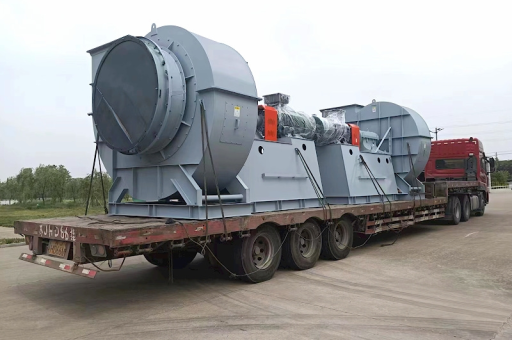
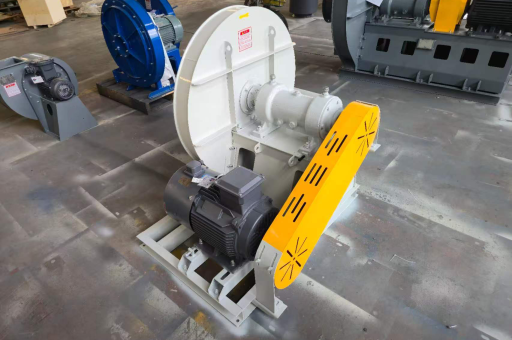
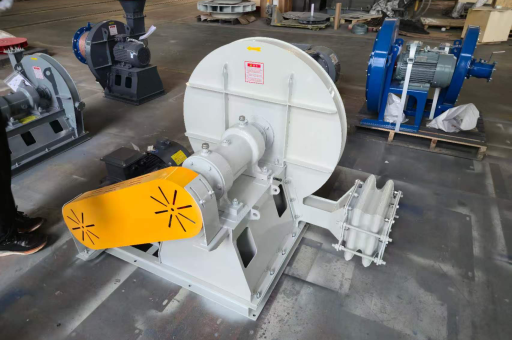
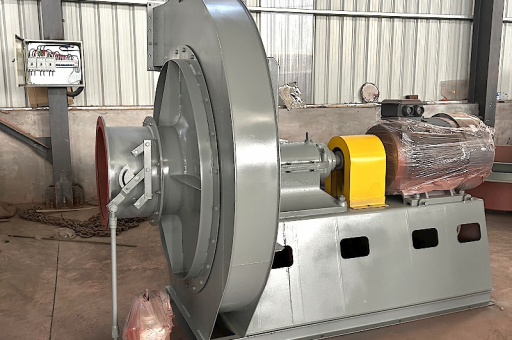
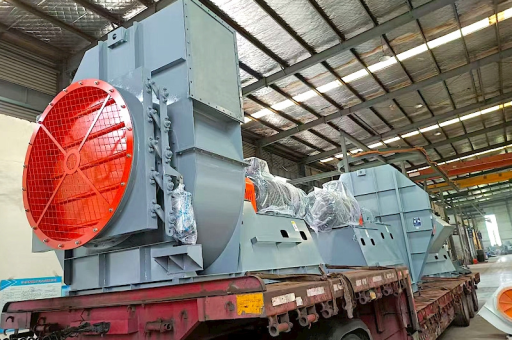
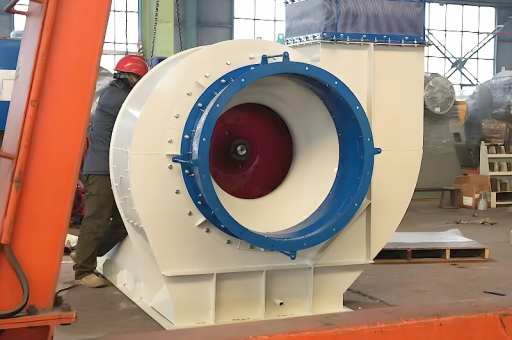
- Centrifugal Fan: A fan that uses a rotating impeller to increase the velocity of air, which is then converted into pressure. It's ideal for high-pressure, high-volume applications (e.g., pushing air through ducts, filters, or long pipe runs).
- 200kW (268 HP) Motor: A powerful electric motor (typically a 3-phase induction motor) that drives the fan.
- Variable Frequency Drive (VFD): An electronic controller that adjusts the motor's speed (RPM) by varying the frequency and voltage of the power supplied to it. This gives you precise control over the fan's airflow and pressure.
Core Components of the System
| Component | Description | Key Function |
|---|---|---|
| Centrifugal Fan | The air-moving device. Can be backward-curved, forward-curved, or radial-blade. | Converts mechanical rotation into air pressure and flow. |
| 200kW Motor | High-power electric motor (often TEFC - Totally Enclosed Fan Cooled). | Provides the rotational force (torque) to spin the fan. |
| Variable Frequency Drive (VFD) | Solid-state power electronics unit. | Controls motor speed (and thus fan output) by varying frequency and voltage. |
| Input Protection | Circuit breaker, fuses, line reactor, or harmonic filter. | Protects the VFD and motor from electrical faults and harmonics. |
| Control System | PLC, DCS, or standalone controller with sensors (pressure, flow, temperature). | Sends speed commands (e.g., 4-20mA, 0-10V) to the VFD based on system demand. |
| Coupling / Drive Train | Direct drive (shaft coupling) or belt drive. | Transmits torque from the motor to the fan impeller. |
How it Works (The VFD Advantage)
Traditional fans use dampers, inlet vanes, or bypass ducts to control airflow. These are inefficient because the motor runs at full speed, and the restriction creates energy losses.
With a Variable Frequency Drive (VFD):
-
Demand Sensing: A pressure sensor or flow meter in the duct tells the controller how much air is needed.
-
Speed Command: The controller sends a signal (e.g., "run at 75% speed") to the VFD.
-
Motor Control: The VFD adjusts the electrical frequency and voltage to the motor, causing it to spin at 75% of its rated RPM.
-
Fan Affinity Laws (The Key to Savings): The fan's performance follows these physics laws:
- Flow (CFM) ∝ Speed (RPM) : 75% speed → 75% airflow.
- Pressure ∝ Speed² : 75% speed → 56% pressure.
- Power (kW) ∝ Speed³ : 75% speed → 42% power consumption!
Example:
- At full speed (60 Hz), a 200kW fan moves 100% airflow.
- At 75% speed (45 Hz), it moves 75% airflow but only uses ~84 kW instead of 150 kW (which a damper would require). This is a massive energy saving.
Key Benefits of a VFD-Controlled 200kW Fan
- Major Energy Savings (30-60%): This is the primary reason. The cubic relationship between speed and power is enormously beneficial. A 200kW fan running at partial load can save hundreds of thousands of dollars in electricity per year.
- Precise Process Control: Maintains exact pressure, airflow, or temperature for a process (e.g., kiln combustion air, mine ventilation, pneumatic conveying).
- Reduced Mechanical Stress: Soft-starting the motor (ramping up speed over 10-30 seconds) eliminates the massive inrush current and mechanical shock of a direct-on-line start. This extends the life of belts, bearings, and the impeller.
- Lower Maintenance: No dampers or inlet vanes to maintain or fail.
- Reduced Noise: The fan operates at lower speeds (and thus lower noise) during normal, non-peak demand.
Typical Applications for a 200kW Centrifugal Fan
This size and type of fan is used in heavy industrial and large commercial settings:
| Industry | Specific Application |
|---|---|
| Cement & Mining | Kiln induced draft (ID) fans, mill exhaust fans, pneumatic transport. |
| Power Generation | Boiler forced draft (FD) fans, primary air fans, flue gas desulfurization (FGD) fans. |
| Wastewater Treatment | Aeration blowers for biological treatment (often "turbo blowers" but can be centrifugal). |
| HVAC (Large Buildings) | Main air handling units for stadiums, airports, data centers (cooling towers). |
| Chemical / Petrochemical | Process air supply, fume exhaust, and combustion air for large heaters. |
| Steel Manufacturing | Furnace draft fans, ventilation for steel mills. |
Important Considerations for a 200kW System
- Power Supply: A 200kW motor requires a significant electrical feed. You need to know the voltage (e.g., 400V, 480V, 690V, 3.3kV, 6.6kV) and available fault current.
- Harmonics: A large VFD can inject harmonic distortion back into the power grid. You may need a line reactor or a harmonic filter to meet utility standards (e.g., IEEE 519).
- Cabling: High-current cables (likely 2-4 runs of large gauge per phase) are needed to minimize voltage drop and overheating.
- Cooling: The VFD itself generates heat. It must be installed in a clean, ventilated room or a dedicated enclosure with an air conditioner.
- Motor Compatibility: The existing motor must be rated for inverter duty. Standard motors on VFDs can overheat at low speeds due to reduced cooling from the motor's internal fan.
- Pricing: A complete system (fan, motor, VFD, controls, installation) for 200kW can range from $80,000 to $200,000 USD or more, depending on complexity and features.
Summary Table: VFD vs. Traditional Damper Control
| Feature | Traditional (Damper/Vane) | VFD Control |
|---|---|---|
| Flow Control | Restrict airflow (inefficient) | Vary fan speed (efficient) |
| Energy Use @ 75% Flow | ~80-90% of full power | ~42% of full power |
| Start-up | High inrush current (direct on-line) | Soft-start (low current) |
| Equipment Wear | High (shock load, constant full speed) | Low (gradual acceleration, lower speeds) |
| Maintenance | High (damper bearings, linkages) | Low (fewer moving parts) |
| Cost | Lower initial cost | Higher initial cost (VFD + controls) |
Conclusion: A 200kW Variable Frequency Centrifugal Fan is a high-investment, high-return system. The VFD control offers dramatic energy savings (often paying back the VFD's cost in 1-2 years), precise process control, and extended equipment life. It is the industry standard for any application requiring variable but controlled airflow or pressure.