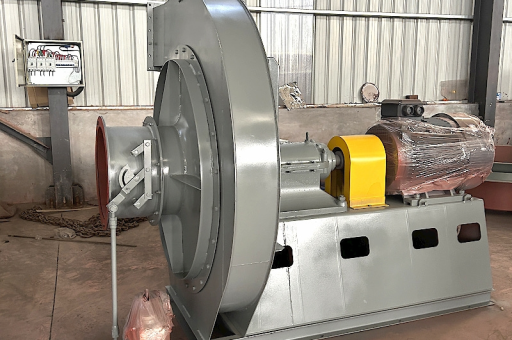
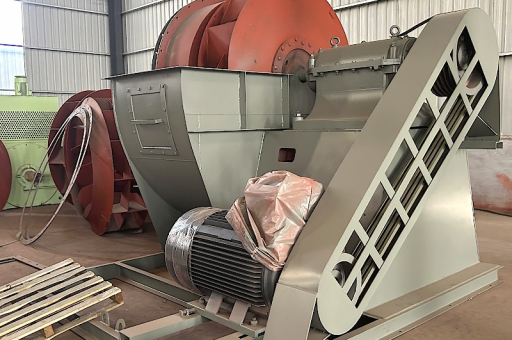
This article's table of contents introduction:
- Introduction: The Environmental Imperative in Asphalt Production
- Understanding Asphalt Flue Gas Composition
- The Principle of Thermal Oxidation (Incineration)
- Why a High-Temperature Fan is Indispensable
- Key Technical Specifications & Engineering Challenges
- Frequently Asked Questions (FAQ)
- Conclusion: Future Trends in Sustainable Asphalt Manufacturing
** Optimizing Industrial Emission Control: The Critical Role of the Asphalt Flue Gas Incineration High-Temperature Fan
Table of Contents
- Introduction: The Environmental Imperative in Asphalt Production
- Understanding Asphalt Flue Gas Composition
- The Principle of Thermal Oxidation (Incineration)
- Why a High-Temperature Fan is Indispensable
- Key Technical Specifications & Engineering Challenges
- Frequently Asked Questions (FAQ)
- Conclusion: Future Trends in Sustainable Asphalt Manufacturing
Introduction: The Environmental Imperative in Asphalt Production
The asphalt industry faces mounting pressure to reduce airborne pollutants generated during the mixing and drying of aggregates. Asphalt plants emit a complex cocktail of volatile organic compounds (VOCs), carbon monoxide, particulate matter, and odorous sulfur compounds. Among the most effective abatement technologies is flue gas incineration — a thermal oxidation process that destroys hazardous components at temperatures exceeding 760°C (1,400°F). However, the success of this system hinges on a single, often overlooked component: the Asphalt Flue Gas Incineration High-Temperature Fan. This article explores the fan’s engineering, operational role, and SEO-optimized insights for industry professionals seeking reliable emission control solutions.
Understanding Asphalt Flue Gas Composition
Before delving into the fan, it is essential to understand what it must handle. Asphalt flue gas typically contains:
- VOCs (e.g., benzene, toluene, xylene)
- Polycyclic Aromatic Hydrocarbons (PAHs)
- Carbon monoxide (CO) and nitrogen oxides (NOx)
- Particulate matter (PM2.5 and PM10)
- Sulfur dioxide (SO₂)
- Moisture and abrasive dust
These gases exit the drum mixer at temperatures between 150°C and 300°C. For incineration to be effective, the gas stream must be heated to the oxidation temperature and held at that level for a specified residence time (typically 0.5 to 1.0 second). This is where the high-temperature fan becomes the system’s “heart.”
The Principle of Thermal Oxidation (Incineration)
Thermal oxidation, or afterburning, involves raising the flue gas temperature to the auto-ignition point of combustibles. In a typical asphalt plant incinerator:
- The gas is drawn from the baghouse or directly from the drum.
- A burner raises the temperature to around 760–870°C.
- The high-temperature fan creates the necessary negative pressure or positive pressure to move the hot gas through the combustion chamber and out the stack.
- Cleaned exhaust — primarily CO₂ and water vapor — is released.
Without a fan capable of withstanding sustained thermal stress, the entire emission control system fails.
Why a High-Temperature Fan is Indispensable
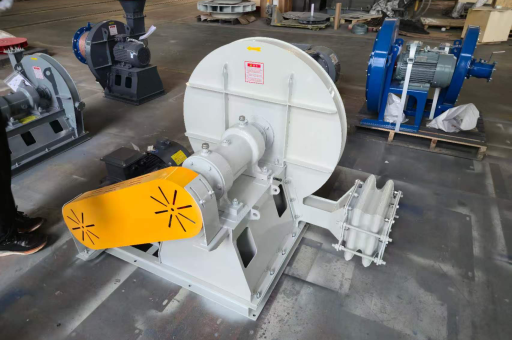
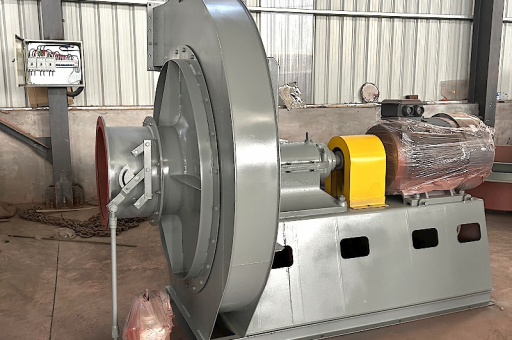
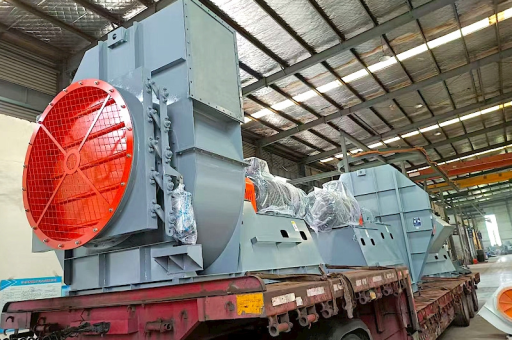
The Asphalt Flue Gas Incineration High-Temperature Fan must perform under extreme conditions. Key reasons for its criticality include:
| Requirement | Why It Matters |
|---|---|
| Continuous operation at 400–900°C | Standard fans fail due to material creep, bearing seizure, or shaft distortion. |
| Corrosion resistance | Sulfur and chlorides in flue gas attack carbon steel. |
| Abrasion tolerance | Particulate erodes impeller blades, reducing efficiency. |
| Variable speed control | Allows precise regulation of gas flow and pressure to match burner output. |
| Low leakage | Prevents cold air ingress, which would quench the oxidation process. |
Industry data shows that using a fan rated for 850°C (instead of a standard 200°C fan) can reduce unburned hydrocarbon emissions by up to 98% compared to systems operating at lower temperatures.
Key Technical Specifications & Engineering Challenges
When selecting a fan for asphalt flue gas incineration, engineers must evaluate:
- Material of construction: Impellers are often made from Inconel 601 or Hastelloy X to withstand temperatures up to 950°C. The housing uses heavy-gauge stainless steel with ceramic fiber insulation.
- Bearing cooling: High-heat fans require water-cooled or air-cooled bearing housings. Some designs use a separate cooling fan to maintain bearing temperature below 80°C.
- Shaft sealing: To prevent hot gas leakage, labyrinth seals or high-temperature mechanical seals are employed.
- Drive configuration: Direct-drive with a VFD (variable frequency drive) is preferred over belt-driven systems to avoid belt degradation from radiant heat.
Common engineering failures include:
- Thermal fatigue cracking of the impeller due to rapid temperature cycling.
- Bearing failure from inadequate cooling.
- Vibration caused by uneven thermal expansion.
To mitigate these, leading manufacturers (brands such as fan, if mentioned domestically) now offer fans with finite element analysis (FEA) optimized impellers and real-time vibration monitoring.
Frequently Asked Questions (FAQ)
Q1: What distinguishes a high-temperature fan from a standard industrial fan?
A: High-temperature fans are constructed with specialized alloys (e.g., stainless steel 310S, Inconel), have external bearing supports with active cooling, and feature thicker shafts to handle thermal stress. Standard fans typically operate below 200°C.
Q2: Can a retrofit fan improve existing incineration performance?
A: Yes. Upgrading to a fan designed for 850°C+ operation can increase the destruction removal efficiency (DRE) of VOCs from 90% to over 99%, while reducing fuel consumption by maintaining stable draft.
Q3: How does particulate buildup affect fan performance?
A: Dust accumulation on the impeller causes imbalance, increases power draw, and reduces airflow. Regular cleaning (e.g., via soot blowers or water washing) is essential. Some advanced fans feature self-cleaning impeller coatings.
Q4: Are there energy-efficient options for high-temperature fans?
A: Yes. Combined with a VFD and optimized ductwork, modern fans can achieve 85%+ efficiency. Additionally, waste heat recovery systems can preheat incoming gas, reducing the thermal load on the fan.
Q5: What is the typical lifespan of such a fan?
A: With proper maintenance (including bearing replacement every 12–18 months and periodic impeller inspection), a well-engineered high-temperature fan can operate reliably for 8–12 years.
Conclusion: Future Trends in Sustainable Asphalt Manufacturing
The Asphalt Flue Gas Incineration High-Temperature Fan is no longer just a support component — it is a core element of compliance and sustainability. As global emission standards tighten (e.g., EU BREF, U.S. EPA MACT), operators must invest in fans that can handle higher temperatures, more corrosive gases, and stricter energy efficiency requirements.
Emerging trends include:
- Smart fans with IoT sensors for predictive maintenance.
- Modular fan designs that allow quick blade replacement without housing removal.
- Hybrid cooling systems that use both air and a small amount of water for extreme applications.
Selecting the right fan — one that matches the specific chemical and thermal profile of your asphalt plant — can mean the difference between costly downtime and consistent, compliant operation. Whether you are a plant manager, an EHS officer, or a procurement specialist, understanding the high-temperature fan’s role in incineration ensures that your emissions control system works as intended: efficiently, reliably, and within regulatory limits.
For further technical guidance, consult leading fan manufacturers and ensure your system design incorporates the latest high-temperature material science.