The Ultimate Guide to 250kW Backward-Curved Centrifugal Fan: Design, Performance, and Applications
Table of Contents
- Introduction: What Is a 250kW Backward-Curved Centrifugal Fan?
- Key Design Features of the 250kW Backward-Curved Centrifugal Fan
- Performance Characteristics and Efficiency
- Why Choose a Backward-Curved Blade Design?
- Common Applications for High-Power Centrifugal Fans
- Installation and Maintenance Best Practices
- Frequently Asked Questions (FAQ)
- Conclusion
Introduction: What Is a 250kW Backward-Curved Centrifugal Fan?
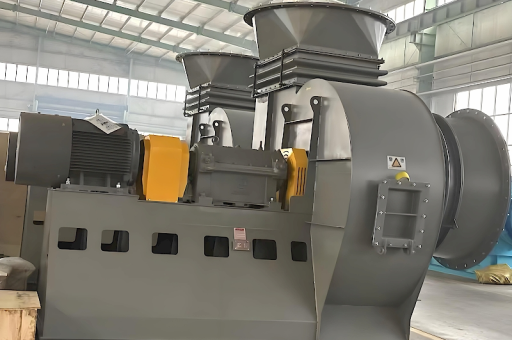
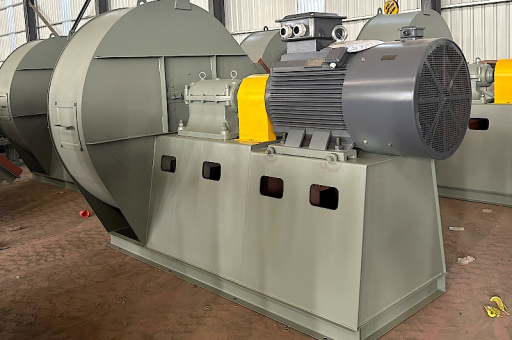
The 250kW Backward-Curved Centrifugal Fan is a high-performance industrial air-moving device designed for demanding applications requiring substantial airflow and high static pressure. Rated at 250 kilowatts (approximately 335 horsepower), this fan represents a critical component in heavy-duty ventilation systems, industrial process cooling, and large-scale material handling operations.
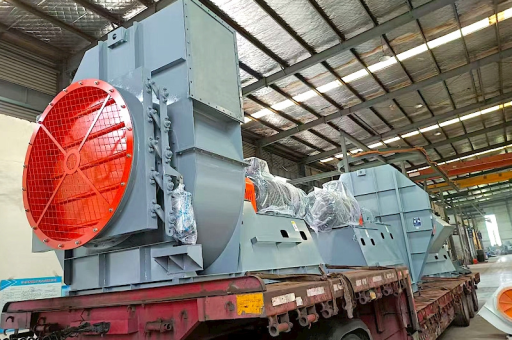
Unlike standard forward-curved fans, the backward-curved design (also known as backward-inclined or backward-bladed) features blades that curve away from the direction of rotation. This design principle enables the fan to achieve higher efficiency, lower noise levels, and greater resistance to blade fouling. The 250kW rating places this fan in the heavy industrial class, suitable for power plants, cement factories, mining operations, and large HVAC systems.
The fan operates by drawing air axially into the impeller, accelerating it radially outward through curved blades, and discharging it at high velocity into a volute casing. The backward-curved blade profile ensures that air leaves the impeller with a velocity component opposite to the direction of rotation, reducing energy losses and maximizing pressure generation.
Design Features of the 250kW Backward-Curved Centrifugal Fan
Impeller Construction
The impeller of a 250kW backward-curved centrifugal fan is typically fabricated from high-strength steel, stainless steel, or aluminum alloys. The blades are aerodynamically profiled with a backward lean angle ranging from 30° to 45°, depending on the specific pressure and flow requirements. This geometry allows the fan to develop high static pressure while maintaining stable operation across a wide flow range.
Motor and Drive System
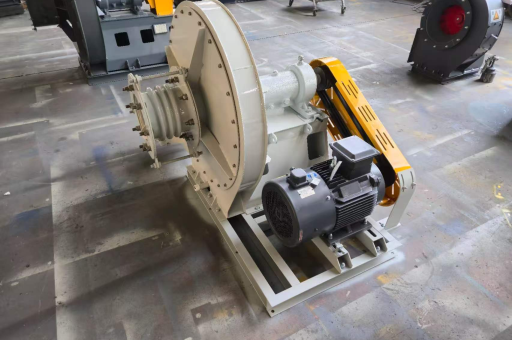
A 250kW fan requires a robust drive system. Most units use a direct-drive arrangement with a high-voltage induction motor (typically 380V–690V, 50/60Hz) or a belt-driven configuration for flexibility in speed adjustment. Variable frequency drives (VFDs) are commonly integrated to modulate airflow precisely, reducing energy consumption during partial load conditions.
Casing and Inlet Cone
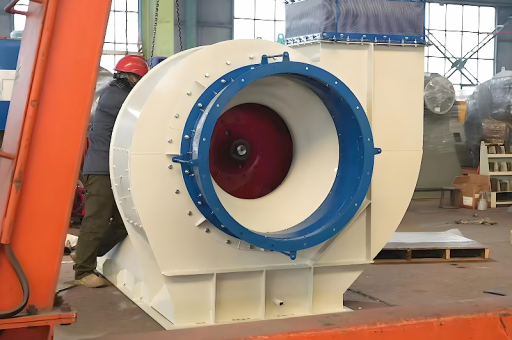
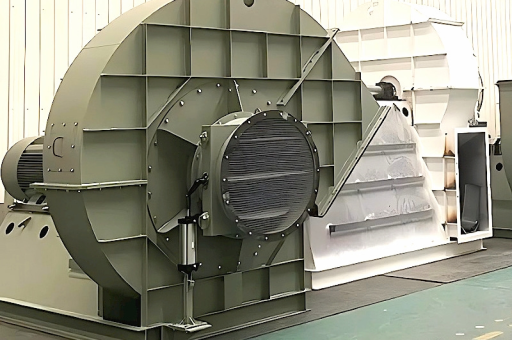
The fan casing is designed with a scroll or volute shape that converts velocity pressure into static pressure efficiently. The inlet cone features a bell-mouth design to minimize turbulence and ensure smooth air entry. Heavy-duty flanges, access doors, and drain provisions are standard for maintenance convenience.
Bearings and Lubrication
Given the 250kW power level, bearings are oversized and often equipped with forced lubrication systems or temperature monitoring sensors. Spherical roller bearings or split cylindrical roller bearings are preferred for their ability to handle radial and axial loads under continuous operation.
Noise and Vibration Control
Modern designs incorporate acoustic insulation, vibration isolators, and balanced rotors to comply with occupational noise exposure limits. The backward-curved design inherently produces lower noise than forward-curved fans, making it suitable for installations where sound levels are a concern.
Performance Characteristics and Efficiency
Pressure and Flow Curve
The 250kW backward-curved centrifugal fan generates a characteristic pressure-flow curve that is steep and non-overloading. This means that as system resistance increases, the fan's power consumption does not rise dramatically, preventing motor overload. The efficiency peak typically occurs at 70–80% of the wide-open flow rate.
Efficiency Compared to Other Designs
Backward-curved fans achieve efficiencies of 75–85%, significantly higher than forward-curved fans (which usually achieve 50–65%) and comparable to airfoil-blade fans. The 250kW version benefits from large impeller diameters (1.2 to 2.5 meters) and optimized blade profiles that reduce internal recirculation losses.
Operating Range
A typical 250kW backward-curved fan can deliver airflow from 50,000 to 150,000 cubic meters per hour (m³/h) at static pressures from 1,000 to 5,000 Pascals (Pa). The actual operating point depends on the system design, ductwork resistance, and speed control method.
Energy Consumption and Cost
At full load, a 250kW fan operating 8,000 hours per year consumes approximately 2,000,000 kWh of electricity. Even a 5% improvement in efficiency can save 100,000 kWh annually, translating to significant cost reductions. Variable speed control can further reduce energy use by 30–50% during low-demand periods.
Why Choose a Backward-Curved Blade Design?
| Feature | Backward-Curved | Forward-Curved | Radial-Blade |
|---|---|---|---|
| Efficiency | High (75–85%) | Moderate (50–65%) | Moderate (60–70%) |
| Noise Level | Low | High | Moderate |
| Self-Cleaning Ability | Excellent | Poor | Good |
| Power Curve | Non-overloading | Overloading | Non-overloading |
| Suitable for Dusty Air | Yes | No | Limited |
| Maximum Static Pressure | High | Low | Very High |
The backward-curved design is the preferred choice for applications where energy efficiency, low noise, and reliability in dusty environments are essential. The non-overloading power characteristic is particularly valuable for 250kW installations where motor protection is critical.
Common Applications for High-Power Centrifugal Fans
Power Generation
In thermal power plants, 250kW backward-curved fans are used for forced draft (FD) and induced draft (ID) systems. They supply combustion air to boilers and exhaust flue gases through pollution control equipment.
Cement and Mining Industries
These fans transport raw materials, cool clinker, and ventilate grinding mills. The backward-curved design resists wear from abrasive particles and minimizes buildup on blades.
HVAC Systems
Large commercial buildings, data centers, and industrial facilities use 250kW fans for central air handling units. The high static pressure capability allows air to be distributed through extensive duct networks.
Chemical and Pharmaceutical Processing
Clean rooms, fume hoods, and drying systems require reliable fans that can handle corrosive or sterile air. Stainless steel construction and backward-curved blades ensure longevity.
Wastewater Treatment
Aeration systems in wastewater treatment plants use high-power fans to supply oxygen to biological treatment processes. The 250kW rating supports large basins with high oxygen demand.
Installation and Maintenance Best Practices
Installation Guidelines
- Ensure a rigid foundation to prevent vibration transmission
- Provide adequate clearance for access to bearings, motor, and couplings
- Install inlet and outlet transitions with smooth contours to avoid turbulence
- Use flexible connections to isolate vibration from ductwork
- Verify alignment between motor and fan shaft within 0.05 mm tolerance
Routine Maintenance
- Daily: Check bearing temperatures (max 80°C), vibration levels, and motor current
- Weekly: Inspect belt tension and condition (if belt-driven)
- Monthly: Lubricate bearings according to manufacturer specifications
- Quarterly: Clean blade surfaces to prevent buildup and imbalance
- Annually: Perform a full dynamic balance check and inspect for blade erosion
Troubleshooting Common Issues
- Excessive vibration: Usually caused by imbalance, misalignment, or worn bearings
- Reduced airflow: Check for blocked inlet, dirty blades, or slipping belts
- Overheating motor: May indicate overloading due to incorrect system resistance
- Unusual noise: Could signal blade contact with housing or bearing failure
Frequently Asked Questions (FAQ)
Q1: Can a 250kW backward-curved fan operate at variable speeds? Yes, and it is highly recommended. Using a VFD allows the fan to match system demand precisely, reducing energy consumption by 30–50% compared to constant-speed operation. The fan’s non-overloading characteristic makes it safe for VFD control.
Q2: What is the typical lifespan of a 250kW backward-curved centrifugal fan? With proper maintenance, these fans can operate for 20–30 years. Critical components like bearings and seals may require replacement every 5–10 years, depending on operating conditions.
Q3: How do I select the correct fan size for my application? You need to know the required airflow (m³/h), static pressure (Pa), and air density. Consult the fan manufacturer’s selection software or performance curves to find the model that operates closest to your design point with maximum efficiency.
Q4: Is the backward-curved fan suitable for high-temperature air? Yes, but material selection is critical. For temperatures up to 200°C, standard carbon steel is acceptable. For higher temperatures (up to 600°C), you need alloy steel or stainless steel with special shaft cooling arrangements.
Q5: What is the difference between a backward-curved and an airfoil fan? Airfoil fans have hollow blades with an aerodynamic profile similar to an aircraft wing, offering slightly higher efficiency (up to 90%). However, they are more expensive and less tolerant of dust. Backward-curved fans are more robust and cost-effective for abrasive or dirty environments.
Q6: Can I retrofit an existing system with a 250kW backward-curved fan? Yes, but you must verify the foundation strength, electrical capacity, and ductwork compatibility. The fan’s weight (often 2–5 tons) and startup torque must be considered. Always consult a professional engineer for retrofitting larger fans.
Q7: What safety features should be included? Key safety features include emergency stop switches, vibration cutoffs, over-temperature alarms, and locked access doors with interlocks. For 250kW fans, local and remote monitoring systems are standard.
Q8: How does altitude affect fan performance? At higher altitudes, air density decreases, reducing the fan’s pressure capability. You may need to oversize the fan or increase speed to compensate. For example, at 3,000 meters altitude, a fan may deliver 15–20% less pressure than at sea level.
Conclusion
The 250kW Backward-Curved Centrifugal Fan represents a pinnacle of industrial air-moving technology. Its design combines high efficiency, reliable operation, and versatility across multiple industries. Whether used in power generation, mining, HVAC, or wastewater treatment, this fan delivers consistent performance with lower energy costs and reduced environmental impact.
When selecting a 250kW backward-curved centrifugal fan, consider factors such as operating temperature, dust load, required static pressure, and available space. Partnering with an experienced manufacturer ensures that the fan is correctly sized, properly installed, and maintained for decades of service.
As industries continue to seek energy-efficient solutions, the backward-curved centrifugal fan remains a trusted choice. Its non-overloading power curve, self-cleaning capability, and excellent efficiency make it the preferred option for demanding 250kW applications worldwide.
For detailed technical specifications, performance curves, or custom design assistance, consult a qualified fan engineer or visit the official website of fan manufacturers specializing in high-power centrifugal equipment.