This article's table of contents introduction:
- Core Concept: The "Blade Belt"
- Key Design & Operating Principles for Paper Scraps
- This is NOT a Standard "Blower"
- System Components (The Whole Conveying System)
- Specific Considerations for Conveying Paper Scraps
- Summary: How to specify or build one
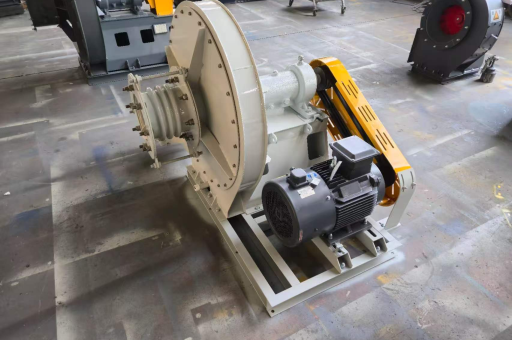
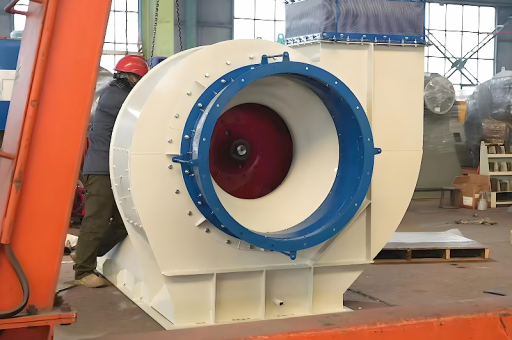
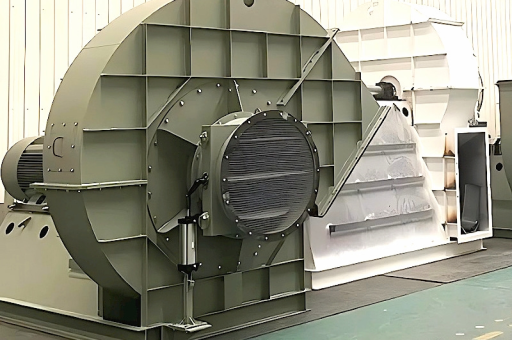
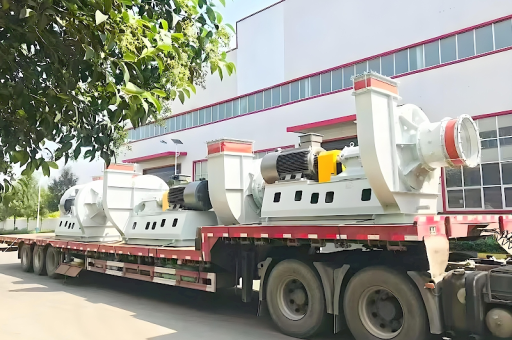
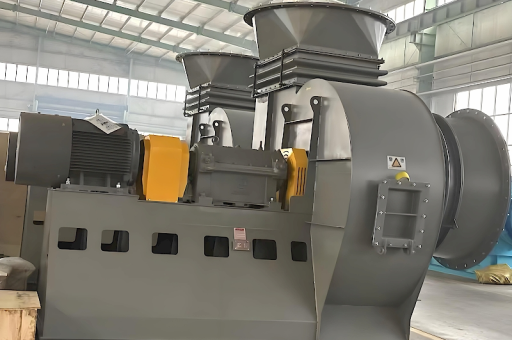
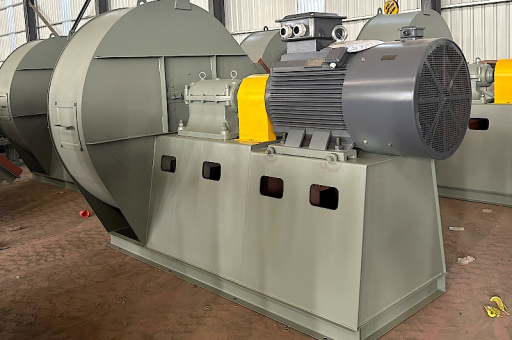
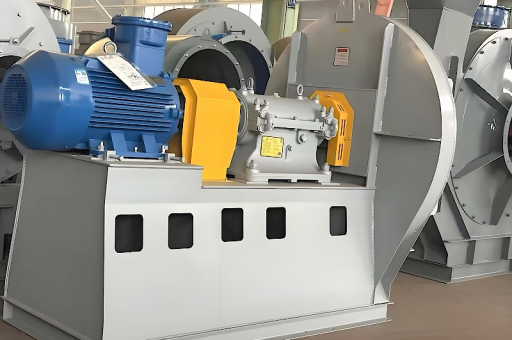
This is a specialized application, not a standard off-the-shelf product. A "Centrifugal Fan with Blade Belt for Paper Scraps Conveying" is typically a material handling fan or a trim removal system.
Here is a detailed breakdown of the design, how it works, and critical considerations for this specific application.
Core Concept: The "Blade Belt"
The term "Blade Belt" likely refers to a specific design where the fan impeller (the rotating part) is not a standard enclosed wheel, but rather a series of heavy-duty paddles or blades attached to a central hub, resembling a belt. However, in industrial trim systems, this is more accurately called a Paddle Wheel Fan or a Venturi Eductor Fan combined with a mechanical conveyor.
There are two primary interpretations of "Blade Belt" in this context:
-
Interpretation A: Paddle Wheel Design (True Centrifugal)
- The fan consists of a heavy, open paddle wheel (radial blades) mounted on a shaft. This is a radial blade industrial fan.
- How it works: The rotating paddles create centrifugal force. They fling the paper scraps outward against the fan housing. The air movement and mechanical impact propel the scraps through the discharge duct. This is a harsh duty design.
-
Interpretation B: Fan + Conveyor Belt Integration (Hybrid System)
This is less common but possible. A standard centrifugal fan creates high-velocity air. A separate conveyor belt (often cleated) feeds paper scraps into the fan's inlet throat. The high-velocity air stream then captures the scraps and carries them through the ductwork. The "blade" here refers to the fan's impeller blades, and the "belt" is the feeder.
We will focus on Interpretation A (Paddle Wheel Fan) as it is the standard solution for conveying large, light, bulky materials like paper scraps.
Key Design & Operating Principles for Paper Scraps
Paper scraps are challenging because they are:
- Light & Bulky: They require high volume, low to medium pressure.
- Tangles: They can wrap around shafts.
- Dusty: They create paper dust (explosion/fire hazard).
A standard fan would clog instantly. Therefore, the "Blade Belt" (Paddle Wheel) fan is designed with specific features:
| Feature | Purpose for Paper Scraps |
|---|---|
| Open Radial Paddles | No enclosed wheel. Blades are thick, flat plates. Prevents clogging and allows large, irregular scraps to pass through. |
| Large Inlet/Outlet | 10" to 24"+ diameter. Reduces velocity but handles high volume. |
| Blunt, Heavy-Duty Blades | Designed to "pound" or "fling" the paper, not delicately cut it. Blades are often 1/4" to 1/2" thick steel. |
| No Backplate or Shroud (or minimal) | This is the "open" impeller. Paper cannot get trapped between the blade and a back plate. |
| Generous Clearances | The space between the blade tips and the housing is large (1" to 3") to prevent jamming. |
| Direct Drive (often) | Belt-driven designs are common for speed control, but the shaft must be sealed against dust ingress. A shaft with a shear pin is recommended to protect the motor if a large jam occurs. |
This is NOT a Standard "Blower"
You cannot use a standard HVAC centrifugal fan (like a forward-curved squirrel cage blower) for this job. It will:
- Clog the wheel within seconds.
- Wrap paper around the motor shaft.
- Create a fire hazard due to dust accumulation and friction.
System Components (The Whole Conveying System)
The fan itself is just one part. For paper scraps, the complete system includes:
- Pickup Hoods: Located under the slitter/guillotine to capture the falling scrap.
- Inlet Ducting: Usually flexible or thin-gauge spiral duct (4" to 12" diameter for small systems, larger for big).
- The Fan (Paddle Wheel): The "Blade Belt" heart of the system.
- Discharge Ducting: Transports material to a collection point.
- Separation/Cyclone or Dust Baghouse: The air and paper must be separated. The cyclone uses centrifugal force to drop the paper, while the clean air exhausts (or is filtered).
- Rotary Airlock Valve: Critical. Placed under the cyclone to remove the dense paper from the pressurized system without losing air pressure. Without this, the fan loses efficiency.
Specific Considerations for Conveying Paper Scraps
- Fire & Explosion Risk (Combustible Dust):
- Paper dust is NFPA 69 Class II combustible.
- The fan housing must be non-sparking (aluminum fan wheel, copper shroud).
- Explosion relief vents must be installed on the fan housing and ductwork.
- The system must be grounded (conductive hoses, bonded components) to prevent static sparks.
- Anti-Wrapping Features:
- The fan shaft should have a Teflon sleeve or a stainless steel shaft sleeve where it passes through the housing.
- Some designs use an air purge at the shaft seal to keep paper dust out of the bearings.
- Motor & Drive:
- Use a TEFC (Totally Enclosed Fan Cooled) motor, preferably Inverter Duty rated for variable speed.
- Install a VFD (Variable Frequency Drive). You won't always need full speed, and you can match the velocity to the scrap weight.
- Duct Velocity:
- Maintain a minimum transport velocity of 3,500 - 4,500 feet per minute (FPM) to keep the paper suspended in the air stream. Below this, it will fall out and plug the duct.
- For heavy paper scraps (like cardboard), you may need 5,000+ FPM.
Summary: How to specify or build one
If you are designing or purchasing a Centrifugal Fan with a Blade Belt for Paper Scraps:
- Choose the Right Type: Look for a "Material Handling Fan" or "Industrial Exhauster" specifically with an Open Radial Blade or Paddle Wheel impeller.
- Key Specification:
- CFM (Cubic Feet per Minute): Based on the volume of scrap and duct size.
- Static Pressure (SP): Usually 6" to 15" w.g. (water gauge). Higher pressure = higher velocity, but also more wear and power.
- Impeller Diameter: 12" to 36" depending on CFM.
- Critical Materials:
- Housing: Mild steel (1/8" to 3/16" thick).
- Impeller: Aluminum (for non-sparking) or Wear-Resistant Steel (if heavy contaminants like staples are present).
- Must Include:
- Access door on housing for cleaning.
- Replaceable wear liners on the housing side opposite the discharge (where the scrap hits the hardest).
- Shut-off gate at the inlet for emergency cleaning.
Bottom Line: This is a rugged, purpose-built industrial fan. If you are trying to adapt a standard fan, it will fail. A dedicated "Paddle Wheel" or "Trim Removal System" fan from a manufacturer like Robinson Industries, Clarage, Chicago Blower, or New York Blower is the correct equipment.