This article's table of contents introduction:
- Table of Contents
- Introduction to the 18.5 kW Backward-Curved Centrifugal Fan
- Core Design Principles: Why "Backward-Curved" Matters
- Technical Specifications and Performance of the 18.5 kW Variant
- Application Domains: Where This Fan Excels
- Operational Advantages: Energy Efficiency and Low Noise
- Installation, Maintenance, and System Integration
- Frequently Asked Questions (FAQ)
- Conclusion and Future Outlook
** Mastering High-Efficiency Air Movement: The Ultimate Guide to the 18.5 kW Backward-Curved Centrifugal Fan
Table of Contents
- Introduction to the 18.5 kW Backward-Curved Centrifugal Fan
- Core Design Principles: Why "Backward-Curved" Matters
- Technical Specifications and Performance of the 18.5 kW Variant
- Application Domains: Where This Fan Excels
- Operational Advantages: Energy Efficiency and Low Noise
- Installation, Maintenance, and System Integration
- Frequently Asked Questions (FAQ)
- Conclusion and Future Outlook
Introduction to the 18.5 kW Backward-Curved Centrifugal Fan
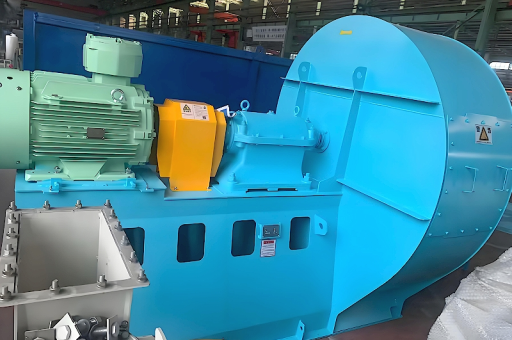
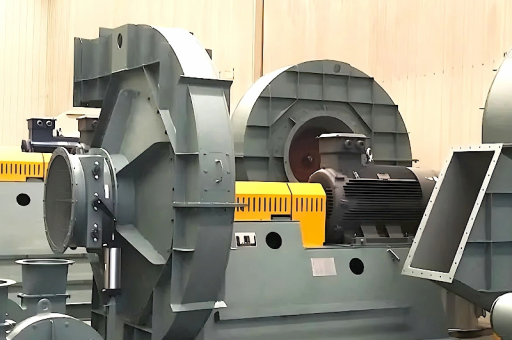
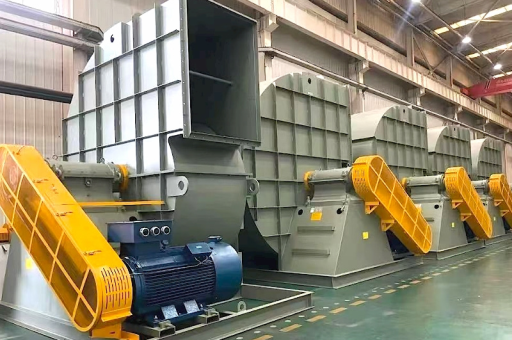
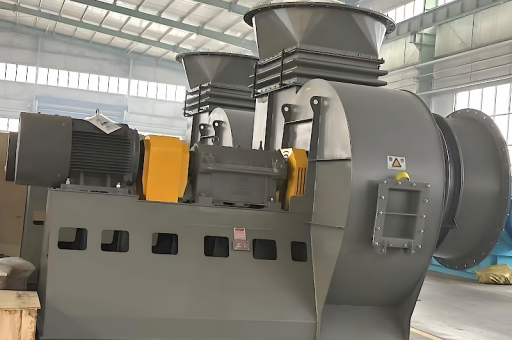
In the world of industrial ventilation, few components offer the perfect balance between pressure capability and energy efficiency as the 5 kW Backward-Curved Centrifugal Fan. This specific power rating—18.5 kilowatts—represents a "sweet spot" in medium-to-heavy-duty airflow applications. It is not a generic fan; it is a high-performance air mover engineered for systems that demand consistent static pressure, high volumetric flow rates (typically measured in cubic meters per hour or CFM), and reliable continuous operation.
Unlike axial fans that push air along the axis, centrifugal fans—specifically those with backward-curved impellers—accelerate air radially, generating higher pressure. The 18.5 kW motor coupled with a backward-curved (BC) impeller creates a system optimized for clean air handling where efficiency is paramount. This guide consolidates insights from engineering manuals, HVAC technical resources, and industry case studies to provide a definitive overview, optimized for search engine visibility and practical application.
Core Design Principles: Why "Backward-Curved" Matters
To understand the supremacy of this fan, we must dissect its impeller geometry. A backward-curved centrifugal fan features blades that curve away from the direction of rotation.
How it Works:
- Air Entry: Air enters the impeller axially through the inlet cone.
- Radial Acceleration: The rotating impeller flings air outward due to centrifugal force.
- Blade Interaction: Unlike forward-curved blades (which scoop air), backward-curved blades push air. This design minimizes turbulence and slip.
Key Engineering Distinctions:
- Non-Overloading Power Curve: This is the most critical characteristic. As airflow increases, the power consumption of a backward-curved fan peaks and then declines. This prevents motor burnout if the system pressure drops unexpectedly—a common failure point for forward-curved fans.
- Higher Static Efficiency: Backward-curved impellers achieve peak static efficiencies of 75% to 85%. The 18.5 kW motor, therefore, converts more electrical energy into useful air movement compared to other centrifugal designs.
- Flat Pressure Curve: These fans maintain stable pressure across a wide range of airflow rates, making them ideal for variable air volume (VAV) systems.
Example: A forward-curved fan operating at a high flow rate might require 20 kW to move the same air that a backward-curved fan moves with 18.5 kW, highlighting the cost-saving potential.
Technical Specifications and Performance of the 18.5 kW Variant
An 18.5 kW backward-curved centrifugal fan is not a one-size-fits-all device. Performance varies based on impeller diameter, rotational speed (RPM), and housing geometry. However, typical parameters found in industry datasheets include:
- Power Rating: 18.5 kW (25 HP)
- Electrical Supply: Typically 380V - 460V, 3-phase, 50/60 Hz
- Airflow Range: 15,000 to 30,000 m³/h (8,800 to 17,600 CFM) depending on system resistance.
- Static Pressure Range: 1,500 to 3,500 Pa (6 to 14 inches WG).
- Operating Temperature: Standard models handle up to 80°C; high-temperature versions can handle 200°C+.
- Drive Configuration: Often driven by a V-belt (allowing RPM adjustment) or direct-coupled via a flexible coupling.
Performance Curve Interpretation: The fan curve for an 18.5 kW BC fan shows a steeply sloping pressure line. At the "Best Efficiency Point" (BEP), the fan moves the maximum volume of air per unit of energy. Operating away from the BEP increases vibration and noise. For optimal longevity, system designers should select ductwork and filters so the fan operates within 80%-100% of its rated BEP range.
Application Domains: Where This Fan Excels
The 18.5 kW power class is specifically suited for applications that require "medium pressure/medium volume" airflow. It is the workhorse of commercial and light industrial ventilation.
Primary Applications:
- Commercial HVAC (Air Handling Units): Large AHUs in office buildings, shopping malls, and airports use BC fans to overcome the static pressure of extensive ductwork, VAV boxes, and high-efficiency filters (HEPA or MERV-15).
- Industrial Dust Collection (Clean Air): While not ideal for heavy dust (which requires a radial or paddle wheel fan), the BC design is excellent for pre-filtered exhaust streams or applications with low particulate loads like woodworking chip extraction.
- General Factory Ventilation: Supply or exhaust systems for manufacturing floors that need consistent air changes without high noise levels.
- Process Air Supply: Drying ovens, pneumatic conveying systems, and spray booths where stable pressure is required.
Why not a tube-axial fan? In long duct runs, an axial fan cannot generate enough static pressure. The 18.5 kW BC fan bridges the gap between low-pressure axial fans and high-pressure radial fans.
Operational Advantages: Energy Efficiency and Low Noise
The 18.5 kW rating is already a benchmark for efficiency. But the specific benefits of the backward-curved design extend beyond the nameplate:
- Superior Energy Efficiency: The non-overloading characteristic means lower peak power demand. When paired with a Variable Frequency Drive (VFD), the 18.5 kW BC fan can operate at reduced speeds (e.g., 40 Hz) during low-demand periods, cutting energy consumption by up to 60% compared to a damper-controlled system.
- Low Noise Signature: Backward-curved blades generate less aerodynamic noise than forward-curved or radial designs because the airflow is smoother. Sound levels for this class typically range from 75 dB(A) to 85 dB(A) measured at 1 meter, which is crucial for occupied spaces.
- Reduced Maintenance: The impeller is dynamically balanced. Because the blades are stiffer than forward-curved types, they are less prone to fatigue cracking. The 18.5 kW motor—often an IE4 or IE5 premium efficiency class—features sealed bearings requiring minimal lubrication.
Cost Analysis: Over a 10-year lifecycle, the energy savings of a BC fan over a forward-curved fan can offset the higher initial purchase cost by 2-3 times.
Installation, Maintenance, and System Integration
Correct installation is vital to maximizing the 18.5 kW BC fan's performance.
Installation Guidelines:
- Foundation: A rigid base with vibration isolators (spring or rubber pads) is mandatory to prevent structure-borne noise transmission.
- Ductwork: The fan should have a straight duct section of at least 3-5 impeller diameters before any elbows or transitions to prevent turbulence.
- Electrical: Ensure cable sizing supports the 18.5 kW load (approx. 35-40 Amps at 380V). A soft starter or VFD is recommended to reduce inrush current.
Routine Maintenance Checklist:
- Weekly: Listen for bearing noise; check belt tension.
- Monthly: Inspect the impeller for dust buildup (which unbalances the wheel).
- Quarterly: Lubricate motor bearings; check vibration levels.
- Annually: Verify the balance grade (ISO 1940 G6.3 or better); inspect the inlet cone alignment.
System Integration: Modern building management systems (BMS) often integrate the 18.5 kW fan directly. A BMS can read differential pressure across the fan to modulate the VFD, maintaining constant static pressure in the ductwork.
Frequently Asked Questions (FAQ)
Q1: Can an 18.5 kW backward-curved fan handle corrosive fumes? A: This fan is typically built with steel (painted or galvanized) or stainless steel (SS304/SS316). For corrosive fumes, specify a 316L stainless steel impeller with an epoxy coating on the housing. However, for highly aggressive gases like chlorine, a special FRP or plastic fan is safer.
Q2: What is the difference between a backward-curved and an airfoil fan? A: Airfoil blades are essentially backward-curved blades but with a hollow, airfoil-shaped cross-section. They are more efficient (up to 88% static efficiency) but are more expensive and weigh less. For most 18.5 kW applications, a standard backward-curved (flat plate) blade is sufficient and cost-effective.
Q3: How do I know if the fan is running at the correct operating point? A: You must use a manometer to measure the static pressure across the fan and an anemometer or pitot tube to measure the airflow velocity in the duct. Cross-reference these numbers with the fan performance curve provided by the manufacturer. If the motor amperage exceeds the nameplate FLA (Full Load Amps), you are overloading the motor.
Q4: Is a VFD necessary for a 18.5 kW BC fan? A: Not always, but highly recommended. For constant volume systems (e.g., a fixed-speed exhaust fan), a VFD is not essential. For variable volume systems, a VFD saves substantial energy. Remember: Fan power is proportional to the cube of the speed. Reducing speed by 20% cuts power consumption by nearly 50%.
Q5: What happens if the system resistance increases suddenly (e.g., a blocked filter)? A: Because this is a backward-curved fan, the motor current will decrease as the system resistance increases. The fan operates in a "non-overloading" region. The motor is safe, but the reduced airflow may cause overheating in the process or ventilation failure. Install a pressure switch to trigger an alarm.
Conclusion and Future Outlook
The 5 kW Backward-Curved Centrifugal Fan represents a pinnacle of modern fan engineering. It is not merely an air mover; it is a system component that directly impacts energy bills, production quality, and indoor air quality. Its non-overloading characteristic provides safety, while its high static efficiency delivers ROI.
As global regulations (like the EU's Ecodesign Directive and US DOE standards) tighten efficiency requirements, the demand for premium-efficiency, backward-curved centrifugal fans will continue to rise. The 18.5 kW class will remain a popular choice for building service engineers and plant managers who require a robust, efficient, and reliable solution for medium-pressure ventilation challenges. Whether you are replacing an older unit or designing a new system, this fan technology deserves serious consideration.
For more expert insights and product specifications, we encourage you to consult a professional fan manufacturer or an HVAC specialist who can match the curve to your specific network resistance.