This article's table of contents introduction:
- What it is
- Performance Characteristics (Typical for a 7.5kW BC Fan)
- Common Applications
- Key Advantages of Backward-Curved
- Key Disadvantages
- Buying / Specifying a 7.5kW Backward-Curved Fan
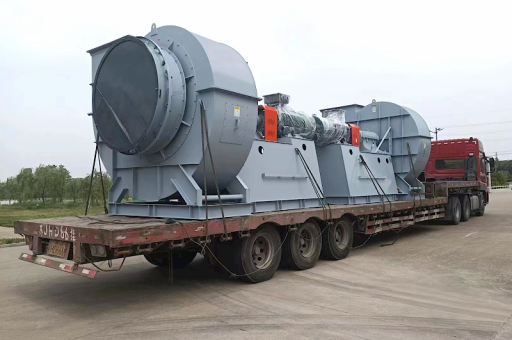
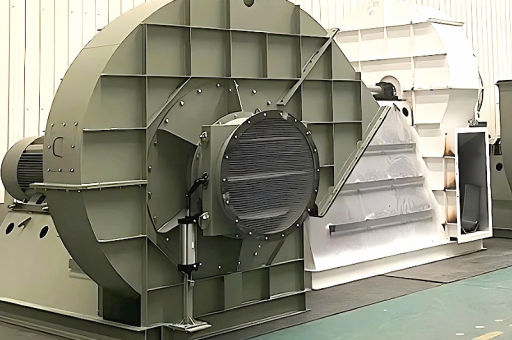
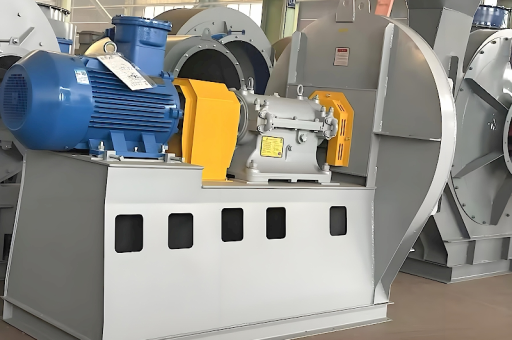
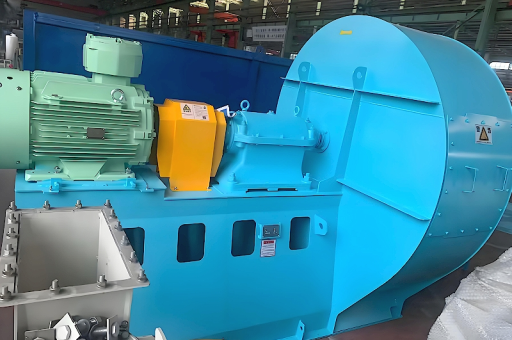
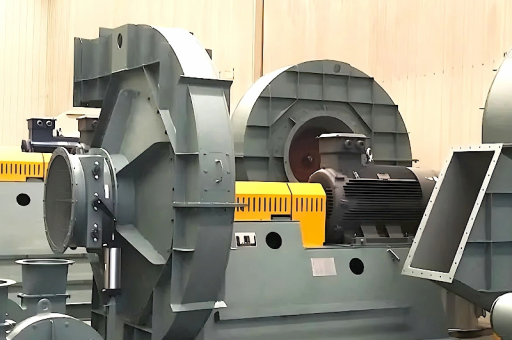
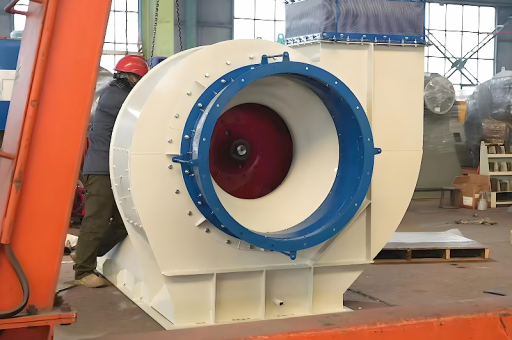
This is a specification for a specific type of industrial fan. To give you the most useful information, I need to clarify what "7.5 kW Backward-Curved Centrifugal Fan" means, its typical performance characteristics, and its common applications.
Here’s a detailed breakdown:
What it is
- 5 kW (Kilowatt): This is the power rating of the electric motor driving the fan. It's roughly equivalent to 10 HP (Horsepower) . This indicates the fan is a medium-to-large industrial unit, not a small residential one.
- Backward-Curved (BC): This refers to the shape and angle of the fan blades.
- Design: The blades curve away from the direction of rotation.
- Key Characteristic: They are non-overloading. This is the most important feature. Because of the blade shape, the motor's power draw reaches a maximum at a specific airflow point. If the system resistance (static pressure) changes (e.g., a filter gets clogged), the motor will not draw excessive current and burn out. This makes them very safe and reliable.
- Centrifugal Fan: The air enters the fan wheel axially (along the shaft) and is discharged radially (outward, 90 degrees from the intake). This design generates higher pressure than an axial fan (like a desk fan or a wall-mounted exhaust fan).
Performance Characteristics (Typical for a 7.5kW BC Fan)
These are general estimates. Actual performance depends heavily on the specific fan model, wheel diameter, and speed (RPM).
- Airflow (CFM or m³/h): A 7.5 kW BC fan typically moves a large volume of air against moderate to high resistance.
- Estimate: 2,000 to 8,000 CFM (3,400 to 13,600 m³/h) at moderate static pressure.
- Static Pressure (in. w.g. or Pa): This is the resistance the fan must overcome. BC fans are good for medium to high pressure applications.
- Estimate: 3 to 10 inches of water gauge (750 to 2,500 Pa).
- Efficiency: Backward-curved fans are typically more efficient than forward-curved fans (like those in your home furnace). They operate more quietly at higher pressures.
- Speed (RPM): A 7.5 kW motor is often a 4-pole motor (around 1,450 RPM at 50Hz or 1,750 RPM at 60Hz). The fan wheel might be directly coupled or driven by a belt to a different speed.
Common Applications
Because of its power, efficiency, and non-overloading nature, you'll find this fan in demanding industrial and commercial settings:
- HVAC Systems (Heating, Ventilation, and Air Conditioning):
- Large commercial buildings (office towers, shopping malls, hospitals).
- Air handling units (AHUs) that move air through extensive ductwork, coils, and filters.
- Industrial Ventilation:
- Dust collection systems (with proper pre-separation).
- Fume extraction from welding booths, chemical labs, or factories.
- General building exhaust for large facilities.
- Process Air:
- Drying systems (e.g., lumber kilns, textile drying).
- Pneumatic conveying (moving light materials like grain, pellets, or dust through pipes).
- Combustion air supply for boilers or furnaces.
- Commercial Kitchens: Exhaust hoods over large cooking lines.
Key Advantages of Backward-Curved
- Non-Overloading Power Curve: Motor is protected from overcurrent, even if the duct becomes blocked.
- High Efficiency: Lower operating costs over time compared to forward-curved or paddle-wheel fans.
- Quieter Operation: Generally quieter than other centrifugal fan types at similar duty points.
- Handles Higher Speeds: Can run at higher RPMs for higher pressure requirements.
Key Disadvantages
- More Expensive: Initial purchase cost is higher than a forward-curved fan of similar size.
- Requires Controlled Start-up: If started with a completely open inlet/outlet, it can draw high power (though not damaging due to the non-overloading curve, it can be inefficient). Variable frequency drives (VFDs) are often used.
- Not Ideal for Sticky Materials: The backward-curved blades can clog with sticky dust or fibers. For that, you might need a radial-blade or industrial exhauster.
Buying / Specifying a 7.5kW Backward-Curved Fan
If you are looking to purchase or replace one, you will need these additional parameters:
- Airflow Required (CFM or m³/h): The volume you need to move.
- Static Pressure (in. w.g. or Pa): The total resistance of the duct system, filters, coils, etc.
- Air Temperature: High temperature can derate the motor and require special construction.
- Air Conditions: Is it clean air, dusty, corrosive, or explosive? (Requires special materials or construction).
- Mounting: Arrangement (e.g., Arrangement 1 - direct drive, Arrangement 3 - belt drive).
- Discharge: Clockwise or counter-clockwise rotation, and discharge angle (e.g., downblast, upblast, horizontal).
In short: A 7.5 kW backward-curved centrifugal fan is a heavy-duty, efficient, and reliable workhorse for moving large volumes of air against significant resistance in industrial and large commercial applications.