This article's table of contents introduction:
- What it Means
- The Key Advantage of "Backward-Curved" Blades
- Typical Applications (Where you'd find a 5.5 kW unit)
- Typical Performance Range (Approximate)
- What to Check / Key Selection Parameters
- Summary
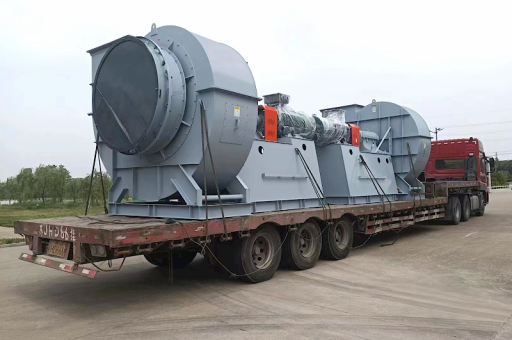
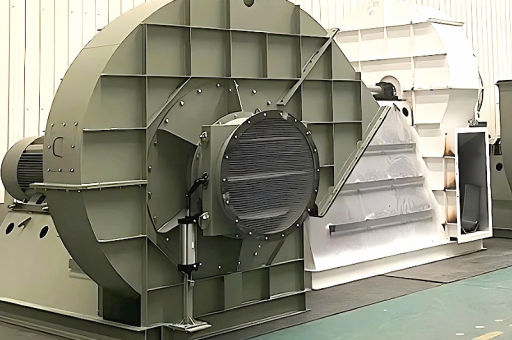
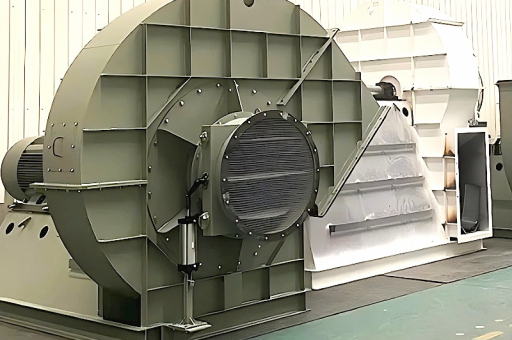
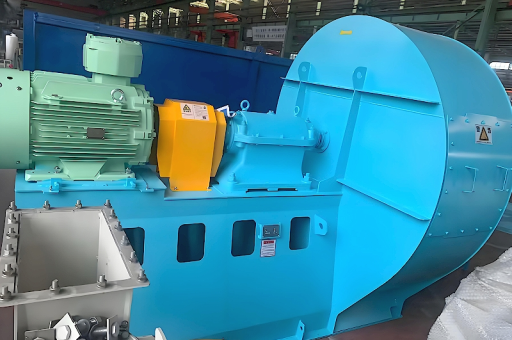
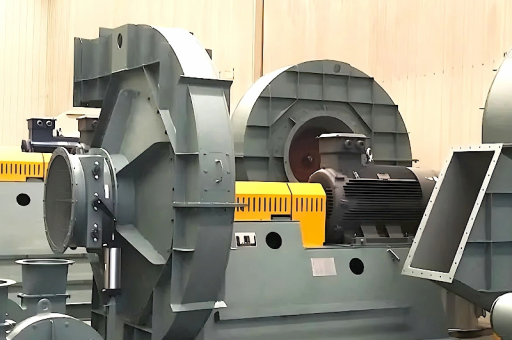
This is a specification for a specific type of industrial fan. Here is a breakdown of what "5.5kW Backward-Curved Centrifugal Fan" means, its typical applications, and key selection considerations.
What it Means
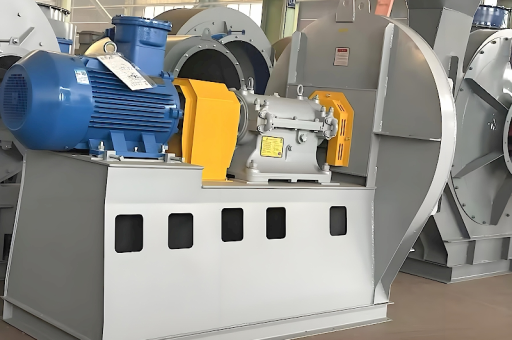
- 5 kW (Kilowatts): This is the power rating of the motor. 5.5 kW is approximately 5 horsepower (HP). This indicates a medium-to-large industrial fan capable of moving significant air volumes against moderate system resistance.
- Backward-Curved: This refers to the shape of the fan blades. The blades curve away from the direction of rotation.
- Centrifugal Fan: The mechanical design. Air enters the fan wheel axially (along the shaft) and is expelled radially (outward at 90 degrees) by centrifugal force.
The Key Advantage of "Backward-Curved" Blades
Backward-curved centrifugal fans (also known as "backward-inclined" or "airfoil" fans when the blades are shaped like airplane wings) are the most efficient design for industrial fans. Here’s why they are chosen:
- High Efficiency: They are typically 75-85% efficient, significantly better than forward-curved fans (which are smaller and quieter but less efficient) or radial-blade fans (which are rugged but inefficient).
- Non-Overloading Power Curve: This is the most critical operational feature.
- Problem: Forward-curved fans have a power curve that increases as air resistance decreases (e.g., a damper opens or a filter gets clogged). This can overload the motor and cause it to burn out.
- Solution: Backward-curved fans have a power curve that peaks near the best efficiency point (BEP) and then drops off as airflow increases. The motor can never be overloaded, even if the duct is wide open.
- Steady Operation: They handle variable system pressures much better without surging or causing motor strain.
Typical Applications (Where you'd find a 5.5 kW unit)
Because of its power and efficiency, this fan is not a small HVAC unit (like in a home air conditioner). It is an industrial or large commercial piece of equipment.
- Industrial Dust Collection: A primary use. It's ideal for moving dusty, particulate-laden air through ducts and filter bags. The backward-curved blade design is less prone to material buildup than forward-curved blades.
- Boiler and Furnace Induced Draft (ID Fans): Pulling combustion gases through a boiler, heat exchanger, and stack. The high efficiency and non-overloading nature are critical here.
- HVAC Make-up Air: For large commercial kitchens, warehouses, or factories requiring massive amounts of fresh air.
- General Industrial Ventilation: Exhausting fumes, smoke, or hot air from a process line. For example, welding booths, paint spray booths, or chemical fume hoods.
- Drying Systems: Moving high volumes of hot air over a product (e.g., in a lumber kiln, grain dryer, or textile dryer).
Typical Performance Range (Approximate)
Note: These are very rough estimates. Actual performance depends heavily on the specific fan model, wheel diameter, RPM, and ductwork design.
- Airflow: 2,000 - 6,000 CFM (Cubic Feet per Minute) or 3,400 - 10,200 m³/h.
- Static Pressure: 2 - 12 inches w.g. (Water Gauge) or 500 - 3,000 Pa. A 5.5 kW motor provides enough torque to overcome moderate to high resistance (ductwork, filters, collectors).
What to Check / Key Selection Parameters
If you are selecting or replacing a 5.5kW backward-curved fan, you must confirm these details:
- Air Volume (CFM or m³/h): How much air do you need to move?
- Static Pressure (SP or ΔP): What is the total resistance of your system (ductwork, filters, dampers, etc.)? This is the most common point of failure in fan selection.
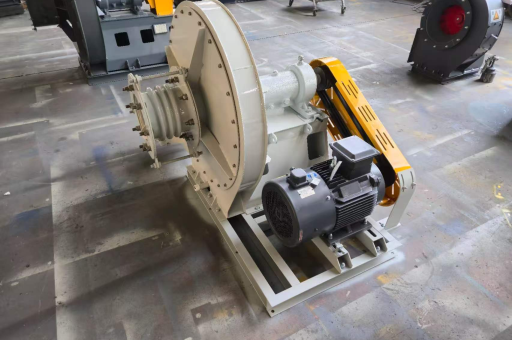
- Motor Speed (RPM): Is the motor directly coupled or belt-driven?
- Direct Drive: Motor speed equals fan speed. Typically 1800 RPM or 3600 RPM for this power level.
- Belt Drive: Allows for changing fan speed (and thus performance) by changing sheave (pulley) sizes.
- Wheel Diameter: A larger wheel moves more air at lower speed (quieter, more efficient). A smaller wheel moves less air at higher speed.
- Temperature & Environment: Is the air clean, dusty, hot, explosive, or corrosive? This dictates the material of the wheel and housing (steel, stainless steel, aluminum, coated).
- Noise Level: Backward-curved fans are generally mid-range for noise (quieter than radial-blade but louder than forward-curved). Sound data should be provided by the manufacturer.
Summary
A 5kW Backward-Curved Centrifugal Fan is a professional-grade, highly efficient air mover designed for medium-to-heavy industrial applications. Its main strength is its high efficiency and the ability to operate safely across a wide range of system pressures without risking motor burnout. It is a reliable choice for dust collection, process ventilation, and HVAC systems where performance and energy savings are a priority.