This article's table of contents introduction:
- What is it?
- Key Technical Features (Explosion-Proof Specifics)
- Common Applications
- Critical Safety & Operational Considerations
- Typical Performance Range (Example)
- How to Specify the Correct Fan
- Summary Table: Features vs. Safety
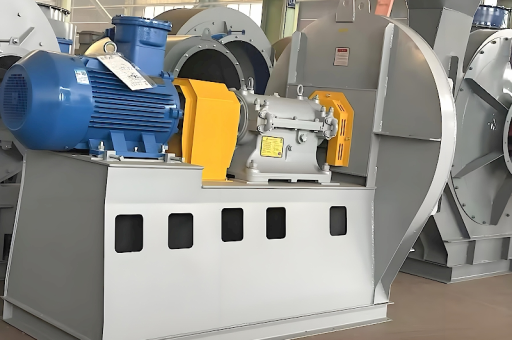
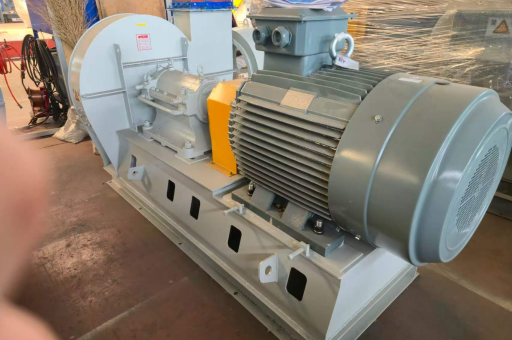
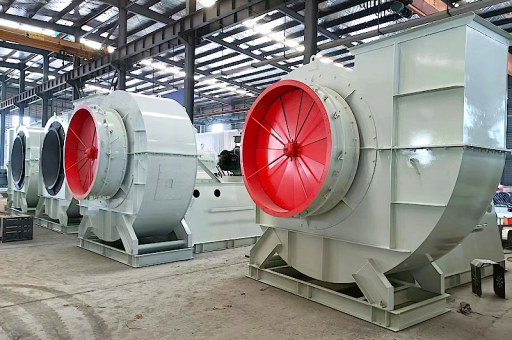
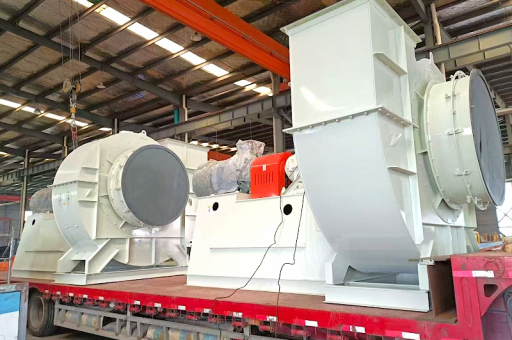
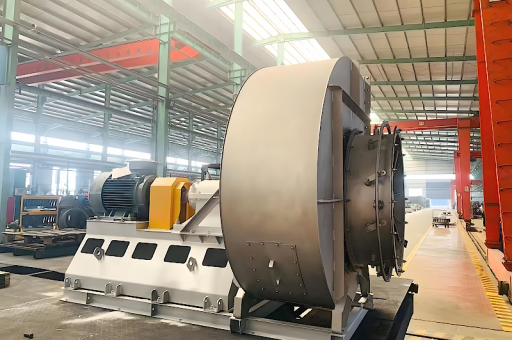
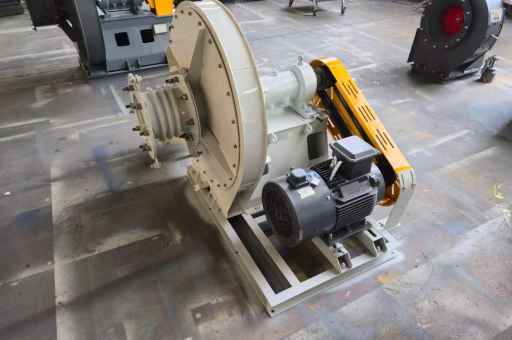
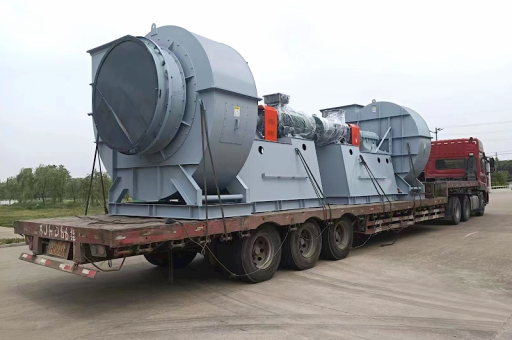
The term "Natural Gas Transmission Explosion-Proof Booster Fan" refers to a specialized industrial fan used to increase the pressure (boost) of natural gas within a pipeline system. The term "Explosion-Proof" is critical in this context because natural gas is highly flammable and explosive.
Here is a detailed breakdown of what this equipment is, its key features, applications, and critical safety considerations.
What is it?
A natural gas transmission booster fan (often technically a compressor or blower, though colloquially called a fan) is designed to:
- Overcome Pressure Drops: As natural gas travels long distances through pipelines, friction causes pressure to drop. A booster fan re-pressurizes the gas to maintain flow.
- Increase Flow Rate: It allows more gas to be moved through a given pipeline diameter.
- Support End-User Needs: It ensures that gas arriving at distribution points (power plants, industrial facilities, city gates) has sufficient pressure.
The Explosion-Proof designation means the fan and its motor are designed, constructed, and certified to prevent the ignition of the surrounding atmosphere or the gas being handled.
Key Technical Features (Explosion-Proof Specifics)
An explosion-proof booster fan is not a standard fan with a simple coating. It requires fundamental design changes:
-
Housing & Impeller (Casing and Wheel):
- Material: Typically made of cast iron, ductile iron, or aluminum-bronze alloys. These materials are less likely to create a spark if the impeller strikes the casing.
- Spark-Resistant Construction: The gap between the impeller and the intake ring is very tight and made of non-ferrous materials to prevent friction sparks. A "spark-resistant" rating (e.g., AMCA Type A or B) is common.
- Pressure Rating: The housing must be robust enough to handle the operating pressure of the natural gas pipeline (often 5–100 PSI or more, depending on the application) and any potential surge.
-
Motor:
- UL/CSA/ATEX Certified: The motor must be certified for use in Class I, Division 1 or 2, Group D (per North American codes) or Zone 1 or 2, IIA or IIB T3 (per IEC/ATEX codes).
- Sealing: The motor has special conduit seals and gaskets to prevent gas from entering the electrical housing.
- Temperature Classification (T-Rating): The motor’s maximum surface temperature (T3 = 200°C / 392°F) must be well below the auto-ignition temperature of natural gas, which is typically around 580°C (1076°F).
-
Shaft Seal (Critical Component):
- The point where the motor shaft enters the gas path must be perfectly sealed to prevent gas from leaking into the motor or the environment.
- Common Seals: Mechanical seals, labyrinth seals, or magnetic couplings (for fully sealed, zero-leak systems).
-
Gauges & Control Systems:
- Pressure gauges, temperature transmitters, and vibration sensors are often required for safe operation.
- The entire system is typically controlled by a Programmable Logic Controller (PLC) with emergency shut-off valves.
Common Applications
- Natural Gas Transmission Pipelines: Mid-point or end-of-line pressure boosting.
- Compressor Stations: Used as a supplementary booster for specific lateral lines or to feed a storage facility.
- Gas Gathering Systems: Boosting gas from wellheads or processing plants into the main transmission line.
- Industrial Boiler Fuel Systems: Ensuring a consistent pressure for large industrial burners.
- Landfill Gas & Biogas: Though not "natural" gas, the same explosion-proof principles apply when collecting methane from landfills or digesters.
Critical Safety & Operational Considerations
- No Leaks: This is the #1 priority. Natural gas is odorless, colorless, and explosive. A single leak can lead to a catastrophic explosion. The entire unit, from the inlet flange to the outlet flange, must be pressure-tested and leak-checked (e.g., with a soap solution or gas sniffer) before commissioning.
- Proper Sizing: The fan must be correctly sized for the required pressure rise (boost) and flow rate. Oversizing or undersizing can cause cavitation, surge, or instability.
- Venting: The area around the fan must be well-ventilated (if indoors) to prevent gas accumulation. The fan itself is explosion-proof, but the room must also be classified.
- Lightning & Static Protection: The fan and piping must be properly bonded and grounded to prevent static sparks.
- Environmental Factors: Consider ambient temperature, humidity, and altitude, as they affect gas density and motor performance.
Typical Performance Range (Example)
| Parameter | Value (Typical) |
|---|---|
| Flow (CFM) | 500 – 50,000+ |
| Pressure Rise (Inches W.C. or PSI) | 5 – 50 In. W.C. (0.2 – 2 PSI) |
| Motor Power | 5 HP – 500+ HP |
| Gas Temperature | -40°F to 150°F (-40°C to 65°C) |
| Materials | Cast Iron, Ductile Iron, Stainless Steel |
How to Specify the Correct Fan
If you are looking to purchase or specify a Natural Gas Explosion-Proof Booster Fan, you must provide:
- Gas Composition: Is it 100% methane (CH4), or does it contain heavier hydrocarbons, hydrogen sulfide (H2S), or moisture?
- Inlet Pressure: The pressure of the gas entering the fan (e.g., 20 PSIG).
- Required Outlet Pressure: The pressure needed downstream (e.g., 25 PSIG).
- Flow Rate: The amount of gas to be moved (in SCFM or MMSCFD).
- Operating Temperature: The temperature of the gas.
- Ambient Classification: The hazardous area classification (e.g., Class I, Div 1, Group D).
- Environmental Conditions: Indoor/outdoor, altitude, flood zone.
Summary Table: Features vs. Safety
| Feature | Purpose |
|---|---|
| Spark-Resistant Impeller | Prevents ignition from friction. |
| Explosion-Proof Motor | Contains any internal explosion without igniting the outside gas. |
| Sealed Shaft & Housing | Prevents gas leaks to the atmosphere. |
| T-Rated Motor | Ensures surface temperature stays below auto-ignition. |
| Bonding & Grounding | Prevents static sparks. |
| Emergency Shut-Off | Stops the fan if a hazard is detected. |
In conclusion: A Natural Gas Transmission Explosion-Proof Booster Fan is a high-reliability, safety-critical component of the gas infrastructure. It requires rigorous engineering, certification, and maintenance. Choosing a reputable manufacturer (like Robinson Fans, New York Blower, Howden, or Truflo) and adhering to strict installation and inspection procedures is paramount.