The Ultimate Guide to 11000Pa 3000m³/h High-Pressure Centrifugal Induced Draft Fan Blower: Performance, Applications & Selection
Table of Contents
- Introduction: What Makes a 11000Pa 3000m³/h Fan Blower Unique?
- Core Technical Parameters Explained
- How Does a High-Pressure Centrifugal Induced Draft Fan Work?
- Key Applications in Industry
- Comparison: Induced Draft vs. Forced Draft Fans
- Selection Criteria: Choosing the Right Blower for Your System
- Installation & Maintenance Best Practices
- Frequently Asked Questions (FAQ)
- Conclusion
Introduction: What Makes a 11000Pa 3000m³/h Fan Blower Unique?
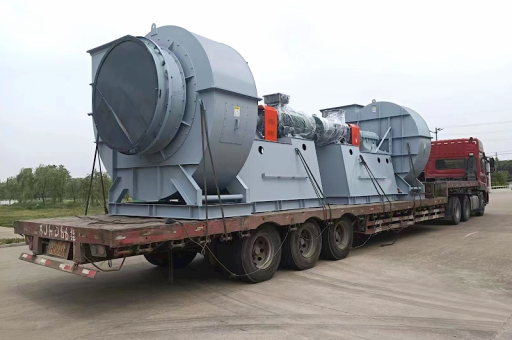
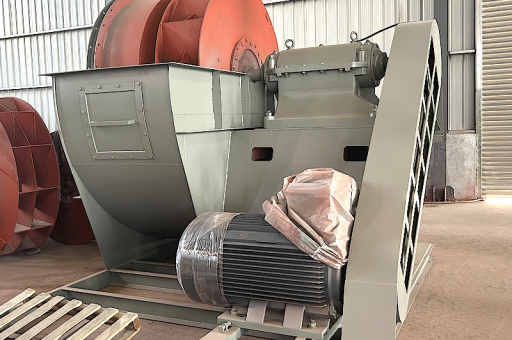
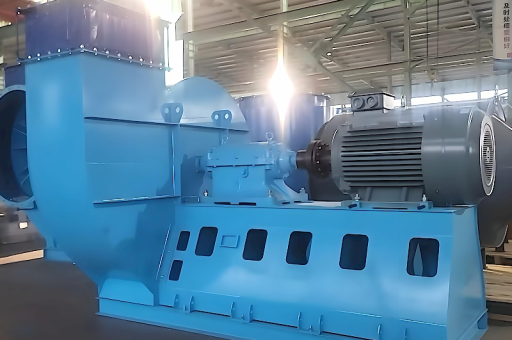
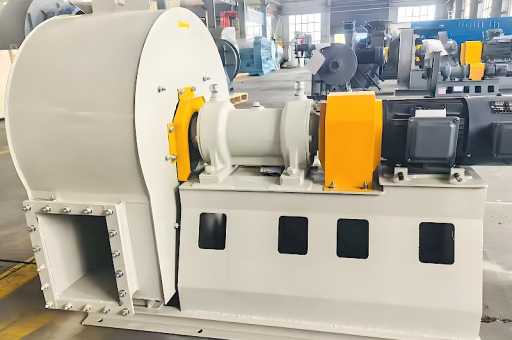
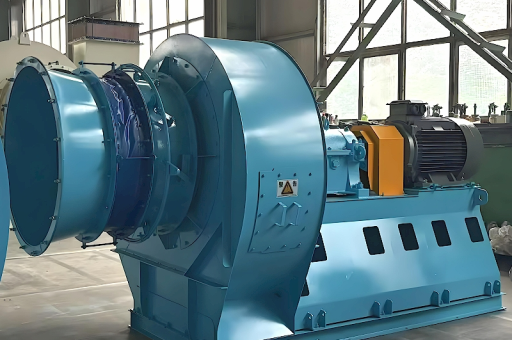
In the world of industrial ventilation and air handling, the 11000Pa 3000m³/h high-pressure centrifugal induced draft fan blower stands as a powerful workhorse designed for demanding environments. This specific configuration—11000 Pascal static pressure combined with a 3000 cubic meters per hour airflow—places it in a mid-to-high performance tier, ideal for applications requiring both strong suction and moderate volume.
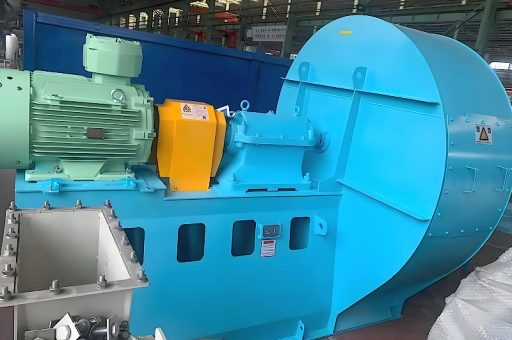
Unlike standard axial fans that move air at low pressure, this centrifugal induced draft fan creates a negative pressure system, pulling air or gas through ducts, filters, and equipment. The high pressure capability (11000Pa) allows it to overcome significant system resistance from long duct runs, dense filter media, or heat exchangers.
Why does this matter? Industries such as cement plants, steel mills, chemical processing, and power generation rely on such fans to maintain safe atmospheric conditions, remove toxic fumes, or transport materials pneumatically.
Core Technical Parameters Explained
Static Pressure: 11000Pa
- What it means: The fan generates 11,000 Pascals of static pressure, which is approximately equivalent to 1.12 meters of water column or 44 inches of water gauge.
- Significance: This high static pressure enables the fan to push or pull air through high-resistance systems. For reference, a standard household HVAC fan operates at 100–300 Pa.
Airflow: 3000 m³/h
- What it means: The fan moves 3,000 cubic meters of air or gas per hour at its designed operating point.
- Significance: This is a moderate flow rate, suitable for industrial processes that need strong suction but not extremely large volume. Compare this to industrial cooling fans that may exceed 100,000 m³/h at lower pressures.
Power Consumption & Efficiency
- A typical 11000Pa / 3000m³/h fan requires a motor in the range of 5 kW to 15 kW, depending on efficiency and impeller design.
- High-efficiency backward-curved blades can reduce energy consumption by up to 15% compared to forward-curved designs.
Material Construction
- Common materials: Q235 carbon steel for standard applications, 304/316 stainless steel for corrosive or high-temperature environments.
- Impeller types: Radial blade (for dust-laden air), backward inclined (for high efficiency), or airfoil (for silent operation).
How Does a High-Pressure Centrifugal Induced Draft Fan Work?
The Centrifugal Principle
- Air enters axially through the fan inlet.
- The rotating impeller accelerates the air radially outward using centrifugal force.
- The volute casing converts the kinetic energy of the air into static pressure.
- The air exits at a 90-degree angle from the inlet.
Induced Draft Configuration
In an induced draft system, the fan is placed at the exhaust side of the process equipment. It creates a negative pressure (vacuum) upstream, drawing air or gas through the system. This is critical for:
- Boilers: Pulling combustion gases through the chimney.
- Dust collectors: Sucking particulates through baghouse filters.
- Fume hoods: Extracting hazardous vapors.
Why 11000Pa and 3000m³/h?
These specifications are a balance. Lower pressure rating would fail to overcome system resistance in dense filter media, while higher flow would require larger ductwork and motors. The 11000Pa 3000m³/h combination is commonly found in:
- Medium-sized boiler induced draft systems.
- Industrial dust collectors with moderate filter surface areas.
- Pneumatic conveying systems for light materials.
Key Applications in Industry
Boiler Induced Draft Systems
- Function: Removes flue gases (CO2, NOx, SOx) from the boiler.
- Requirement: Must handle high temperatures (150°C–300°C) and corrosive gases.
- Fan selection: The 11000Pa pressure ensures gases travel through heat exchangers and scrubbers without backflow.
Cement & Mining Dust Collection
- Challenge: Cement plants generate fine, abrasive dust that can erode fan blades.
- Solution: Radial blade impellers with wear-resistant lining. The high static pressure pulls dust through long baghouse filter banks.
Chemical Fume Extraction
- Scenario: Chemical reactors release toxic or flammable vapors.
- Fan requirement: Spark-proof construction (aluminum or stainless steel) and the ability to handle condensation.
- Why 3000m³/h: Sufficient for typical 500–800 ft³ chemical fume hoods.
Pneumatic Conveying
- Material transport: Moves powders, granules, or pellets through pipes.
- Pressure need: 11000Pa can convey materials over distances of 50–150 meters, depending on pipe diameter.
Wastewater Treatment Aeration
- Aeration systems: Provide oxygen to biological treatment tanks.
- Fan type: induced draft helps control air distribution in diffuser systems.
Power Plant Cooling
- Application: Secondary cooling systems where gas needs to be pulled through cooling coils.
Comparison: Induced Draft vs. Forced Draft Fans
| Feature | Induced Draft (ID) Fan | Forced Draft (FD) Fan |
|---|---|---|
| Position | Downstream (exhaust) | Upstream (intake) |
| Pressure Type | Negative (suction) | Positive (blow) |
| Typical Use | Boilers, dust collectors, fume extraction | Combustion air supply, cooling |
| Fan Design | Heavier casing (handles vacuum) | Lighter casing |
| Efficiency at 11000Pa | Higher for pulling through filters | Lower for same pressure drop |
| Maintenance | Easier access to motor | Harder due to proximity to hot zones |
For the 11000Pa 3000m³/h configuration, the induced draft design is preferred when the process equipment upstream has significant pressure drop (e.g., deep-bed filters, scrubbers).
Selection Criteria: Choosing the Right Blower for Your System
Step 1: Calculate System Resistance
- Measure the total static pressure drop of your ductwork, filters, heat exchangers, and other components.
- Ensure the fan’s 11000Pa rating exceeds this by a safety margin of 10–20%.
Step 2: Verify Airflow Requirements
- Your process needs 3000 m³/h at the operating point, not at free air delivery.
- Check the fan performance curve provided by the manufacturer.
Step 3: Assess Temperature & Material Compatibility
- For temperatures above 100°C, request high-temperature bearings and shaft seals.
- For corrosive gases, choose 316L stainless steel or special coatings.
Step 4: Check Power Supply
- Standard motor voltages: 380V/50Hz, 460V/60Hz, or custom.
- Consider variable frequency drive (VFD) for energy savings—can reduce power consumption by 30% when running at 80% speed.
Step 5: Evaluate Noise & Vibration
- The 11000Pa fan at 3000 m³/h typically produces 75–85 dB(A). Use silencers if needed.
Installation & Maintenance Best Practices
Installation Tips
- Use flexible connectors between fan and ductwork to isolate vibration.
- Install the fan on a concrete foundation with 0.5–1 inch rubber pads.
- Ensure proper alignment between motor shaft and fan impeller (check with dial indicator).
Maintenance Schedule
| Interval | Task |
|---|---|
| Weekly | Check vibration and bearing temperature |
| Monthly | Inspect impeller for dust buildup or erosion |
| Quarterly | Grease bearings, check belt tension |
| Annually | Full disassembly, clean impeller, replace seals |
Common Issues & Troubleshooting
- Low airflow: Check for blocked filters, leaking ducts, or reversed impeller rotation.
- High vibration: Indicates impeller imbalance or bearing wear.
- Overheating motor: Caused by undersized motor or operating at high pressure beyond fan curve.
Frequently Asked Questions (FAQ)
Q1: Can this fan handle high-temperature gases up to 300°C?
Yes, but only if the fan is built with high-temperature steel (e.g., 310S stainless steel), high-temperature bearings, and cooling fins on the shaft. Standard models are rated for 80°C. Always specify the operating temperature when ordering.
Q2: What’s the difference between 11000Pa static pressure and total pressure?
Static pressure measures the pressure overcoming system resistance, while total pressure includes velocity pressure. For induced draft fans, static pressure is the more relevant specification.
Q3: Can I use a VFD with this fan?
Absolutely. A VFD allows you to adjust speed between 50–100%. At 80% speed, the airflow drops by about 20%, but pressure drops by 36% (according to fan affinity laws). This is excellent for energy savings in partial-load conditions.
Q4: How do I select the correct duct diameter for 3000 m³/h?
Recommended duct velocity: 10–15 m/s for general industrial air. Use the formula:
Area (m²) = Flow (m³/s) / Velocity (m/s).
For 3000 m³/h = 0.833 m³/s, at 12 m/s: Area = 0.069 m² → Duct diameter ≈ 0.3 m (12 inches).
Q5: Which motor power rating is typical for this fan?
For a well-designed backward-curved blade fan at 11000Pa and 3000m³/h, motor power is approximately:
Power (kW) = (Flow × Pressure) / (3600 × Efficiency)
Assuming 75% efficiency: (3000 × 11000) / (3600 × 0.75) ≈ 2 kW. A 15 kW motor is commonly used with a safety margin.
Q6: Is this fan suitable for explosive environments?
Only if it’s ATEX-certified or IECEx-approved. The fan must have aluminum or non-sparking impellers, anti-static belts, and grounding systems.
Conclusion
The 11000Pa 3000m³/h high-pressure centrifugal induced draft fan blower is a specialized yet versatile piece of equipment designed to handle challenging industrial tasks. Its ability to generate high static pressure while maintaining a moderate airflow makes it ideal for boiler exhaust, dust collection, chemical fume extraction, and pneumatic conveying systems.
When selecting such a fan, always prioritize:
- Accurate system resistance calculations
- Material compatibility with the gas stream
- Energy efficiency through proper impeller design and VFD integration
By understanding the technical nuances—from centrifugal principles to installation best practices—you can ensure your fan operates reliably for years, reducing downtime and operational costs.
For custom fan solutions tailored to your specific pressure, temperature, and corrosive requirements, always consult with a manufacturer that provides detailed performance curves and commissioning support. The right fan will not only move air—it will drive your process efficiency.