This article's table of contents introduction:
- What is it?
- Key Components & Construction
- How does it work? (Operational Principle)
- Key Differences from Standard Centrifugal Fans
- Common Applications
- Important Selection Criteria
- Summary
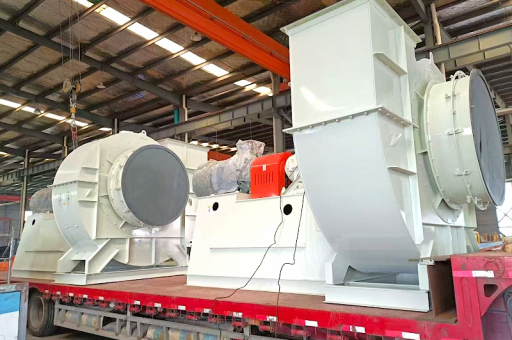
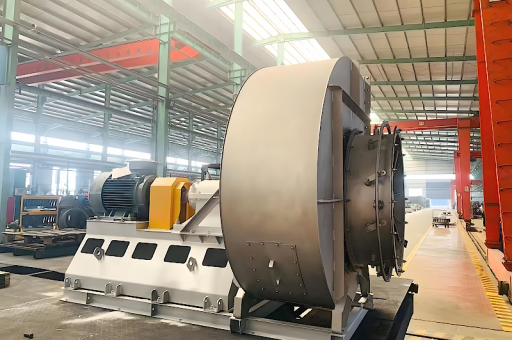
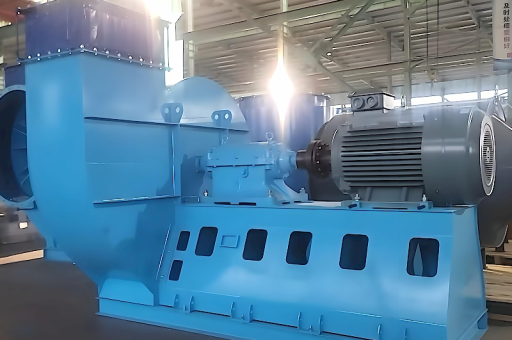
This is a specialized piece of industrial equipment. Here is a detailed breakdown of what a High-Temperature Resistant Insulated Centrifugal Fan is, its key components, applications, and how it differs from standard fans.
What is it?
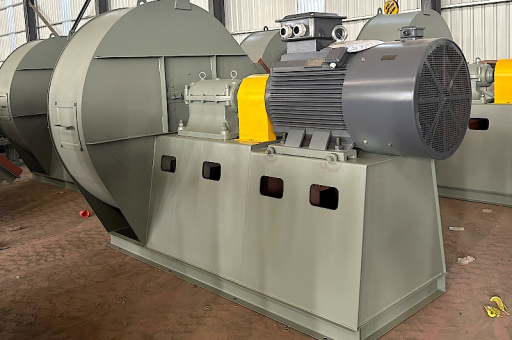
A High-Temperature Resistant Insulated Centrifugal Fan is a mechanical device designed to move air or gases that are extremely hot (typically from 150°C / 300°F up to 700°C / 1300°F or more). The "Insulated" part refers to a thermal insulation layer (jacket) surrounding the fan housing to:
- Protect personnel from burns.
- Reduce heat loss into the surrounding environment.
- Prevent condensation or overheating of nearby equipment.
Key Components & Construction
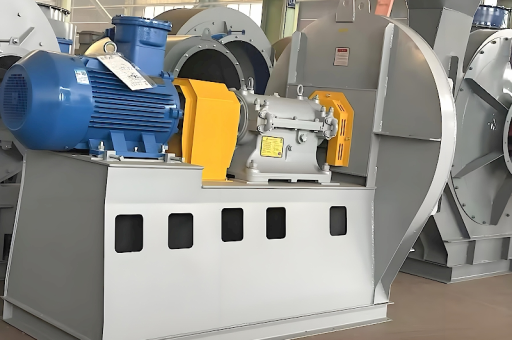
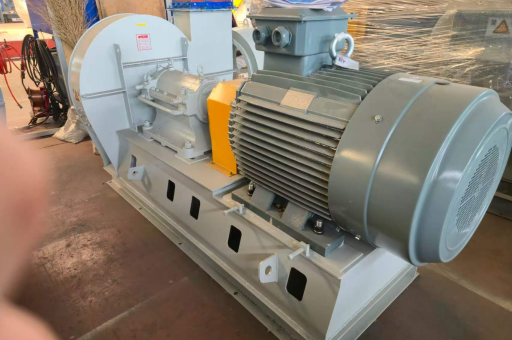
These fans are built from the ground up to handle thermal stress. They are not standard fans with a blanket wrapped around them.
| Component | Material / Feature | Purpose |
|---|---|---|
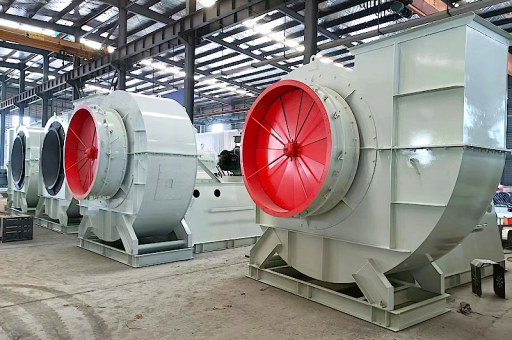
| Impeller (Wheel) | Stainless Steel (SS304, SS316, or special alloys like Inconel) | High strength at elevated temperatures; resists thermal creep and corrosion. Often have a backward-curved design for efficiency. |
| Shaft | High-alloy steel, often with a cooling fan or heat slinger attached. | Transmits motor power; must resist thermal expansion. Cooling fins prevent heat transfer to the motor bearings. |
| Housing (Scroll/Casing) | Thick carbon steel or stainless steel, reinforced for rigidity. | Contains the high-temperature gas flow. Thickness prevents warping from thermal expansion. |
| Insulation Jacket | Mineral wool or ceramic fiber blanket encased in a metal (aluminum or stainless steel) cladding. | Provides thermal barrier to reduce surface temperature to safe levels (e.g., <60°C / 140°F). |
| Bearings | External to the air stream (pillow block or flange mounted). Often with a cooling jacket or high-temp grease. | Prevent lubricant failure and thermal expansion damage. Located entirely outside the hot gas path. |
| Motor | Standard (TEFC or Explosion-Proof) or mounted separately (driven by belts). | The motor itself is not usually high-temp rated. It is kept cool by being outside the airstream or via a shaft cooling fan. Belt-driven allows the motor to be placed far from the heat source. |
| Shaft Seal | Packing gland or labyrinth seal | Prevents hot gases from leaking out along the shaft and reaching the external bearings or motor. |
How does it work? (Operational Principle)
- Gas Entry: Hot gas enters the fan at the center (inlet) of the impeller, which is rotating at high speed.
- Acceleration: The spinning impeller blades catch the gas and fling it outward towards the housing walls due to centrifugal force.
- Pressure Build-Up: The gas gains kinetic energy (velocity) and pressure. The spiral shape of the housing (volute) converts this velocity into static pressure.
- Exhaust: The high-pressure, high-temperature gas exits through a single outlet (discharge) duct.
- Insulation: The thick insulation jacket on the outside of the housing ensures the external surface remains touch-safe and minimizes heat loss to the room.
Key Differences from Standard Centrifugal Fans
| Feature | Standard Fan | High-Temp Insulated Fan |
|---|---|---|
| Maximum Temp | < 80°C (176°F) | 200°C to 700°C+ (400°F - 1300°F+) |
| Impeller Material | Mild / Galvanized Steel | Stainless Steel (SS304/316, Inconel) |
| Bearings | Inside airstream or close to casing | Externally mounted and often cooled |
| Motor | Direct drive, exposed to heat | Belt drive (remote) or shaft-mounted with cooling fan |
| Casing | Thin sheet metal | Thick, reinforced steel to handle thermal expansion |
| Insulation | None | Mineral wool / ceramic fiber jacket (1-4 inches thick) |
Common Applications
- Industrial Ovens & Furnaces: Exhausting hot air, fumes, and combustion gases.
- Dryers (Textile, Paper, Food): Removing moist, hot air from drying processes.
- Fume Extraction (Welding, Foundry): Handling hot, dirty air from metalworking.
- Boiler Systems: Induced draft (ID) fans pulling hot flue gases through a boiler.
- Cement & Glass Plants: High-temperature process ventilation.
- Chemical & Petrochemical: Handling hot process gases or fumes from reactors.
- Hazardous Environments (e.g., paint booths, solvent recovery): Often built with explosion-proof (ATEX/IECEx) motors and spark-resistant impellers.
Important Selection Criteria
When specifying a high-temp insulated centrifugal fan, you must provide:
- Maximum Operating Temperature: (e.g., 400°C continuous, 600°C peak)
- Airflow (CFM / m³/hr)
- Static Pressure (in. wg. / Pa)
- Gas Composition: Is it corrosive (e.g., acidic fumes)? Contains particulate (dust)? Is it explosive?
- Ambient Conditions: Is the fan indoors or outdoors? Cold environment?
- Mounting Orientation: Horizontal or vertical discharge?
- Insulation Requirements: Is a specific cladding thickness or material needed (e.g., for marine environments, cleanroom, or certifications)?
- Motor Type: Standard, Explosion-Proof, or Variable Frequency Drive (VFD) compatible.
Summary
A High-Temperature Resistant Insulated Centrifugal Fan is a robust, engineered solution for moving hot gases safely and efficiently. Its key features are externally mounted bearings, a stainless steel impeller, a thick reinforced housing, and a thermal insulation jacket to protect both the equipment and personnel. It is essential for industries like heat treatment, drying, foundry, and boiler operations where standard fans would fail rapidly.