This article's table of contents introduction:
- Table of Contents
- 1. Introduction: What Is a 14000Pa 800m³/h High-Pressure Centrifugal Induced Draft Fan?
- 2. Core Technical Specifications Explained
- 3. How Does a High-Pressure Induced Draft Fan Work?
- 4. Key Industrial Applications
- 5. Installation & Maintenance Best Practices
- 6. Frequently Asked Questions (FAQ)
- 7. Conclusion: Why This Fan Matters
The Ultimate Guide to 14000Pa 800m³/h High-Pressure Centrifugal Induced Draft Fan Blower: Performance, Applications & FAQs**
Table of Contents
- Introduction: What Is a 14000Pa 800m³/h High-Pressure Centrifugal Induced Draft Fan?
- Core Technical Specifications Explained
- How Does a High-Pressure Induced Draft Fan Work?
- Key Industrial Applications
- Installation & Maintenance Best Practices
- Frequently Asked Questions (FAQ)
- Conclusion: Why This Fan Matters
Introduction: What Is a 14000Pa 800m³/h High-Pressure Centrifugal Induced Draft Fan?
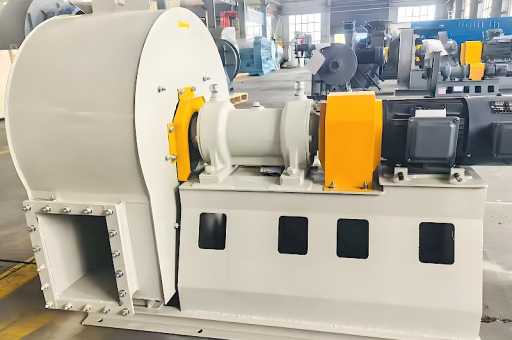
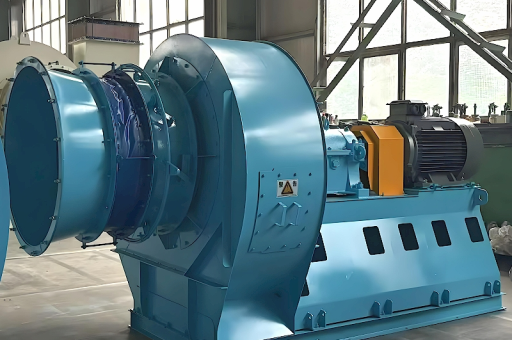
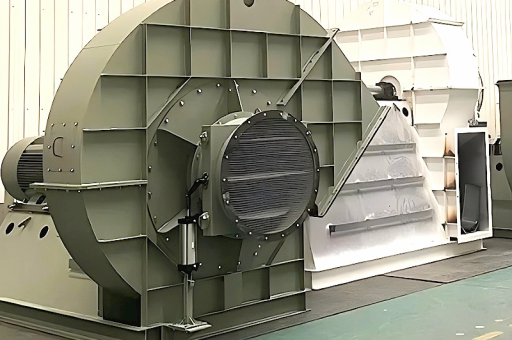
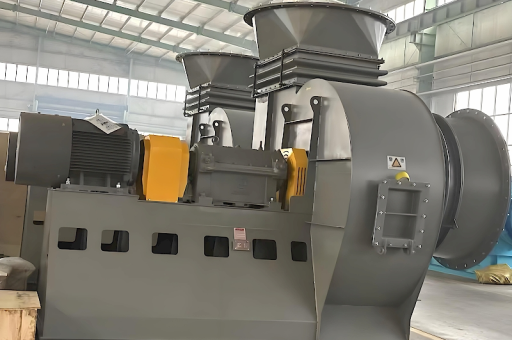
A 14000Pa 800m³/h High-Pressure Centrifugal Induced Draft Fan Blower is an industrial-grade air-moving device designed to generate extremely high static pressure (up to 14,000 Pascals) while maintaining a moderate airflow of 800 cubic meters per hour. Unlike conventional axial fans, this centrifugal fan uses a rotating impeller to accelerate air radially outward, converting kinetic energy into pressure energy. The term "induced draft" means the fan is positioned at the system’s exhaust side, pulling air or gas through ducts, filters, or heat exchangers.
This combination of high pressure and controlled airflow makes it ideal for demanding environments such as pneumatic conveying, dust collection, combustion air supply, and fume extraction. According to data from major industrial fan manufacturers, a 14000Pa rating places this fan in the "high-pressure" category (typically above 10,000 Pa), while 800m³/h is considered a medium-flow volume suitable for localized or ducted systems.
Core Technical Specifications Explained
Understanding the numbers behind the 14000Pa 800m³/h High-Pressure Centrifugal Induced Draft Fan Blower is critical for proper system design.
| Parameter | Value | Meaning |
|---|---|---|
| Static Pressure | 14,000 Pa (≈56 inWG) | Can overcome high resistance from long ducts, filters, or dense materials. |
| Airflow | 800 m³/h (≈470 CFM) | Medium volume; ideal for focused extraction or small-to-medium duct networks. |
| Impeller Type | Backward-curved or radial blades | Radial blades offer higher pressure; backward-curved are more energy-efficient. |
| Motor Power | Typically 2.2–4.0 kW (3–5.5 HP) | Depends on efficiency and operating point. |
| Speed | 2,800–3,600 RPM (direct drive) | High rotational speed is required to achieve 14,000 Pa. |
A fan of this caliber operates at the upper boundary of pressure-to-flow ratio. For comparison, a standard centrifugal fan might produce 2,000 Pa at 5,000 m³/h. Doubling the pressure requires a significantly stronger motor and stiffer housing.
How Does a High-Pressure Induced Draft Fan Work?
The operating principle of a High-Pressure Centrifugal Induced Draft Fan follows these steps:
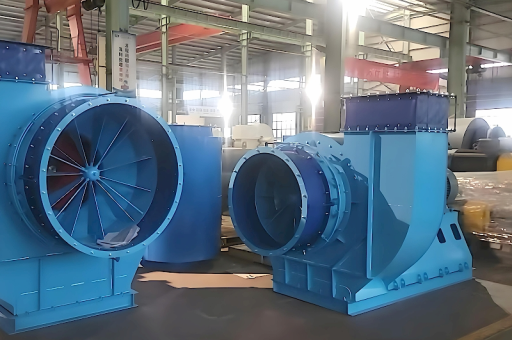
- Air Inlet: Gas enters the fan axially through the inlet cone.
- Impeller Action: The rotating impeller (with specially designed blades) flings the gas outward by centrifugal force.
- Pressure Build-Up: As air moves through the scroll housing, its velocity is converted into static pressure.
- Discharge: High-pressure air exits through the outlet duct, typically connected to a chimney, baghouse, or process line.
In induced draft configuration, the fan is placed downstream of the process. For example, a boiler furnace may use this fan to pull hot flue gases through heat exchangers and emission control filters, maintaining negative pressure in the combustion chamber.
Key difference from forced draft: In forced draft, the fan pushes air into a system. In induced draft, it pulls air out. The 14000Pa rating ensures that even if filters become partially clogged, the system still operates efficiently.
Key Industrial Applications
The 14000Pa 800m³/h High-Pressure Centrifugal Induced Draft Fan Blower finds its niche in applications requiring high resistance handling:
- Pneumatic Conveying: Transporting powders, granules, or pellets through pipelines. The high pressure (14,000 Pa) is essential to overcome friction losses in long or narrow pipes.
- Dust Collection Systems: In woodworking, cement, or metalworking plants, this fan powers baghouse filters or cartridge collectors, maintaining suction at each pick-up point.
- Boiler & Furnace Draft: Induced draft fans for industrial burners or steam boilers, where flue gases must be evacuated against stack resistance.
- Fume & Chemical Extraction: In laboratories or chemical plants, handling corrosive vapors with high static pressure to ensure no backflow.
- CIP (Clean-in-Place) Systems: In food processing, drying air is forced through sintered filters requiring high differential pressure.
A real-world example: A medium-sized cement grinding station uses a 14000Pa fan to move 800m³/h of dust-laden air from a classifier, ensuring the baghouse maintains proper filtration velocity.
Installation & Maintenance Best Practices
To maximize the lifespan of a High-Pressure Induced Draft Fan (14000Pa / 800m³/h), follow these guidelines:
Installation:
- Use vibration isolators (spring or rubber) at the base to prevent resonance.
- Ensure ductwork is properly sized; undersized ducts increase pressure drop, forcing the fan beyond its design point.
- Include a variable frequency drive (VFD) if the system load varies, as this reduces energy consumption and mechanical stress.
Maintenance:
- Inspect impeller blades for wear or corrosion every 3–6 months. The high pressure often means higher blade tip speed, accelerating erosion.
- Check bearing temperatures and lubrication; most high-pressure fans use sealed-for-life bearings but may require regreasing in dusty environments.
- Measure motor current regularly: A rise in amps without airflow increase often indicates filter clogging or impeller imbalance.
Safety: Always lock out power before maintenance. The impeller may continue spinning for minutes after shutdown due to inertia.
Frequently Asked Questions (FAQ)
Q1: Can this fan handle 14000Pa continuously?
Yes, when operated within its performance curve. However, running at maximum pressure for extended periods may require a motor with a service factor of 1.15 or higher.
Q2: Is 800m³/h enough for a whole factory?
No. This airflow is suitable for localized extraction (e.g., one dust hood, one pneumatic line). Whole-factory ventilation typically requires 10,000–50,000 m³/h.
Q3: What material is the impeller made of?
Standard: carbon steel. For corrosive gases: stainless steel 304/316 or even Hastelloy. For abrasive dust: hardened steel with wear liners.
Q4: Can I use this fan for high-temperature gases?
Special high-temperature versions exist (up to 400°C) with shaft cooling fins and heat-resistant bearings. Standard models are rated for 80°C ambient.
Q5: How does 14000Pa compare to a vacuum cleaner?
A typical vacuum cleaner produces about 15,000–20,000 Pa. This fan matches that pressure but moves 10–20 times more air, making it industrial-grade.
Q6: What is the noise level?
At 14000Pa and 800m³/h, expect 75–85 dB(A) without silencers. Use a duct silencer or enclosure for noise-sensitive areas.
Q7: Can I replace an axial fan with this centrifugal fan?
Only if your system requires higher pressure. Axial fans cannot achieve 14000Pa. However, centrifugal fans are larger and heavier.
Q8: What is the efficiency of a high-pressure centrifugal fan?
Typical static efficiency is 55–70%. High-efficiency backward-curved impellers can reach 75%. Always check the performance curve.
Conclusion: Why This Fan Matters
The 14000Pa 800m³/h High-Pressure Centrifugal Induced Draft Fan Blower bridges a critical gap in industrial ventilation: it provides the extreme pressure needed to overcome dense filter media, long ducts, or heavy materials, while keeping airflow at a manageable level. Unlike general-purpose fans, it is engineered for precision in high-resistance environments.
For engineers and plant managers, selecting a fan with the correct pressure-to-flow ratio is far more important than raw power. A fan that is too small will starve the process; one that is too large wastes energy. The 14000Pa/800m³/h combination is a sweet spot for many medium-scale pneumatic conveying and dust collection systems.
When sourcing, always verify the fan’s operating curve against your system resistance curve. Consider adding a VFD for flexibility. And remember: in the world of high-pressure airflow, proper installation and maintenance are just as important as the fan’s rated specs.
For more information or to discuss your specific application, consult a fan engineering specialist.