This article's table of contents introduction:
- What is a "Gas Booster Variable Frequency Exhaust Fan"?
- How the System Works (The Logic)
- Critical Applications
- Key Advantages of Using a VFD in this Role
- Important Engineering Considerations
- Is this for a specific project?
This is a highly specific industrial/mechanical engineering term. It sounds like you are referring to a system that combines gas boosting with a variable frequency drive (VFD) controlled exhaust fan.
Because this is a niche combination, I will break down what this system likely is, how it works, its applications, and the specific value of the VFD.
What is a "Gas Booster Variable Frequency Exhaust Fan"?
This is not a single, off-the-shelf product name. It is a descriptive system consisting of three key components:
- Gas Booster: A compressor or pump that increases the pressure of a gas (usually natural gas, biogas, landfill gas, or vapor) from a low-pressure source to a higher-pressure destination.
- Variable Frequency Drive (VFD): An electronic controller that varies the speed of an electric motor. It controls exactly how fast the fan (or booster compressor) runs.
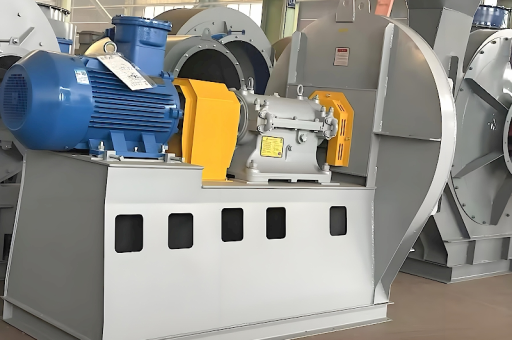
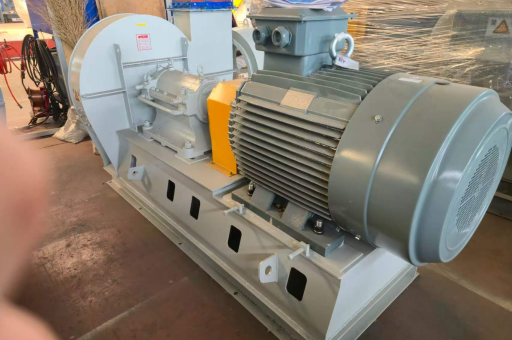
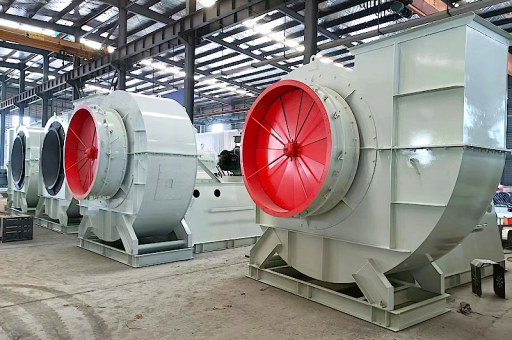
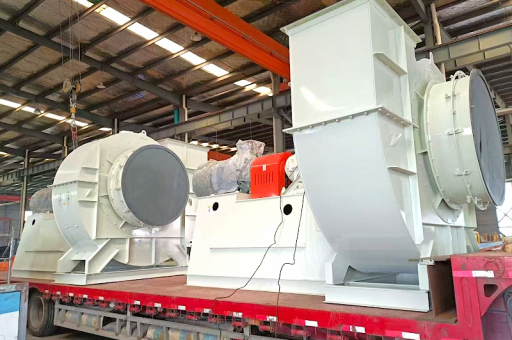
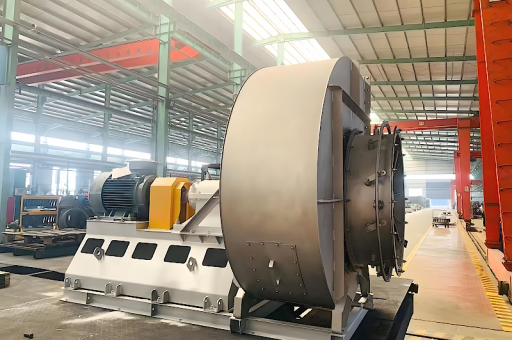
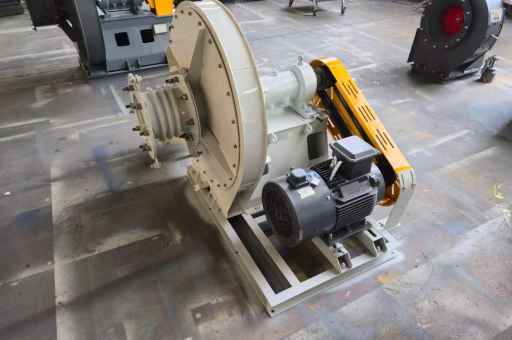
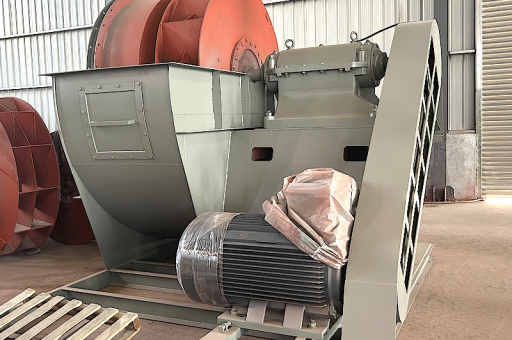
- Exhaust Fan: The prime mover that moves the gas. In this context, it is likely a centrifugal fan or blower designed for hazardous gas service (explosion-proof, leak-tight).
- How they connect: The VFD controls the motor of the exhaust fan. The fan acts as the "booster" mechanism, pulling gas from a low-pressure source (e.g., a gas holder, landfill well, or header) and exhausting it at a higher pressure into a pipeline, burner, or treatment system.
How the System Works (The Logic)
Imagine a landfill collecting methane gas.
- Without VFD: The fan runs at 100% speed all the time. It might pull too much vacuum on the wells (drawing in air) or not enough (venting methane to the atmosphere).
- With VFD (The "Booster" Control):
- A pressure transducer or vacuum sensor is placed at the fan's inlet or the system's suction header.
- The VFD receives this 4-20mA signal.
- If the inlet vacuum drops (pressure rises), the VFD slows the fan down.
- If the inlet vacuum increases (pressure drops), the VFD speeds the fan up.
- Result: The fan maintains a constant, precise vacuum or discharge pressure regardless of changes in the gas supply or demand.
Critical Applications
You will find this system in environments where gas flow is inconsistent and pressure must be strictly controlled:
- Biogas / Landfill Gas Collection: The fan acts as a "booster" to pull gas from wells across a large site. The VFD is crucial to prevent oxygen intrusion (by pulling too hard) or methane emission (by not pulling hard enough).
- Vapor Recovery Units (VRU): Recovering hydrocarbon vapors from storage tanks. The VFD regulates the flow to match vapor generation rates.
- Anaerobic Digestion: Recirculating or transferring process gas within a wastewater treatment plant.
- Industrial Pneumatic Conveying: Moving granular materials with inert gas, where precise gas velocity is critical.
- Landfill Gas Flares: Boosting low-pressure landfill gas into a high-destruction-efficiency enclosed flare.
Key Advantages of Using a VFD in this Role
- Energy Savings (The Biggest Win): Gas flow is rarely constant. Running a fan at 80% speed uses roughly 51% of the power compared to 100% speed (Fan Affinity Laws). This can pay for the VFD in months.
- Pressure / Vacuum Regulation: A VFD provides far smoother and more accurate control than valves or bypass lines. No "hunting" or pressure spikes.
- Reduced Mechanical Stress: Soft starting eliminates the mechanical shock of across-the-line starting (belt slip, bearing wear, motor winding stress).
- Hazardous Area Safety: The VFD can be programmed for a "purge cycle" before starting the fan to ensure no combustible gas is inside the motor housing.
Important Engineering Considerations
If you are specifying or troubleshooting this system, pay attention to:
- Explosion Proof Rating: The fan, motor, and potentially the VFD (if in the hazardous area) must be rated for the specific gas group (e.g., Class 1, Div 1, Group D for methane).
- Gas Sealing: The fan must have a gas-tight shaft seal (e.g., mechanical seal, magnetic drive) to prevent gas leaks.
- VFD Programming:
- PID Loop: The VFD must be configured for "Process PID" control (e.g., "Maintain 10" H2O vacuum at the suction port").
- Minimum Speed: You must set a minimum speed to prevent the fan from stalling or creating a dangerous vacuum.
- Torque Boost: Low-speed operation may require torque boost to overcome inertia.
- Motor Type: A TEFC (Totally Enclosed Fan Cooled) or TENV (Totally Enclosed Non-Ventilated) motor is required. For hazardous gas, a purged and pressurized motor or an XP (Explosion Proof) motor driven by a remotely located VFD is standard.
Is this for a specific project?
Are you designing a system for:
- A landfill gas wellfield?
- An anaerobic digester at a farm or WWTP?
- An industrial vapor recovery system?
If you can provide the specific gas, the required flow (CFM) and pressure (inches of water column or PSI), and the site classification (Class 1, Div 1 or 2), I can give you more targeted guidance on sizing or programming.