This article's table of contents introduction:
- The Scale: Putting 190,000 m³/h in Perspective
- Critical Selection Parameters
- Fan Type Recommendation
- Drivetrain and Controls
- Structural & Installation Considerations
- Common Pitfalls for a Fan This Size
- Summary Specification for a 190,000 m³/h Dust Collector Fan
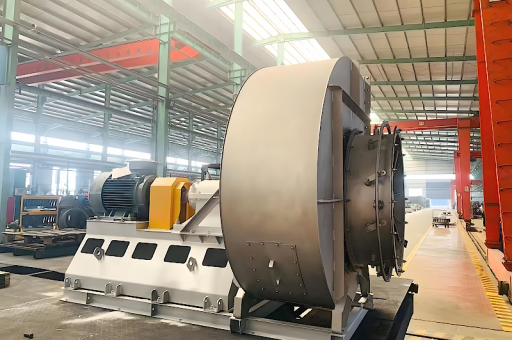
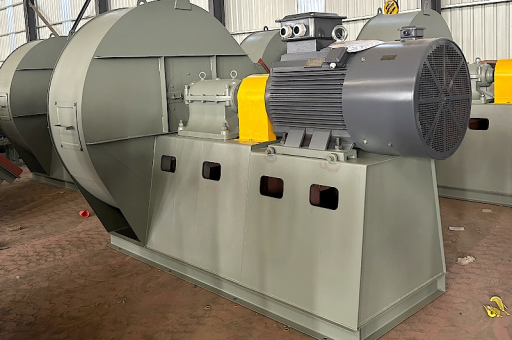
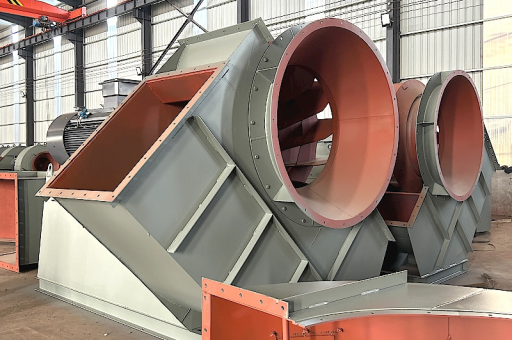
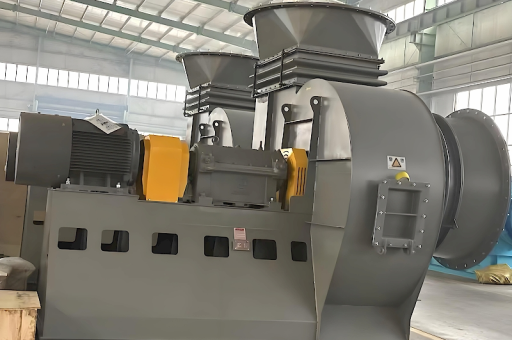
If you are working with a 190,000 m³/h Dust Collector Exhaust Fan, you are dealing with a very large industrial ventilation system. This is typical for heavy industries like cement plants, steel mills, wood processing, or large-scale chemical processing.
Here is a breakdown of what you need to consider for selection, specification, and application of a fan of this size.
The Scale: Putting 190,000 m³/h in Perspective
- Conversion: 190,000 m³/h = 3,166 m³/min = 111,800 CFM (Cubic Feet per Minute).
- Equivalent: This fan could completely change the air in a large warehouse (e.g., 100m x 50m x 10m) every 2.5 minutes.
- Motor Power: For a typical dust collector with moderate pressure (2.5 - 4 kPa or 10" - 16" w.g.), this will likely require a motor between 250 kW and 400 kW (approx. 350 to 550 HP).
Critical Selection Parameters
You cannot select a fan based on flow rate alone. You must match it to your dust collector's Resistance (Pressure Drop) .
| Parameter | Typical Range for 190k m³/h | Notes |
|---|---|---|
| Flow Rate (Q) | 190,000 m³/h (fixed requirement) | Duty point for the system. |
| Static Pressure (SP) | 2,000 - 5,000 Pa (8" - 20" w.g.) | Depends on duct length, filter bag condition, and collector type. This is the most common mistake—underestimating pressure. |
| Air Density | 0 - 1.2 kg/m³ (standard) | Higher if hot or at altitude. |
| Temperature | Ambient to 80°C (standard) | Higher if exhaust is from a dryer or kiln. |
| Dust Type | Abrasive (sand), Fibrous (textiles), Sticky (paint) | Dictates material selection for the impeller. |
Fan Type Recommendation
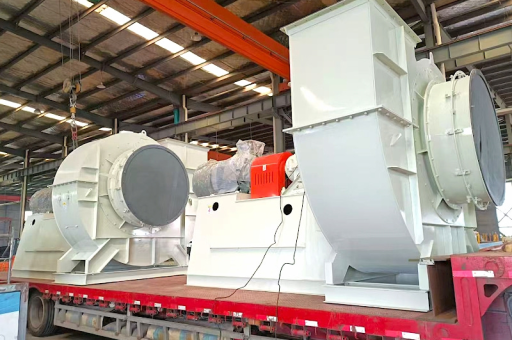
For this volume and typical dust collector applications, the best configuration is a Centrifugal Fan .
| Fan Type | Pros | Cons | Suitability for 190,000 m³/h |
|---|---|---|---|
| Backward Curved (BC) | High efficiency (80-85%), non-overloading power curve. | Less tolerant of very heavy dust. | Excellent for most continuous duty. |
| Airfoil (AF) | Highest efficiency (85-90%), quieter. | Expensive, blades can wear if dust is abrasive. | Best for energy savings if air is clean-ish. |
| Radial (Paddle Wheel) | Handles heavy, sticky, or abrasive dust well. | Lower efficiency (60-70%), higher noise. | Required if dust is very tough (e.g., steel grinding). |
| Radial Tip | Compromise between BC efficiency and radial durability. | Moderate cost. | Excellent for abrasive dust with good efficiency. |
Verdict: For a 190k m³/h dust collector, a Backward Curved or Radial Tip fan is the industry standard.
Drivetrain and Controls
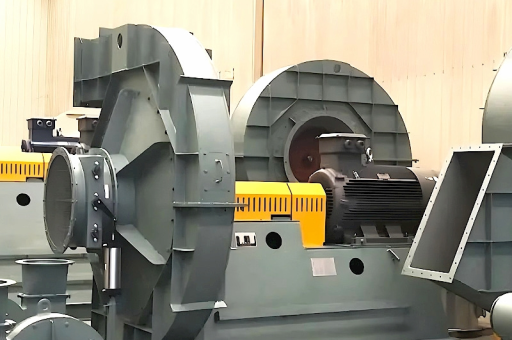
- Drive Type: Direct Drive is preferred for large fans.
- Direct Drive (Coupling): No belt losses (saves ~3-5% energy), less maintenance.
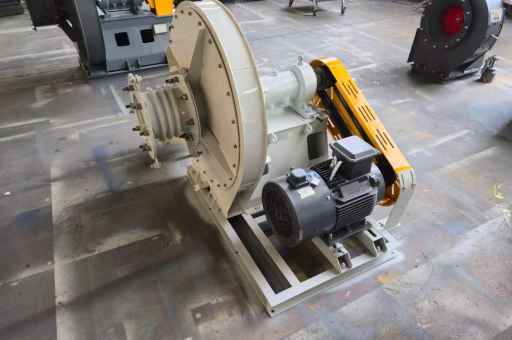
- Belt Drive: Allows for easy speed changes, but not recommended at this power level (belt slippage and tensioning become problematic over 200 kW).
- Speed: Expect a rotational speed of 800 – 1,500 RPM (needs a large motor or gearbox).
- Motor: Squirrel cage induction motor, ideally IE4 (Super Premium Efficiency) to reduce massive energy costs.
- VFD (Variable Frequency Drive): Highly recommended. A 190,000 m³/h fan will consume roughly 2,000,000 kWh per year. A VFD allows for soft start, flow control, and significant energy savings (up to 30%) if the system doesn't always run at full capacity.
Structural & Installation Considerations
- Base: This fan is heavy. It requires a massive, rigid concrete inertia base to prevent vibration and structural damage.
- Isolation: Heavy-duty spring isolators are mandatory to prevent vibration transmission to the building.
- Sound: This fan will be loud (likely >95 dBA). You will need an inlet silencer and likely an acoustic enclosure to meet workplace noise regulations (e.g., <85 dBA).
- Ductwork: The inlet and outlet ductwork must be properly sized (e.g., >1.4 m diameter or rectangular equivalent). Never use a reducer smaller than the fan inlet.
- Airflow Control: A Shut-Off Damper (isolation damper) is needed for maintenance. An Inlet Box Damper can be used for control (more stable than outlet dampers).
Common Pitfalls for a Fan This Size
- Underestimating Pressure: A brand-new dust collector may have a low pressure drop (e.g., 1.5 kPa). After 6 months with dirty bags, resistance can rise to 3.0 kPa. If your fan is only designed for 1.5 kPa, airflow will drop to ~130,000 m³/h, and the dust collector will stop working. Always design for the worst-case pressure drop.
- Ignoring Energy Costs: A 300 kW motor running 8,000 hours/year at $0.10/kWh costs $240,000 per year in electricity. A 5% reduction in efficiency (e.g., using a radial blade instead of BC) wastes $12,000/year.
- Vibration: A large fan out of balance will damage bearings, the motor, and the ductwork. Require a balance grade of G2.5 or better and real-time vibration monitoring.
Summary Specification for a 190,000 m³/h Dust Collector Fan
If you are writing a purchase order, a simplified specification would look like this:
Dust Collector Exhaust Fan
- Type: Centrifugal, Heavy Duty, Backward Curved (or Radial Tip for abrasive dust).
- Performance:
- Volume Flow: 190,000 m³/h
- Static Pressure: 3,500 Pa (Adjust based on your system)
- Air Density: 1.2 kg/m³
- Temperature: 40°C
- Construction: Heavy gauge carbon steel, flanged connections.
- Drivetrain: Direct drive via flexible coupling. Inlet box with damper.
- Motor: 315 kW, 1,500 RPM, IE4 efficiency, 3-phase, 660V (or your local voltage).
- Accessories: VFD, isolation damper, inlet silencer, spring vibration isolators, vibration sensors.
Do you have the specific static pressure (system resistance) for your dust collector? That is the most critical number needed to finalize the fan selection.