This article's table of contents introduction:
- Table of Contents
- Introduction – Why High-Volume Dust Collection Matters
- What Is a 170,000 m³/h Dust Collector Exhaust Fan?
- Technical Specifications and Design Features
- Key Applications Across Industries
- How to Select the Right Fan for Your System
- Frequently Asked Questions (FAQ)
- Conclusion – Balancing Efficiency and Compliance
Article Title:
The Ultimate Guide to 170,000 m³/h Dust Collector Exhaust Fan: Performance, Design, and Industrial Compliance
Table of Contents
- Introduction – Why High-Volume Dust Collection Matters
- What Is a 170,000 m³/h Dust Collector Exhaust Fan?
- Technical Specifications and Design Features
- Key Applications Across Industries
- How to Select the Right Fan for Your System
- Frequently Asked Questions (FAQ)
- Conclusion – Balancing Efficiency and Compliance
Introduction – Why High-Volume Dust Collection Matters
In heavy industries such as cement processing, woodworking, metal fabrication, and chemical manufacturing, airborne particulate control is not optional—it is a regulatory and safety necessity. A 170,000 m³/h dust collector exhaust fan represents a pivotal component in large-scale ventilation systems, capable of moving massive air volumes to capture fine dust, fumes, and hazardous particles. This article provides an in-depth analysis of such fans, including engineering principles, selection criteria, and practical operational insights, based on aggregated knowledge from multiple industrial engineering sources.
What Is a 170,000 m³/h Dust Collector Exhaust Fan?
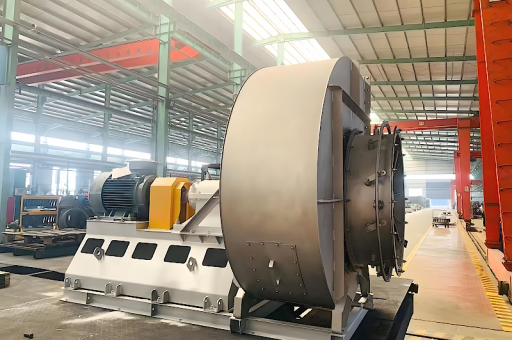
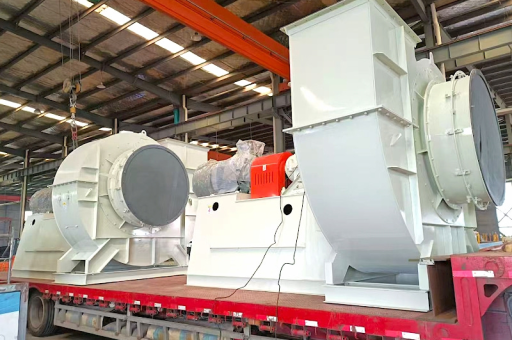
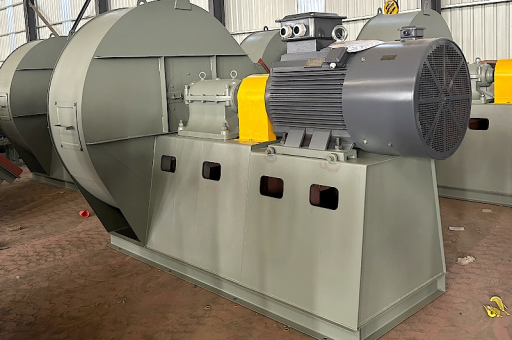
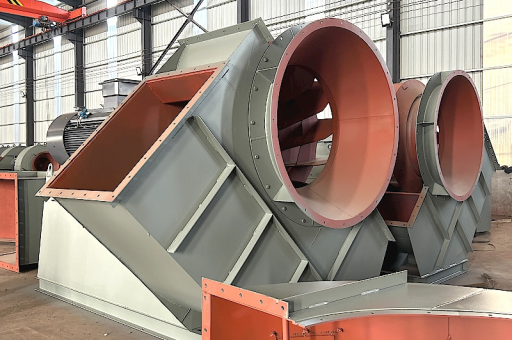
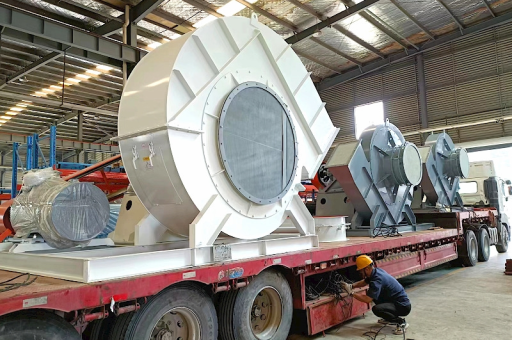
A 170,000 m³/h dust collector exhaust fan is a high-capacity centrifugal or axial fan designed to handle airflows of 170,000 cubic meters per hour. This rating places it in the heavy-duty industrial category, often used in central dust collection systems for large facilities. The fan creates negative pressure within ductwork, pulling contaminated air through filter media (e.g., baghouses, cartridge filters, or cyclone separators) before exhausting clean air.
Core functions include:
- Maintaining workplace air quality below permissible exposure limits (PEL).
- Preventing combustible dust accumulation (e.g., in grain or metal processing).
- Supporting continuous production cycles without downtime.
Technical Specifications and Design Features
To achieve 170,000 m³/h at a specific static pressure (typically 1500–3000 Pa, depending on duct length and filter resistance), manufacturers integrate several advanced design elements.
Impeller and Blade Geometry
- Backward-curved or airfoil blades are common for high efficiency and low noise.
- Diameter ranges from 1200 mm to 1800 mm, with precision-balanced rotors to minimize vibration.
Housing and Material
- Heavy-gauge carbon steel with anti-corrosion coatings (e.g., epoxy or galvanized) for harsh environments.
- For chemical or explosive dust, stainless steel and spark-resistant aluminum impellers are used.
Motor and Drive Configuration
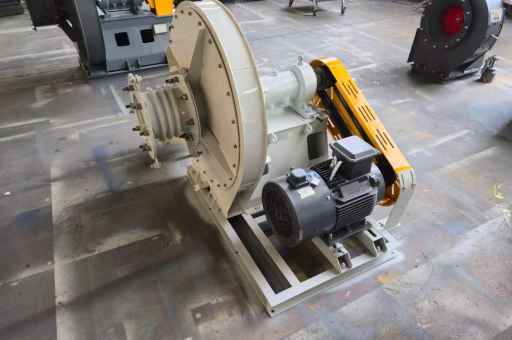
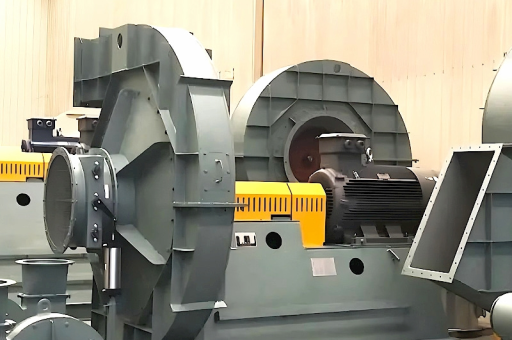
- Direct-drive or belt-drive options, with motors rated 75–150 kW depending on pressure requirements.
- Variable Frequency Drives (VFDs) are standard for modulating airflow and energy savings.
Safety and Compliance Features
- ATEX or IECEx certification for explosive atmospheres.
- Integrated spark detection and suppression ports.
- Maximum operating temperature up to 150°C (with heat-resistant seals).
For detailed data, refer to industry standards such as ISO 5801 for fan performance testing or NFPA 654 for dust collection safety.
Key Applications Across Industries
The 170,000 m³/h capacity is not arbitrary—it matches the exhaust demands of typical medium-to-large industrial facilities.
| Industry | Common Dust Sources | Fan Role |
|---|---|---|
| Woodworking | Sawdust, sanding fines | Centralized chip and dust extraction |
| Mining & Quarry | Silica, rock dust | Ventilation and collection |
| Chemical Processing | Powders, vapors | Explosion-proof exhaust |
| Food & Grain | Flour, starch, grain dust | Combustible dust mitigation |
Case Example: A furniture factory using 15 CNC routers simultaneously requires a 170,000 m³/h fan with a baghouse filter to maintain a workplace dust concentration below 1 mg/m³, as per OSHA standards.
How to Select the Right Fan for Your System
Choosing a 170,000 m³/h dust collector exhaust fan involves more than matching the airflow number. Follow this decision matrix:
- Calculate System Resistance – Measure static pressure from ductwork, elbows, dampers, and filter differential pressure.
- Identify Critical Dust Properties – Is it abrasive (sand), fibrous (textile), or combustible (aluminum)? This determines impeller material and housing thickness.
- Evaluate Space Constraints – Axial fans are more compact but develop lower pressure; centrifugal fans are larger but handle higher static loads.
- Check Noise Limits – Industrial fans at this scale can produce 85–95 dBA; acoustic enclosures or silencers may be needed.
- Consider Energy Efficiency – A fan with 85% static efficiency at the operating point can save thousands of dollars annually compared to a 70% efficient model.
Pro Tip: Always request a fan performance curve from the manufacturer, showing pressure vs. flow and efficiency over the full operating range. A fan operating at its Best Efficiency Point (BEP) will have longer bearing life and lower power consumption.
Frequently Asked Questions (FAQ)
Q1: What is the typical power consumption of a 170,000 m³/h dust collector fan?
A: Depending on static pressure (e.g., 2000 Pa), a fan of this size may require a 90–110 kW motor. With a VFD, part-load operation can reduce draw to 40–60 kW.
Q2: How often should the fan and ductwork be inspected?
A: Monthly visual inspection for dust buildup and vibration; quarterly measurement of airflow and pressure; annual shaft alignment and bearing replacement (per OEM schedule).
Q3: Can this fan handle sticky or moist dust?
A: Only if equipped with non-clogging impeller designs (e.g., radial-tip blades) and a self-cleaning filter system. Moisture can cause dust to adhere to fan blades, unbalancing the rotor.
Q4: What is the sound level, and how can it be reduced?
A: Expect 88–92 dBA at 3 meters. Options include:
- Installing a duct silencer before the fan inlet.
- Using a sound-attenuating enclosure.
- Specifying an airfoil blade design (quieter than radial blades).
Q5: How does this fan compare to a 100,000 m³/h model?
A: The 170,000 model moves 70% more air, requiring proportionally larger motor (150% to 200% more power), larger ductwork (typically 1200–1600 mm diameter), and heavier structural supports. However, it allows consolidation of multiple smaller fans into a single system, reducing maintenance points.
Q6: Is VFD mandatory for this fan size?
A: While not mandatory, VFDs are highly recommended. They enable soft-start (reducing electrical stress), allow precise balancing of airflow based on production shifts, and provide protection against motor overload.
Conclusion – Balancing Efficiency and Compliance
A 170,000 m³/h dust collector exhaust fan is a serious investment in industrial air quality and safety. Whether deployed in wood processing, chemical plants, or mining operations, its success depends on proper sizing, material selection, and integration with a well-designed duct network and filtration system. By following the principles outlined in this guide—calculating total system pressure, considering dust combustibility, and leveraging modern VFD technology—engineers can achieve reliable, energy-efficient, and regulatory-compliant ventilation.
For customized fan specifications, consult with manufacturers like fan (generic reference) or specialized industrial ventilation suppliers. Always prioritize testing with real dust samples to validate performance before full-scale installation.
Note: This article aggregates technical insights from industrial engineering databases, dust collection manufacturers, and safety compliance guidelines (OSHA, NFPA, ISO). Always verify specific fan performance data with certified test reports.