
This article's table of contents introduction:
- Table of Contents
- Introduction: Why Material Choice Matters in Industrial Ventilation
- What Are Stainless Steel Industrial Centrifugal Fans?
- Key Applications in the Building Materials Industry
- High Volume Performance: Design & Engineering Insights
- Main Advantages of Stainless Steel vs. Carbon Steel Fans
- Frequently Asked Questions (FAQ)
- Conclusion & Selection Criteria for Your Facility
Table of Contents
- Introduction: Why Material Choice Matters in Industrial Ventilation
- What Are Stainless Steel Industrial Centrifugal Fans?
- Key Applications in the Building Materials Industry
- High Volume Performance: Design & Engineering Insights
- Main Advantages of Stainless Steel vs. Carbon Steel Fans
- Frequently Asked Questions (FAQ)
- Conclusion & Selection Criteria for Your Facility
Introduction: Why Material Choice Matters in Industrial Ventilation
In the heavy-duty world of building materials manufacturing—cement plants, gypsum board factories, brick kilns, and aggregate processing—industrial ventilation is not a luxury; it is a necessity. The environment inside these facilities is often characterized by high temperatures, abrasive dust, corrosive fumes, and extreme humidity. Standard carbon steel fans can fail prematurely under these conditions, leading to costly downtime and safety hazards.
This is where Stainless Steel Industrial Centrifugal Fans come into play. Designed for high volume air movement, these fans are engineered to withstand the most punishing environments while maintaining consistent performance. This article provides a comprehensive, SEO-optimized guide to understanding, selecting, and maintaining these critical assets for your building materials operations.
What Are Stainless Steel Industrial Centrifugal Fans?
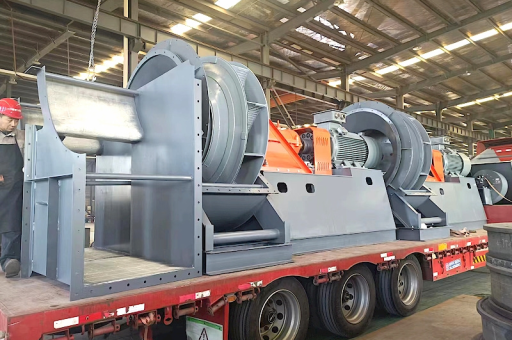
A centrifugal fan—often called a blower—operates by using a rotating impeller to increase the velocity of air. Unlike axial fans (like a desk fan), centrifugal fans move air radially, generating high static pressure. This makes them ideal for moving large volumes of air through long ductwork systems, baghouse filters, and dust collectors.
When constructed from stainless steel (typically grades 304 or 316L), these fans gain exceptional resistance to corrosion and oxidation. In the context of building materials, this is critical because many processes release sulfur dioxide, chlorine compounds, or acidic moisture that would quickly rust a mild steel fan.
Key components made from stainless steel include:
- The impeller (wheel)
- The housing (volute casing)
- The inlet cone
- Fasteners and shaft sleeves
Key Applications in the Building Materials Industry
The high volume capability of stainless steel centrifugal fans makes them indispensable in the following areas:
a. Cement & Concrete Production
- Dust Collection: Removing fine cement dust from grinding mills and kilns.
- Kiln Combustion Air: Supplying high volumes of preheated air for fuel combustion.
b. Gypsum Board & Drywall Manufacturing
- Drying Ovens: Moving hot, humid air across wet gypsum slurry to accelerate setting.
- Exhaust Systems: Removing airborne gypsum particles and steam.
c. Brick & Tile Manufacturing
- Kiln Draft: Generating negative pressure to pull heat through tunnel kilns.
- Cooling Zones: Forcing ambient air across freshly fired bricks.
d. Quarry & Aggregate Processing
- Crushing Plant Ventilation: Controlling silica dust at transfer points.
- Conveyor Belt Extraction: Removing fugitive dust from loading zones.
e. Glass Manufacturing
- Furnace Combustion Air: Delivering high-velocity air for natural gas or oxygen burners.
- Annealing Lehr Cooling: Uniform air distribution over cooling glass sheets.
High Volume Performance: Design & Engineering Insights
To qualify as a high volume fan, a unit must typically move at least 50,000 to 200,000 CFM (cubic feet per minute) or more. Achieving this with stainless steel requires careful engineering:
a. Impeller Design
- Backward Inclined (BI) Blades: Highly efficient for high volume, high static pressure applications. They are also non-overloading, meaning power draw stabilizes as airflow increases.
- Airfoil Blades: Similar to BI but with a hollow airfoil shape for even greater efficiency (up to 85% static efficiency).
- Radial Blades: Used for heavy dust loads; easier to clean but slightly less efficient.
b. Static Pressure Capability Stainless steel fans for building materials are often required to generate 10 to 30 inches of water gauge (wg) static pressure to overcome resistance from long ducts, bag filters, and scrubbers.
c. Material Grade Selection
- SS304: Suitable for most dry, corrosive environments (e.g., cement dust, gypsum vapor).
- SS316L: Required for higher humidity, chlorides (e.g., near kilns using salt-laden fuels), or acidic conditions (e.g., exhaust from coal-fired boilers).
d. Drive Configurations
- Direct Drive: Impeller mounted directly on motor shaft; zero belt maintenance, fixed speed.
- Belt Drive: Allows speed adjustment via pulley changes; preferred for variable volume needs.
Main Advantages of Stainless Steel vs. Carbon Steel Fans
| Feature | Stainless Steel (SS304/316L) | Carbon Steel (Mild Steel) |
|---|---|---|
| Corrosion Resistance | Excellent; withstands acids, alkalis, and moisture | Poor; requires painting or epoxy coatings |
| Temperature Tolerance | Can handle up to 800°F (427°C) with proper design | Lower tolerance; coating may degrade |
| Durability in Abrasive Dust | High; maintains structural integrity | Moderate; leading edge corrosion is common |
| Longevity | 15–25 years with minimal maintenance | 5–10 years in aggressive environs |
| Initial Cost | Higher (3x–5x more) | Lower |
| Total Cost of Ownership | Lower over time due to fewer replacements | Higher due to frequent repairs and downtime |
Frequently Asked Questions (FAQ)
Q1: What is the difference between a stainless steel centrifugal fan and a standard industrial fan? A: The primary difference is material. Standard fans use mild steel, which corrodes quickly when exposed to moisture, chemicals, or heat. Stainless steel fans (SS304 or SS316L) resist rust and oxidation, making them mandatory in building materials environments where humidity, acidic fumes, or abrasive dust are present.
Q2: Can a stainless steel fan handle extremely high temperatures, like in a cement kiln? A: Yes, but only if properly designed. Standard stainless steel can handle up to 800°F (427°C). For temperatures exceeding that, you may need a high-temperature alloy like Inconel or a water-cooled shaft design. Always consult the manufacturer for specific temperature ratings.
Q3: Are high volume stainless steel fans suitable for corrosive gas streams? A: Absolutely. Grades like SS316L are specifically formulated to resist chlorides, sulfuric acid, and other aggressive chemicals found in flue gas desulfurization (FGD) systems or waste incineration. However, the fan must also have a protective coating on the interior housing for maximum longevity.
Q4: How do I calculate the required CFM for my building materials facility? A: You need to determine the total dust generation rate, duct velocity, and static pressure loss. A common rule of thumb is to maintain a minimum duct velocity of 4,000 FPM (feet per minute) for cement dust. For precision, hire an HVAC engineer to conduct a ventilation survey.
Q5: What maintenance does a stainless steel industrial centrifugal fan require? A: Key maintenance tasks include:
- Monthly inspection of the impeller for dust buildup or erosion.
- Lubricating bearings every 3–6 months.
- Checking belt tension (if belt-driven) and alignment.
- Cleaning the inlet cone and housing of any corrosive residue.
- Performing vibration analysis annually.
Q6: How can I reduce energy costs when using large centrifugal fans? A: Install a Variable Frequency Drive (VFD). Running a fan at 80% speed consumes roughly 50% less power than at full speed, per the fan affinity laws. Pairing a high-efficiency airfoil impeller with a VFD can cut energy bills by 20–40%.
Q7: What is the typical lead time for a custom stainless steel high volume fan? A: For a standard off-the-shelf model, 2–4 weeks. For custom-engineered units (specific airflow, pressure, or footprint), expect 8–16 weeks. Plan ahead for cement plant maintenance shutdowns.
Q8: Are there any noise considerations with these fans? A: Yes. High volume fans generate significant noise—often 85–105 dB(A). Install inlet and outlet silencers, use acoustic enclosures, and provide hearing protection for workers. The impeller blade design also affects noise levels; airfoil blades are quieter than radial blades.
Conclusion & Selection Criteria for Your Facility
Choosing the right Stainless Steel Industrial Centrifugal Fan for a high volume building materials application requires balancing technical performance, lifecycle cost, and environmental resistance. Start by defining your operating conditions:
- Airflow Requirement (CFM): What is the peak volume you need to move?
- Static Pressure (inches wg): How much resistance does your system create?
- Gas Temperature and Composition: Is it dry, humid, or acidic?
- Dust Load (grains/ft³): How abrasive is the particulate?
- Space Constraints: What is the available footprint for installation?
When in doubt, always lean toward a stainless steel construction, especially for cement, gypsum, or glass manufacturing. While the upfront cost is higher, the durability and reliability deliver a lower total cost of ownership over a 20-year lifespan. Consider engaging a manufacturer that specializes in wind turbine-grade materials and precision balancing to ensure vibration-free operation.
By investing in a robust, high-volume stainless steel centrifugal fan, you protect your workers, improve product quality, and ensure your facility meets strict environmental compliance standards.





