
This article's table of contents introduction:
- The Core Function: Wall Cooling via Primary Air
- Key Technical Specifications for this Fan
- The Most Suitable Fan Type: Centrifugal
- Critical Operational Challenges
- Summary: Answering the Implicit Question
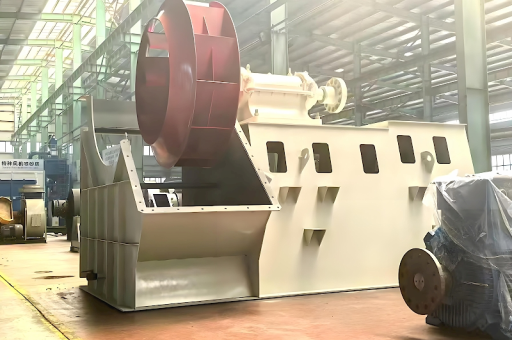
This is a highly specific industrial fan application. To give you the most accurate and useful answer, we need to break down the function of Exhaust Industrial Centrifugal Fans for Primary Air Oven Wall Cooling.
Below is a technical breakdown of what this fan does, the critical design considerations, and the type of fan most suitable for this exact duty.
The Core Function: Wall Cooling via Primary Air
In industrial furnaces (like Cement Pre-heaters, Steel Reheat Furnaces, or Petrochemical Reactors), the Primary Air has two distinct roles:
- Combustion Support: A portion of the primary air is mixed with fuel to start combustion.
- Wall Cooling (Your Specific Application): A critical portion of the primary air flow is directed through channels inside the walls of the oven or burner quarl (the refractory block surrounding the burner).
Why "Exhaust"? The fan isn't just blowing fresh air into the furnace. It is often exhausting or recirculating hot, dusty gas back into the system, or it is exhausting cooling air that has already passed through the wall jacket.
The Fan's Job:
- Supply: Provide high-pressure air to overcome the resistance of the wall cooling channels.
- Ventilation: Remove the hot, used air (often laden with dust or toxic fumes) from the wall jacket to prevent overheating and structural failure.
- Pressure Maintenance: Maintain a specific static pressure to ensure the cooling channel geometry (often complex serpentine paths) is fully utilized.
Key Technical Specifications for this Fan
You cannot use a standard HVAC fan. The environment is brutal. Here are the mandatory specifications:
Temperature Rating
- Standard: 200°C - 400°C (400°F - 750°F)
- High-Limit: Up to 550°C (1022°F) with special alloys and shaft cooling.
- Why? The air has been heated by the oven wall. The fan casing and impeller must be built from materials that retain strength at high temps.
Material of Construction
- Casing: Carbon Steel is acceptable for lower temps. Stainless Steel (SS 310/316) or Hastelloy is required for high temp + corrosive exhaust.
- Impeller: Must be High-Temperature Alloy. Common choices are Corten Steel or Inconel (for extreme heat + abrasion).
- Shaft: Must be sealed with high-temperature labyrinth seals to prevent heat traveling to the bearings.
Pressure & Flow
- Pressure: High static pressure (20" - 80" w.g. or 5 - 20 kPa). Wall cooling channels are often narrow and winding.
- Flow: High volume, but the pressure is the critical factor.
- Air Density: The fan must be sized for hot air density. Hot air is less dense, so the fan motor must be sized for the power at operating temperature, not cold start.
Aeration & Dust Handling
- Air Source: If this is recirculated furnace gas (containing abrasive dust), the fan must have heavy-duty wear plates and an abrasion-resistant impeller.
- Air Source: If it is clean, cool ambient air being used for cooling (and then exhausted), the fan can be simpler but must still handle the heat exhaust from the wall.
The Most Suitable Fan Type: Centrifugal
For this specific duty, you almost always need a Backward Curved or Radial Blade Centrifugal Fan.
| Fan Type | Suitability for Oven Wall Cooling |
|---|---|
| Backward Curved | Best for High Efficiency. Good for clean or moderately dusty air. Can run at higher speeds. |
| Radial (Paddle Wheel) | Best for Harsh Conditions. Handles dust, sticky particles, and high heat better. Lower efficiency but more robust. |
| Airfoil | NOT Recommended. The blades are delicate and will fail quickly under thermal stress or dust impact. |
The "Exhaust" designation means the fan is likely positioned after the wall cooling circuit, pulling the hot air out.
Critical Operational Challenges
- Thermal Expansion: The casing and impeller expand at different rates. The impeller must have an oversized center hole to prevent shaft binding when hot.
- Bearing Cooling: The shaft conducts heat. The bearings must be housed in a heat slinger or finned housing with forced grease or oil mist lubrication. A cooling fan on the shaft is mandatory.
- Vibration: Uneven cooling of the wall or dust buildup on the impeller causes imbalance. Continuous vibration monitoring is essential (probes rated for high temp).
Summary: Answering the Implicit Question
Q: I need an Exhaust Industrial Centrifugal Fan for Primary Air Oven Wall Cooling. What do I look for?
A: You need a Radial (or Heavy-Duty Backward Curved) Centrifugal Fan built from Stainless Steel 310/Inconel, rated for 400°C+ continuous operation, with heavy-duty shaft cooling, abrasion-resistant liners (if handling dust), and a motor sized for hot air density.
This is not a standard fan. You must work with a specialized industrial fan manufacturer (e.g., Howden, New York Blower, Robinson Fans, Cincinnati Fan) and provide them with:
- Exact gas composition (is it combustion exhaust or just hot air?)
- Inlet temperature & density
- Required static pressure & volume at operating temperature
- Dust loading (grains per cubic foot)





