
** The Ultimate Guide to the 250kW Dust Removal Centrifugal Induced Draft Fan: Design, Applications, and Industrial Performance
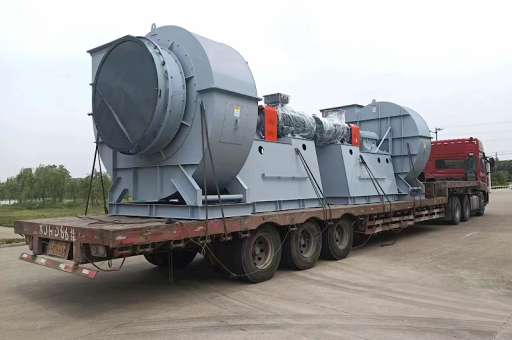
Table of Contents
- Introduction: The Role of High-Power Induced Draft Fans in Modern Industry
- Technical Specifications of the 250kW Centrifugal Induced Draft Fan
- Core Design Principles and Aerodynamic Engineering
- Operational Mechanism: How Dust Removal is Achieved
- Key Applications in Heavy Industries
- Comparative Analysis: 250kW vs. Smaller and Larger Fan Systems
- Performance Optimization and Energy Efficiency
- Common Questions and Expert Answers (FAQ)
- Conclusion: Future Trends and Integration with wind turbine Systems
Introduction: The Role of High-Power Induced Draft Fans in Modern Industry
In the demanding environment of industrial dust collection, few mechanical systems match the sheer capacity and reliability of the 250kW dust removal centrifugal induced draft fan. This heavy-duty equipment is engineered to handle massive volumes of particulate-laden air in sectors such as cement production, steel smelting, chemical processing, and thermal power generation. Induced draft (ID) fans operate downstream of dust collectors, pulling exhaust gases through filters and ductwork via negative pressure. The 250kW power rating places this unit in the high-performance category, capable of moving air at rates exceeding 200,000 cubic meters per hour under standard conditions.
The integration of advanced aerodynamic design with high-torque electric motors makes this fan a cornerstone of modern emissions control. Unlike traditional axial fans, the centrifugal design of this 250kW induced draft fan generates higher static pressure, essential for overcoming resistance from long ducts, baghouses, and scrubbers. This article explores its technical anatomy, operational principles, and industrial significance, while also addressing common engineering queries.
Technical Specifications of the 250kW Centrifugal Induced Draft Fan
The 250kW dust removal centrifugal induced draft fan typically exhibits the following core parameters:
- Power Rating: 250 kW (approximately 335 horsepower)
- Impeller Diameter: Ranges from 1,800 mm to 2,500 mm depending on manufacturer
- Maximum Airflow: 200,000 – 280,000 m³/h
- Static Pressure: 3,500 – 6,000 Pa
- Rotational Speed: 580 – 980 RPM (driven by VFD for variable speed)
- Operating Temperature: Up to 250°C (with special alloys up to 450°C)
- Noise Level: Typically 85 – 95 dB(A) without silencer
- Materials: Q235 carbon steel with wear-resistant lining or stainless steel for corrosive applications
These figures illustrate the fan’s ability to sustain high-pressure differentials while moving vast quantities of dusty gas. The 250kW induction motor is commonly coupled with a hydraulic coupling or variable frequency drive (VFD) to allow soft start and energy modulation.
Core Design Principles and Aerodynamic Engineering
The centrifugal induced draft fan operates on the principle of kinetic energy conversion. Air enters the impeller axially and is forced radially outward by rotating blades. In the 250kW variant, the impeller design uses backward-curved blades—either single thickness or airfoil section. This geometry minimizes turbulence and maximizes static pressure recovery at the volute.
A key engineering feat is the wear resistance strategy. Because dust particles erode material surfaces, the fan casing and impeller are often treated with ceramic coatings or lined with replaceable wear plates. The shaft is supported by heavy-duty spherical roller bearings, often equipped with temperature sensors and lubrication monitoring.
The volute casing expands gradually to convert velocity energy into static pressure with minimal losses. Computational fluid dynamics (CFD) optimization has allowed modern 250kW fans to achieve isentropic efficiencies exceeding 82%, a significant improvement over older designs.
Operational Mechanism: How Dust Removal is Achieved
In a typical dust collection system, the 250kW induced draft fan is positioned after the filtration unit. It creates a negative pressure that pulls contaminated air from hoods, ducts, and enclosures toward the dust collector. Key operational stages include:
- Suction Phase: The fan draws dusty gas through ductwork. The negative pressure ensures no fugitive emissions escape.
- Filtration and Separation: Before reaching the fan, most particles are captured in baghouse filters or cyclones.
- Exhaust Phase: The fan discharges cleaned air to the atmosphere or recirculates it.
Because the fan handles only post-filtration air, the dust load is minimal. However, leakage or bypass events can expose the impeller to dust, making robust construction critical. The 250kW power rating ensures that even if filter pressure drop increases (e.g., due to blinding), the system maintains required airflow.
Key Applications in Heavy Industries
The 250kW dust removal centrifugal induced draft fan is not a one-size-fits-all product. Its deployment varies by sector:
- Cement Plants: Used for kiln exhaust and raw mill dedusting. The high static pressure compensates for long horizontal ducts.
- Steel Mills: Required for electric arc furnace (EAF) fume extraction. The fan must handle hot, dry particulate at high velocities.
- Biomass Power Plants: Integrated with cyclone separators to handle ash-laden flue gas.
- Chemical Industry: Moves corrosive vapors through scrubbers. Material selection shifts to stainless steel or FRP.
- Renewable Energy and wind turbine Manufacturing: In component fabrication facilities, these fans maintain clean air during composite layup and paint operations.
Interestingly, the fan itself shares design principles with components used in large wind turbine cooling systems, where high-static-pressure fans are needed to direct airflow through generators and gearboxes in nacelles.
Comparative Analysis: 250kW vs. Smaller and Larger Fan Systems
To appreciate the 250kW class fan, consider the performance ladder:
| Parameter | 75kW Fan | 250kW Fan | 500kW Fan |
|---|---|---|---|
| Airflow (m³/h) | 90,000 | 240,000 | 450,000 |
| Static Pressure (Pa) | 2,500 | 5,000 | 7,500 |
| Impeller Weight (kg) | 600 | 1,800 | 3,500 |
| Motor Frame Size | 315 | 450 | 560 |
The 250kW fan represents the sweet spot for medium-to-large facilities. It is compact enough for most building constraints yet powerful enough to serve multiple dust collection points. Smaller fans often require parallel operation, increasing complexity. Larger fans demand reinforced foundations and high-voltage switchgear.
Performance Optimization and Energy Efficiency
Industrial operators are increasingly focused on reducing energy consumption. For a 250kW fan running 8,000 hours annually, even a 5% efficiency gain saves approximately 100,000 kWh per year. Key optimization strategies include:
- Variable Frequency Drive (VFD): Matches fan speed to actual demand, reducing power draw at lower loads.
- Inlet Guide Vanes: Provide flow control without excessive pressure drop.
- Impeller Balancing: High-precision balancing reduces vibration and bearing wear.
- Leakage Reduction: Sealing duct joints and fan casing prevents wasted energy.
- Regular Cleaning: Dust accumulation on blades degrades performance; scheduled cleaning restores efficiency.
Some fans are now paired with predictive maintenance systems that monitor vibration, temperature, and current draw to alert operators before failures occur.
Common Questions and Expert Answers (FAQ)
Q1: Why is 250kW the preferred power rating for large induced draft fans? A: The 250kW rating balances capability and cost. It enables suction of heavy dust loads without demanding specialized high-voltage transformers. Many existing industrial electrical infrastructures (480V or 690V) can support this motor size with standard soft starters.
Q2: Can this fan be used for clean air, or only for dust removal? A: While designed for dust-laden air, it can be used for clean air ventilation if pressure and flow requirements match. However, its structural reinforcements and blade coatings are optimized for abrasive environments.
Q3: How does it compare with a wind turbine cooling fan? A: Industrial ID fans move far more air at higher pressure. In contrast, a wind turbine nacelle cooling fan typically operates at lower static pressure (500–1500 Pa) and lower power (10–50 kW), focusing on quiet operation and reliability in variable weather conditions. The 250kW ID fan is a completely different scale.
Q4: What is the typical lifespan of a 250kW centrifugal ID fan? A: With proper maintenance—including bearing lubrication, impeller balancing, and wear plate replacement—a lifespan of 15–25 years is realistic. Harsh environments (e.g., cement kilns) may require blade reconditioning every 3–5 years.
Q5: Are there special noise mitigation requirements? A: Yes. Most installations require silencers on both inlet and outlet. Acoustic enclosures reduce noise to below 85 dB(A) at one meter.
Conclusion: Future Trends and Integration with wind turbine Systems
The 250kW dust removal centrifugal induced draft fan remains an indispensable component for compliance with environmental regulations and maintaining safe workplace conditions. As industries adopt stricter emission standards, demand for high-efficiency, high-reliability fans will grow. Future improvements lie in predictive digital twins, advanced composite materials for lighter impellers, and ultra-efficient motor designs.
Interestingly, the fan industry is evolving in parallel with the wind turbine energy sector. Variable-speed drive technology, originally perfected for wind turbines, is now standard in premium ID fan systems. Furthermore, the precision balancing and bearing technologies used in industrial fans have been adapted for turbine drivetrains. While the 250kW fan is far smaller than a multi-MW wind turbine, the aerodynamic principles—especially in blade profile optimization—are remarkably similar.
For engineers tasked with designing or upgrading dust collection systems, the 250kW centrifugal induced draft fan represents a mature, thoroughly engineered solution. It delivers the brute force required for heavy industrial environments while offering the flexibility needed for integration into modern, energy-conscious operations. Understanding its specifications, operation, and maintenance will ensure decades of reliable service and cost-effective air pollution control.
For further technical consultation on sizing, material selection, and integration with your specific process, always refer to the manufacturer’s engineering data sheets and perform site-specific CFD simulations.





