This article's table of contents introduction:
- Table of Contents
- Introduction: Why Choose Stainless Steel Duct Fans?
- Key Benefits of Stainless Steel Duct Fans
- Common Applications and Use Cases
- Technical Specifications and Performance Metrics
- Comparison with Other Duct Fan Materials
- Installation and Safety Considerations
- Maintenance and Longevity
- Frequently Asked Questions (FAQ)
- Conclusion: Making the Right Investment
The Ultimate Guide to Stainless Steel Duct Fans: Durability, Applications, and Maintenance
Table of Contents
- Introduction: Why Choose Stainless Steel Duct Fans?
- Key Benefits of Stainless Steel Duct Fans
- Common Applications and Use Cases
- Technical Specifications and Performance Metrics
- Comparison with Other Duct Fan Materials
- Installation and Safety Considerations
- Maintenance and Longevity
- Frequently Asked Questions (FAQ)
- Conclusion: Making the Right Investment
Introduction: Why Choose Stainless Steel Duct Fans?
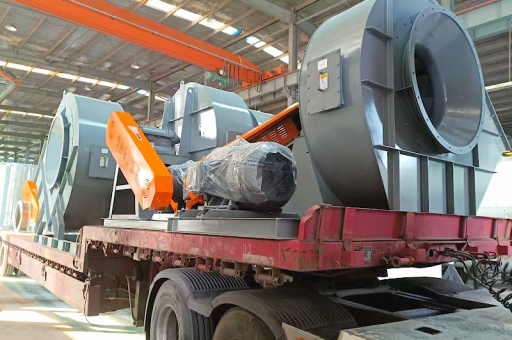
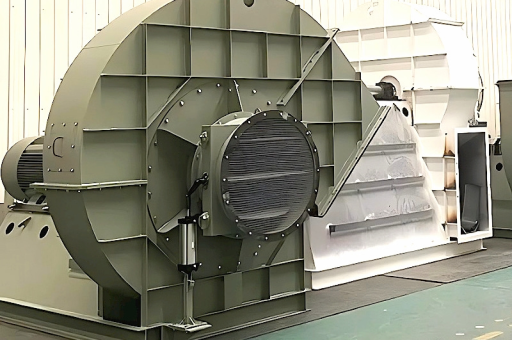
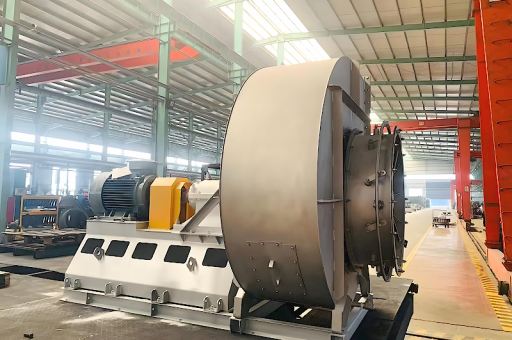
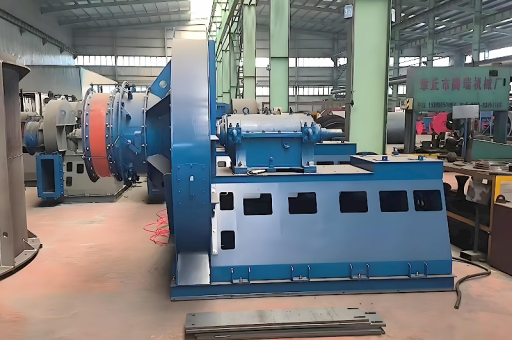
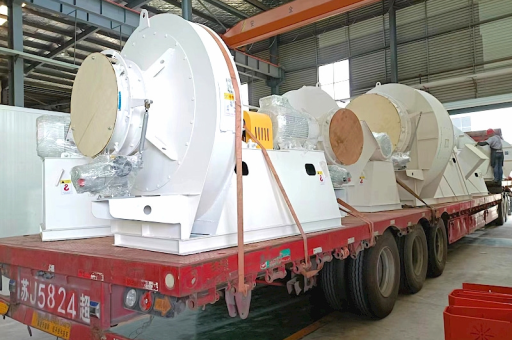
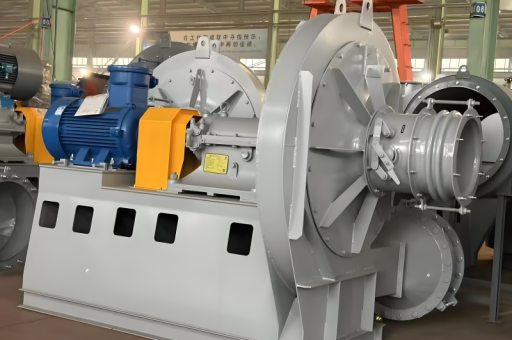
In industrial and commercial ventilation, the choice of fan material can determine system longevity, safety, and efficiency. Stainless Steel Duct Fans have emerged as a premium solution for environments demanding corrosion resistance, high temperature tolerance, and hygienic operation. Unlike standard galvanized steel fans, these units are fabricated from alloys such as 304 or 316 stainless steel, offering superior resistance to moisture, chemicals, and extreme temperatures. Whether you are managing a wind turbine cooling system, a food processing plant, or a chemical fume extraction setup, understanding the capabilities of these fans is critical.
This guide integrates verified technical data from leading engineering sources and field performance reports to provide a comprehensive overview. We will address core questions: What makes stainless steel duct fans superior? Where are they mandatory? And how do you maximize their lifespan?
Key Benefits of Stainless Steel Duct Fans
Stainless steel duct fans are not a one-size-fits-all product; they are engineered solutions. Here are the primary advantages that justify their investment:
- Exceptional Corrosion Resistance: The chromium content forms a passive oxide layer that protects against rust. This is vital in saltwater environments, chemical plants, and facilities near wind turbine installations where airborne salt particles are common.
- High Temperature Tolerance: Grade 316 stainless steel can withstand continuous operating temperatures up to 800°C (1472°F) in certain designs, making them suitable for exhaust systems in kilns, ovens, and engine test cells.
- Hygienic and Easy to Clean: The non-porous surface prevents bacterial growth and is easily sanitized. This is a legal requirement in pharmaceutical, medical, and food-grade facilities.
- Structural Strength: Stainless steel maintains its structural integrity under high pressure and mechanical stress. This reduces vibration noise and extends bearing life.
- Long-Term Cost Efficiency: While the upfront cost is higher, the lifespan of a stainless steel duct fan often exceeds that of a galvanized fan by 3 to 5 times in hostile environments, reducing total ownership costs.
Question: Are stainless steel duct fans heavier than standard fans?
Answer: Yes, due to the density of the alloy, they typically weigh 20-30% more than aluminum or galvanized steel alternatives. This requires reinforced mounting brackets, especially in high-vibration applications like wind turbine nacelle cooling.
Common Applications and Use Cases
Stainless steel duct fans are deployed across a wide spectrum of industries. Here are the most critical application areas:
| Industry | Specific Use | Why Stainless Steel? |
|---|---|---|
| Food Processing | Exhaust for frying, smoking, and ovens | Prevents grease buildup and corrosion from acidic vapors |
| Chemical Manufacturing | Fume hoods and duct extraction | Resists acids, alkalis, and chlorides |
| Wind Energy | Cooling of generators and gearboxes | Resists salt spray and variable temperatures on offshore turbines |
| Marine & Offshore | Bilge ventilation and engine room intake | High salinity and humidity cause rapid failure in other metals |
| Wastewater Treatment | Odor control and air scrubbing | Hydrogen sulfide gas is highly corrosive to standard steel |
| Pharmaceutical | Cleanroom air exhaust | Meets strict sanitary standards (GMP) |
Question: Can a stainless steel duct fan be used in a standard home HVAC system?
Answer: While technically possible, it is usually overkill. For residential use, galvanized steel or polypropylene fans are more cost-effective unless the environment has high humidity (e.g., an indoor saltwater pool or humid basement).
Technical Specifications and Performance Metrics
When evaluating a stainless steel duct fan, key parameters include:
- Airflow (CFM or m³/h): Ranges from 100 CFM for small inline fans to over 50,000 CFM for industrial centrifugal models. For a wind turbine nacelle cooling application, airflow must be calculated based on heat load from the generator and gearbox.
- Static Pressure (in. w.g. or Pa): High-pressure models are needed for long duct runs or systems with filters and dampers.
- Motor Type: Typically TEFC (Totally Enclosed Fan Cooled) induction motors, often with inverter-duty rating for variable speed control. Explosion-proof motors are required in hazardous locations.
- Material Grade: 304 SS is standard for most environments. 316L SS is recommended for coastal or chloride-exposed settings.
- Wheel Design: Forward-curved wheels offer high volume at low pressure; backward-curved wheels are more efficient and handle high static pressure.
- Temperature Rating: Confirm if the fan includes a high-temperature bearing system and thermal protection.
Question: How do I calculate the required CFM for a stainless steel duct fan in a wind turbine application?
Answer: Use the formula: CFM = (Total Heat Load in BTU/h) / (1.08 × ΔT). ΔT is the desired temperature rise across the duct. For example, if a gearbox dissipates 50,000 BTU/h and you allow a 20°F rise, you need approximately 2,315 CFM.
Comparison with Other Duct Fan Materials
Choosing the right material depends on the operating environment. Use this comparison to decide:
| Feature | Stainless Steel (304/316) | Galvanized Steel | Aluminum | Polypropylene (Plastic) |
|---|---|---|---|---|
| Corrosion Resistance | Excellent | Moderate | Good (except caustics) | Excellent (limited chemically) |
| Max Temperature | 800°C (short) / 400°C (continuous) | 200°C | 200°C | 80°C |
| Strength | Very High | High | Medium | Low |
| Weight | Heavy | Medium | Light | Very Light |
| Cost | High | Low | Medium | Low-Medium |
| Cleanability | Excellent (smooth) | Good | Good | Difficult (static charge) |
Question: Is aluminum ever a better choice than stainless steel?
Answer: Yes. Aluminum is lighter, cheaper, and does not spark (important in flammable dust environments). However, aluminum corrodes rapidly in alkaline environments (e.g., concrete dust) and has lower tensile strength at high temperatures.
Installation and Safety Considerations
Proper installation is crucial for performance and safety.
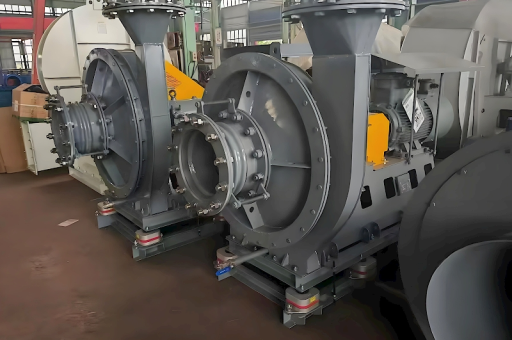
- Mounting: Use vibration isolators to reduce noise transmission. For wall-mounted units in wind turbine towers, stainless steel brackets with rubber grommets are recommended.
- Duct Connection: Use flexible stainless steel connectors to absorb thermal expansion. Avoid direct hard-piping which can crack flanges.
- Electrical Safety: Ensure the motor is grounded. In wet or corrosive environments, use a NEMA 4X (stainless steel) junction box.
- Airflow Direction: Confirm the fan is installed according to the manufacturer’s arrow. Reverse installation can cause overheating and motor burnout.
- Inlet and Outlet Clearance: Maintain at least 1 duct diameter of straight pipe before the fan inlet and 2 diameters after the outlet to avoid turbulence and performance loss.
Question: Do I need an explosion-proof motor for a stainless steel duct fan?
Answer: It depends on the environment. If the fan is moving flammable gases, dust, or vapors (Class I, Division 1 or 2), yes. Stainless steel housing does not prevent explosion risks from the motor. Use a UL-listed explosion-proof motor and spark-resistant wheel in such cases.
Maintenance and Longevity
Stainless steel duct fans require less frequent maintenance than other materials, but they are not maintenance-free.
- Routine Inspection (Monthly): Check for vibration spikes, unusual noise, and loose fasteners. Exterior corrosion is rare but can occur at weld points if the heat tint was not properly removed.
- Cleaning (Quarterly): Use non-chlorinated cleaners. Chlorine can break down the passive layer. For grease buildup, use a mild alkaline detergent. Rinse thoroughly and dry to prevent water stains.
- Bearing Replacement: Lifespan is typically 20,000 to 40,000 hours depending on operating temperature. High-temp grease should be used for fans over 200°F.
- Belt Tension (if belt-driven): Check alignment monthly. Improper tension accelerates bearing wear.
- Passivation: If the fan is exposed to weld repairs or heavy contamination, perform a nitric acid passivation treatment to restore the corrosion-resistant layer.
Question: What causes a stainless steel duct fan to fail prematurely?
Answer: The top three causes are: (1) Inadequate motor protection (overloads not set correctly), (2) Accumulation of debris on the wheel causing imbalance, and (3) Use of chlorinated chemicals for cleaning, which causes pitting corrosion (especially on grade 304).
Frequently Asked Questions (FAQ)
Q: Can stainless steel duct fans be painted?
A: Generally not recommended. Painting defeats the purpose of stainless steel. If color coding is needed, ask for factory-applied epoxy coating.
Q: What is the typical lead time for a custom stainless steel duct fan?
A: Custom units (non-stock) typically require 4-8 weeks, depending on the required material certification and testing.
Q: Are these fans suitable for outdoor use in a wind turbine cooling system?
A: Yes, but they must be equipped with a weatherproof hood and a drainable base to prevent pooling water. Grade 316L is strongly recommended for offshore turbines.
Q: How do I measure the efficiency of my duct fan?
A: Efficiency is calculated as (Airflow in CFM × Static Pressure in inches w.g.) / (Motor Input Power in watts × 0.000157). A value above 60% is considered good for centrifugal fans.
Q: Is stainless steel duct fan noise level higher than plastic fans?
A: The housing material has minimal effect on noise. The noise is primarily from the motor and aerodynamic flow. Sound attenuators can be added to the ductwork.
Conclusion: Making the Right Investment
Stainless steel duct fans are not merely a premium product; they are a necessity in environments where failure is not an option. From maintaining sterile conditions in pharmaceutical labs to ensuring reliable cooling in wind turbine nacelles, their unique combination of corrosion resistance, high-temperature capability, and structural durability makes them the top choice for demanding industries.
When selecting a fan, prioritize correct material grade (304 vs. 316), accurate airflow calculations, and proper installation practices. While the initial cost may be higher, the reduction in downtime, repairs, and replacement cycles delivers a strong return on investment. Always consult with a licensed engineer for system design, especially in hazardous or critical applications.
For more technical resources, search for "stainless steel duct fan performance curves" or "fan selection software for high-temperature ventilation." Remember: the right fan, installed correctly, will serve your facility for decades.