This article's table of contents introduction:
- What is a Stainless Steel Sidewall Fan?
- Key Applications
- Key Advantages of Stainless Steel
- Common Features & Options
- How to Select the Right Stainless Steel Sidewall Fan (Checklist)
- Manufacturers & Brands
- Installation & Safety Considerations
- Maintenance & Care
- Cost
Here is a comprehensive guide to Stainless Steel Sidewall Fans, covering what they are, their key applications, benefits, and what to look for when selecting one.
What is a Stainless Steel Sidewall Fan?
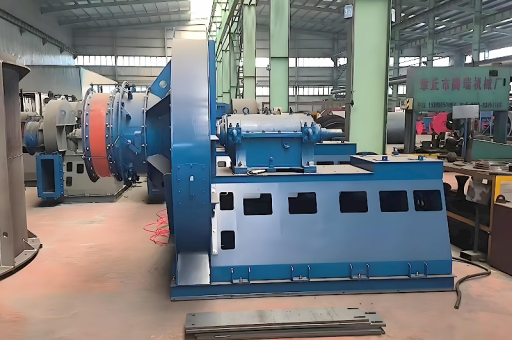
A Stainless Steel Sidewall Fan is a ventilation fan designed to be mounted through an exterior wall. The "stainless steel" designation means the fan's housing, and often the wheel and hardware, are constructed from corrosion-resistant stainless steel (typically 304 or 316 grade). This construction allows them to operate in harsh environments where standard galvanized steel fans would quickly rust and fail.
They are the standard choice for exhaust and supply ventilation in corrosive, humid, or high-temperature settings.
Key Applications
These fans are built to last where other fans won't. Common applications include:
- Commercial Kitchens: Exhausting greasy, humid, and hot air from cooking areas.
- Swimming Pools & Aquatic Centers: Removing chlorine-laden, humid air that is highly corrosive to standard metals.
- Industrial & Manufacturing Plants: Ventilating areas with chemical fumes, salt spray, or other corrosive agents (e.g., plating rooms, labs, wastewater treatment).
- Coastal Buildings: Used in buildings near the ocean where salt spray in the air will rapidly corrode standard fans.
- Marine & Shipboard: For ventilating engine rooms, galleys, and other ship compartments.
- Agricultural Settings: Ventilating livestock barns where ammonia and moisture are prevalent.
- Car Washes & Detailing Shops: Exhausting moisture, steam, and chemical vapors.
Key Advantages of Stainless Steel
- Superior Corrosion Resistance: The primary benefit. Stainless steel forms a passive chromium oxide layer that protects it from rust and chemical attack.
- Longevity: Significantly outlasts galvanized or painted steel fans in harsh environments, reducing replacement costs.
- Sanitary & Easy to Clean: The non-porous surface resists bacterial growth and is easy to wipe down, making it ideal for food service and medical facilities.
- High-Temperature Tolerance: Stainless steel maintains its structural integrity at higher temperatures than standard galvanized steel, making it suitable for kitchen exhaust.
- Aesthetics: Provides a clean, professional, and industrial look, which can be important for visible exterior installations.
Common Features & Options
- Materials:
- 304 Stainless Steel: Good general corrosion resistance for kitchens, pools, and mild chemical environments.
- 316 Stainless Steel: Higher corrosion resistance, especially against chlorides (salt, bleach) and more aggressive chemicals. The premium choice for coastal and marine applications.
- Drive Types:
- Belt Drive: The motor is mounted outside the airstream. This protects the motor from heat, moisture, and corrosive fumes, increasing motor life. Allows for speed adjustment via pulley changes.
- Direct Drive: The motor is mounted directly in the airstream. Simpler design, lower maintenance, but the motor is exposed to the environment.
- Mounting & Discharge Styles:
- Shutter-Mounted: The fan is mounted to a wall box with an automatic backdraft shutter to prevent outside air from entering when the fan is off.
- Hooded / Louvered: The exterior side has a weatherproof hood or gravity louver for rain protection.
- Upblast: The discharge is directed upwards, used in kitchen exhaust to push grease and heat away from the roof/wall surface.
- Wheel Types:
- Backward Inclined (BI): Efficient for clean, non-sticky air. Not ideal for greasy kitchen air.
- Forward Curved (FC): Good for moving large volumes of air against low to moderate static pressure. Common in residential and light commercial.
- Paddle Wheel / Radial Blade: Best for dirty, sticky, or particulate-laden airstreams (e.g., kitchen exhaust). Self-cleaning, non-clogging design.
How to Select the Right Stainless Steel Sidewall Fan (Checklist)
- Application (What is the air's composition?): Humidity level, presence of salt, chemicals, grease, or extreme heat.
- Airflow Requirement (CFM): How much air (in cubic feet per minute) needs to be moved.
- Static Pressure (SP): The resistance the fan must overcome from ductwork, louvers, and other components. Measured in inches of water gauge ("wg).
- Temperature: What is the maximum continuous temperature of the airstream?
- Motor Requirements: Voltage (115V, 208V, 230V, 460V), Phase (single or three-phase), and enclosure type (TEFC, ODP, Explosion-Proof).
- Sound Level (dB): Check the fan's sound rating, especially for occupied spaces.
- Specific Code Requirements: Local building codes often dictate kitchen exhaust fan specs (e.g., UL 762 for commercial cooking exhaust, UL 705 for general use).
Manufacturers & Brands
Several major HVAC manufacturers produce high-quality stainless steel sidewall fans:
- Greenheck: A leading commercial/industrial fan manufacturer. Offers extensive lines of stainless steel models (e.g., CSP, Vektor-H).
- Twin City Fan & Blower: Known for heavy-duty industrial fans, including severe-duty stainless steel options.
- PennBarry: Offers the Centri-Pac line of corrosion-resistant fans.
- Loren Cook Company: A major competitor with a wide range of stainless steel fans.
- Fantech: Known for inline and sidewall fans, including models with stainless steel construction for pools and kitchens.
- Canarm / Fasco: Offer smaller, more cost-effective stainless steel options for light commercial.
Installation & Safety Considerations
- Structural Support: Ensure the wall opening can support the fan's weight.
- Ductwork: Follow local codes for duct materials (stainless steel is required for commercial kitchen ducts).
- Electrical: Must be installed by a qualified electrician per local codes. Include proper disconnect means.
- Clearance: Keep surrounding areas clear of obstructions to ensure adequate airflow.
- Shutters and Guards: Always use a properly sized backdraft shutter and a protective guard on the interior or exterior to prevent debris or animal entry.
- Explosion-Proof: If the fan will be used in a location with flammable vapors (rated Class I, Division 1 or 2), the entire unit must be explosion-proof rated.
Maintenance & Care
- Regular Cleaning: Especially for kitchen fans. Grease buildup is a fire hazard. Use appropriate non-toxic, non-flammable degreasers. Rinse thoroughly.
- Belt Tension: For belt-drive units, check and adjust belt tension periodically.
- Motor Lubrication: Some motors require periodic lubrication. Check the manufacturer's instructions.
- Inspect for Corrosion: Although stainless steel is corrosion-resistant, it's not corrosion-proof. Inspect for pitting, especially around welds or in high-chloride environments.
- Check Shutters: Ensure automatic shutters open freely and close completely when the fan is off.
Cost
Stainless steel fans are significantly more expensive than their galvanized steel counterparts (often 2-3x the cost). However, the cost is justified by their extended lifespan in corrosive environments, preventing frequent and costly replacements. The price varies based on:
- Size (CFM & HP)
- Steel Grade (316 vs 304)
- Drive Type (Belt vs Direct)
- Special Features (Explosion-proof, high-temp, special coatings)
In short: If you have a corrosive, humid, or high-temperature environment, a Stainless Steel Sidewall Fan is not a luxury—it is a necessary and cost-effective long-term investment.