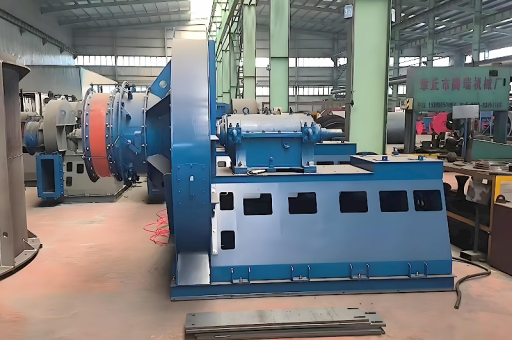
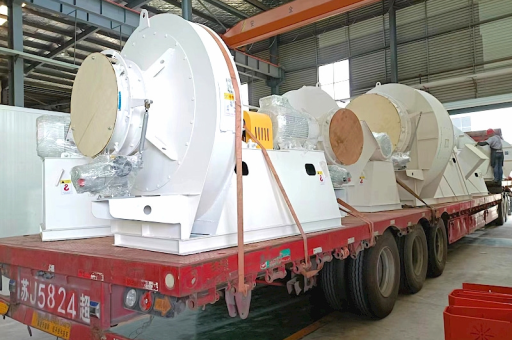
This article's table of contents introduction:
- The Critical Material Choice: 316L or Higher (Not 304)
- Key Design & Physical Features
- Sizing & Performance Considerations
- Installation Best Practices
- Maintenance (Critical for Longevity)
- Supplier/Quoting Checklist
- Summary Recommendation
This is a very specific and important application. For a pickling workshop, the environment is extremely corrosive. Pickling typically involves strong acids like Hydrochloric acid (HCl), Sulfuric acid (H2SO4), Nitric acid (HNO3), or mixtures thereof, often at elevated temperatures. Ordinary steel or even standard 304 stainless steel will rapidly corrode.
Here is a comprehensive guide to specifying, selecting, and maintaining stainless steel exhaust fans for pickling workshops.
The Critical Material Choice: 316L or Higher (Not 304)
- DO NOT use 304 Stainless Steel (SS304). While SS304 is "stainless," it is highly susceptible to pitting and stress corrosion cracking (SCC) from chlorides found in hydrochloric acid and many pickling solutions. It will fail quickly.
- Minimum Standard: 316L Stainless Steel (SS316L). This contains Molybdenum, which dramatically improves resistance to chlorides and general acid attack. The "L" (Low Carbon) version is preferred to prevent sensitization during welding, which can lead to corrosion at weld joints.
- For Harsh Conditions (e.g., Hot HCl, HF mixtures): You may need Duplex Stainless Steel (e.g., 2205) or Super-Austenitic grades (e.g., 904L, 254SMO) . These offer significantly higher resistance to pitting and crevice corrosion in hot, wet acid environments.
- Processing:
- All wetted parts (housing, impeller, inlet cone) must be the high-grade alloy.
- Fasteners (bolts, nuts) must be Alloy 20, Hastelloy, or Titanium. Standard 316 bolts will corrode first.
- The shaft must be protected. Options include a 316L shaft sleeve or a shaft seal to prevent acid fumes from reaching the shaft bearings.
- Welds must be pickled and passivated post-manufacturing to restore the corrosion-resistant oxide layer. Welds are the weakest point.
Key Design & Physical Features
-
Sealed Motor and Bearings:
- A standard TEFC (Totally Enclosed Fan Cooled) motor is insufficient. The corrosive fumes will eat the cooling fins and the frame.
- Use a Chemically Duty Motor (C-Face) designed for harsh environments.
- Sealed, Lubricated-for-Life Bearings (e.g., Stainless Steel or Ceramic bearings) are a must. External grease fittings that are sealed and purged are acceptable but risk contamination.
- IP56 or higher enclosure rating is essential.
-
Belt Drive vs. Direct Drive:
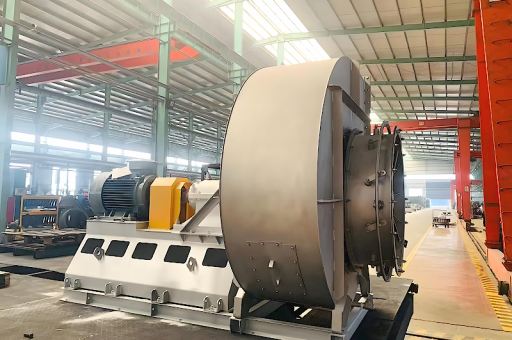
- Belt Drive is STRONGLY RECOMMENDED.
- The motor sits outside the airstream (mounted on a base with an isolation plate).
- Belts and pulleys are isolated from the acid fumes, extending their life.
- Easy to adjust speed for process changes.
- Direct Drive is simpler but the motor is exposed to fumes. This requires a custom, sealed motor which is expensive and harder to replace.
- Belt Drive is STRONGLY RECOMMENDED.
-
Fan Type:
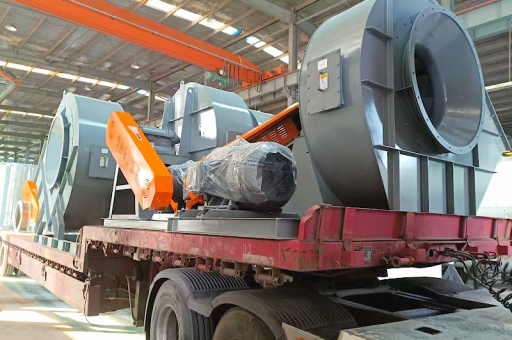
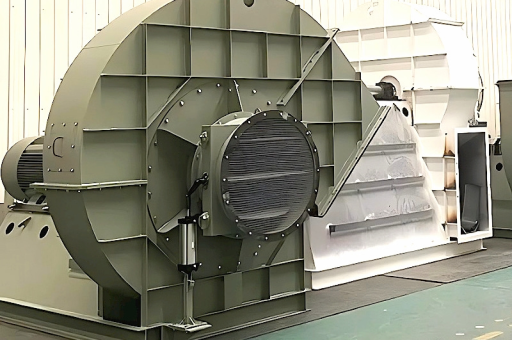
- Centrifugal (Radial) Fans: Ideal for ductwork. Backward Inclined (BI) or Radial Tip (RT) impellers are best for handling moisture and some particulate.
- Inline Duct Fans (Tube Axial): Good for general ventilation but the entire motor is often in the airstream (bad). If used, the motor must be a flameproof, chemically sealed unit.
- Roof Exhausters (Upblast or Downdraft): Good for removing fumes from the building envelope. 316L construction is mandatory.
Sizing & Performance Considerations
- Airflow (CFM): Calculated based on the volume of the room and the required air changes per hour (often 6-10 ACPH for pickling). Also consider capture velocity at the tank lip (typically 100-150 feet per minute for pickling tanks).
- Static Pressure (SP): Account for:
- Ductwork friction (use schedule 40 or 80 PVC, CPVC, or FRP for ducts).
- Fume Scrubber (if used). Pickling often requires a scrubber with high pressure drop (5-10 inches w.g.).
- Temperature: Pickling is often done hot (60-90°C / 140-190°F). The fan and motor must be rated for the continuous operating temperature + a safety margin. A heat slinger on the shaft is a good feature.
Installation Best Practices
- Duct Material: Never use steel ductwork. Use PVC (low temp), CPVC (higher temp, 200°F+), or FRP (Fiberglass Reinforced Plastic) . FRP is best for high temperatures and corrosive mixes.
- Drainage: Install a drain plug at the lowest point of the fan housing to prevent acid condensate from pooling and pitting the housing.
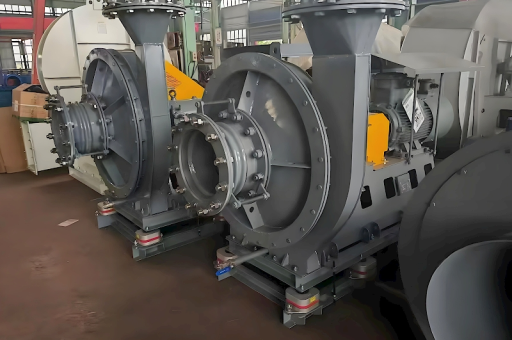
- Isolation: Use vibration isolators (rubber or spring) to prevent fan vibration from damaging duct connections.
- Access Doors: Include an access door on the fan housing for inspection and cleaning of the impeller and housing.
- Electrical: Provide a local e-stop disconnect near the fan and route electrical conduit in PVC coated rigid steel or stainless steel flexible conduit.
Maintenance (Critical for Longevity)
- Daily: Visual check for unusual noise, vibration, or leakage.
- Weekly: Check belt tension (belt drive). Listen for bearing noise.
- Monthly:
- Wash down the fan interior with clean water while it is running to remove accumulated acid residue. Use a low-pressure spray. Do this after the day's work is finished and the tank is off.
- Grease sealed bearings (if applicable) per manufacturer specs.
- Quarterly:
- Inspect impeller for corrosion, pitting, and balance. Imbalance is a major cause of failure.
- Check bolts and fasteners for corrosion. Replace with Alloy 20 if corroded.
- Verify motor insulation resistance (Megger test). Acid attack on motor windings is fatal.
- Annually:
- Thorough internal inspection. Strip the fan if possible.
- Replace belts.
- Passivate the interior surfaces (removing light surface rust) with a suitable passivating agent (e.g., citric acid passivation).
Supplier/Quoting Checklist
When contacting a manufacturer (e.g., Greenheck, Twin City, New York Blower, Howden, or a specialty corrosion fan builder like HP Plastics or QEF), provide this information:
- Chemical: e.g., "Atmosphere of HCl vapor with water condensation, temp 65°C."
- Desired Material: "316L for all wetted metal. Alloy 20 fasteners."
- Fan Type: "Belt-driven, centrifugal, roof upblast."
- Airflow: "3,500 CFM at 2.5" SP."
- Motor: "Chem duty, 3-phase, 460V, IP56, with sealed bearings."
- Accessories: "Access door, drain plug, spring isolators, test ports."
Summary Recommendation
For a pickling workshop, the optimal exhaust fan is a 316L Stainless Steel, Belt-Driven, Centrifugal Roof Upblast Fan, with a Chem Duty Motor, Alloy 20 or higher fasteners, and a CPVC/FRP duct system equipped with drains and wash-down ports.
Warning: If hydrochloric acid is the primary pickling agent, do not use 304 SS. Even 316L will have a finite life (5-10 years) depending on concentration and temperature. If the acid is hot (>60°C) and concentrated, invest in Duplex 2205 or a Polypropylene/FRP fan instead of stainless steel.
Always consult a reputable fan manufacturer's corrosion guide for the specific chemical mixture and temperature in your workshop.