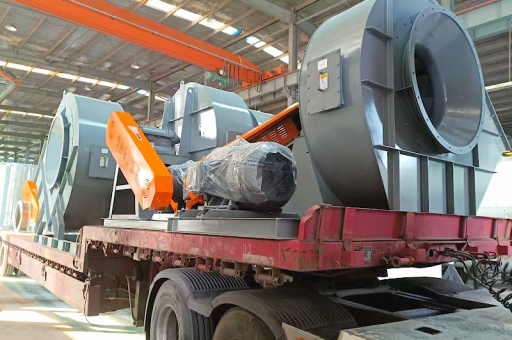
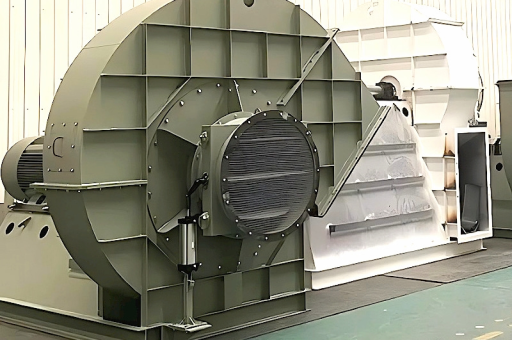
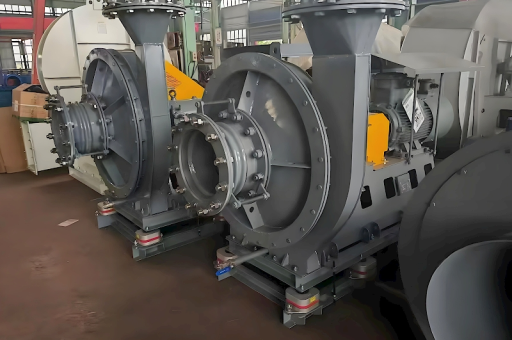
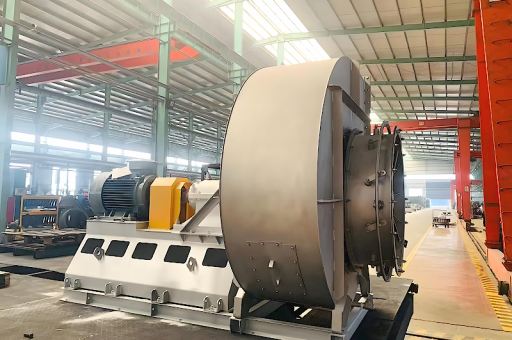
This article's table of contents introduction:
- Why Stainless Steel is Required in Battery Factories
- Key Technical Specifications for Battery Factory Exhaust Fans
- Common Applications within a Battery Factory
- Summary: What to Ask Your Vendor
This is a highly specific and critical application. Yes, stainless steel exhaust fans are not just common in battery factories; they are often mandatory safety equipment.
However, the choice isn't simply "stainless steel." The grade of stainless steel and the type of fan (explosion-proof vs. standard) are the defining factors.
Here is a detailed breakdown of why and how they are used in battery factories.
Why Stainless Steel is Required in Battery Factories
The atmosphere in a battery factory (especially Lithium-ion, Lead-Acid, or NiMH) is chemically aggressive and hazardous.
-
Corrosive Gases: During battery formation, charging, and electrolyte filling, corrosive fumes are released (e.g., hydrogen fluoride (HF), sulfuric acid mist, and various electrolyte vapors). Standard galvanized steel or aluminum fans will corrode rapidly, leading to:
- Blade imbalance (causing vibration and failure).
- Structural weakness (posing a safety risk).
- Contamination of the cleanroom (rust particles).
-
Explosion Risk: Battery gassing (especially during initial charging) produces Hydrogen (H2) gas, which is highly flammable and explosive. Exhaust fans must be ATEX (Europe) or UL/CSA (North America) rated for hazardous locations (e.g., Class I, Division 1, Group B for hydrogen). Stainless steel is non-sparking and resists the chemical attack that could create sparks from mechanical failure.
-
Cleanroom Requirements: Dry rooms (for lithium battery assembly) require extremely low dew points (-40°C to -60°C). Non-corroding materials (like SS) prevent particle shedding and ensure the long-term integrity of the sealed environment.
Key Technical Specifications for Battery Factory Exhaust Fans
When sourcing these fans, look for the following features, not just "stainless steel."
| Feature | Why it Matters | Common Specification |
|---|---|---|
| SS Grade | 304 SS is standard for general fume resistance. 316L SS is required for high-chloride or high-HF environments (e.g., in the electrode coating or electrolyte mixing areas). | 304L or 316L (L = low carbon for better weld corrosion resistance) |
| Type of Fan | Centrifugal (Squirrel Cage): Best for high static pressure (duct runs, scrubbers). Axial: Used for general wall/roof ventilation. Never use belt-driven fans inside the exhaust stream; direct drive only to prevent belt corrosion/failure. | Backward-curved or airfoil blades, direct drive. |
| Motor Protection | Motor must be outside the airstream or rated for the chemical environment and explosion-proof (for Zone 1/Division 1). ATEX II 2G Ex d IIC T4 or Class I, Div 1, Group B, C, D are typical targets. | Ex d (flameproof), IP65 or higher. |
| Leakage & Sealing | Fumes must not leak into the factory. Fans must have shaft seals, gaskets, and a robust housing design. | 100% pressure tested. |
| Anti-Spark | Impeller blades must be non-ferrous (e.g., Monel, Hastelloy, or Aluminum Bronze) or a spark-tight construction if SS is used. SS-on-SS contact can spark. | - |
| Coating (Optional) | In extreme chemical environments, even SS316L may be coated with PTFE (Teflon) or Halar (ECTFE) for additional protection. | - |
Common Applications within a Battery Factory
- Formation Room Exhaust: Top priority. Fan must be explosion-proof (Hydrogen) and corrosion-resistant (HF/SO2). Usually, a high-volume centrifugal fan connected to a wet scrubber.
- Electrolyte Filling Area: Local exhaust ventilation (LEV) hoods removing flammable electrolyte vapors. Small, VFD-controlled fans.
- Electrode Coating Dry Rooms: Recirculating air handling units with 316L SS cooling coils and fan housings to maintain low dew point.
- Slurry Mixing Rooms: Exhaust for NMP (N-Methyl-2-pyrrolidone) solvent vapors (flammable).
- General Ventilation: Roof-mounted axial fans for general air changes, still in SS304 to protect the roof structure from acidic condensation.
Summary: What to Ask Your Vendor
Don't just ask for "a stainless steel fan." Use this checklist:
- "What specific area of the battery factory is this for?" (Formation? Dry room? Slurry?)
- "Is the fan ATEX/UL certified for Hydrogen (Group B/IIC)?" (If yes, confirm the temperature class, e.g., T4).
- "What grade of stainless steel (304 vs 316L) and where is it used?" (Housing, impeller, shaft).
- "Is the motor direct-drive and out of the airstream?" (Avoids belt corrosion and motor contamination).
- "Is the impeller spark-resistant?" (Often made of a non-ferrous material even if the housing is SS).
Bottom Line: For a battery factory, a 304L or 316L stainless steel centrifugal fan, with direct drive, explosion-proof motor, and spark-resistant impeller, is the industry standard for critical exhaust. Never use a standard galvanized fan in a chemical or hydrogen-containing zone—it is an immediate fire and safety hazard.