This article's table of contents introduction:
- Table of Contents
- Introduction: Why Stainless Steel Matters in Waste Gas Handling
- Key Design Features of Stainless Steel Waste Gas Treatment Fans
- Critical Application Scenarios and Industry Use Cases
- Material Selection: 304 vs. 316L Stainless Steel for Corrosive Gases
- Performance Metrics: Flow Rate, Static Pressure, and Efficiency
- Installation Best Practices for Longevity and Safety
- Common Operational Challenges and Troubleshooting Q&A
- Maintenance Checklist and Lifecycle Cost Considerations
- Conclusion: Future Trends in Fume Exhaust Technology
*The Essential Guide to Stainless Steel Waste Gas Treatment Fans: Design, Applications, and Maintenance*
Table of Contents
- Introduction: Why Stainless Steel Matters in Waste Gas Handling
- Key Design Features of Stainless Steel Waste Gas Treatment Fans
- Critical Application Scenarios and Industry Use Cases
- Material Selection: 304 vs. 316L Stainless Steel for Corrosive Gases
- Performance Metrics: Flow Rate, Static Pressure, and Efficiency
- Installation Best Practices for Longevity and Safety
- Common Operational Challenges and Troubleshooting Q&A
- Maintenance Checklist and Lifecycle Cost Considerations
- Conclusion: Future Trends in Fume Exhaust Technology
Introduction: Why Stainless Steel Matters in Waste Gas Handling
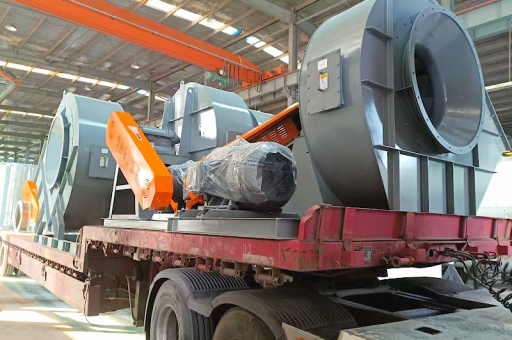
In industrial environments where waste gases contain corrosive chemicals, high humidity, or extreme temperatures, standard carbon steel fans deteriorate rapidly. Stainless steel waste gas treatment fans are engineered specifically for these harsh conditions. Their corrosion resistance, structural integrity, and ability to handle acidic or alkaline fumes make them indispensable in chemical plants, wastewater treatment facilities, and semiconductor manufacturing.
Unlike coated alternatives, stainless steel offers inherent protection against pitting and stress corrosion cracking. According to data from the American Society of Mechanical Engineers (ASME), stainless steel fan assemblies in continuous acid vapor exposure can last 5–8 times longer than carbon steel units with similar performance ratings.
Quick Fact: A stainless steel waste gas fan in a chlor-alkali plant recorded over 12 years of continuous operation before needing impeller replacement—proving its long-term economic value.
Key Design Features of Stainless Steel Waste Gas Treatment Fans
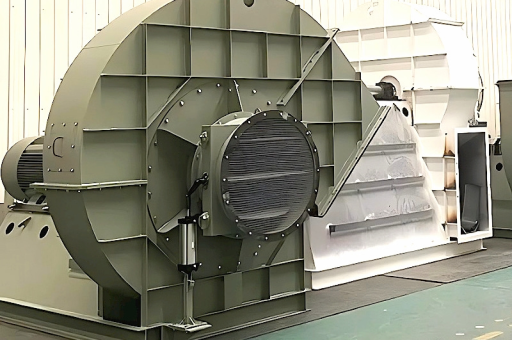
Modern stainless steel waste gas fans incorporate several engineering refinements to maximize durability and efficiency:
- Impeller Geometry: Backward-curved or airfoil blades reduce turbulence and erosion, especially when particulate matter is present.
- Sealed Bearings: Isolated from the gas stream to prevent lubricant contamination.
- Drain Ports: Strategically placed to remove condensate that can cause corrosion.
- Spark-Resistant Construction: AATCC-certified non-sparking impeller options for flammable gas streams.
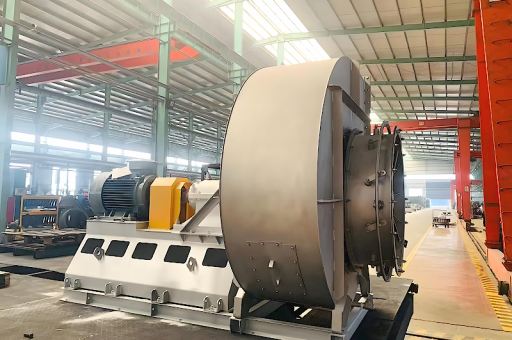
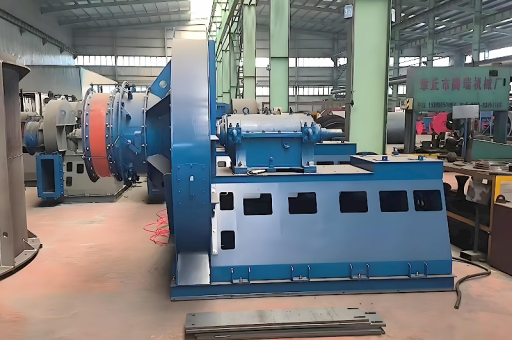
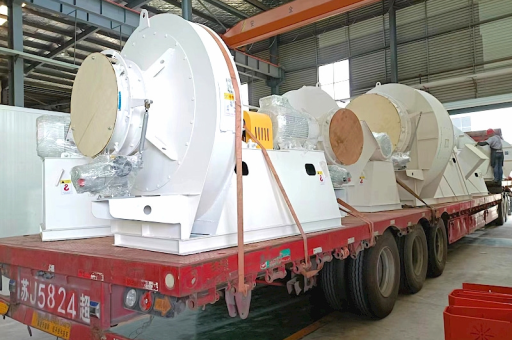
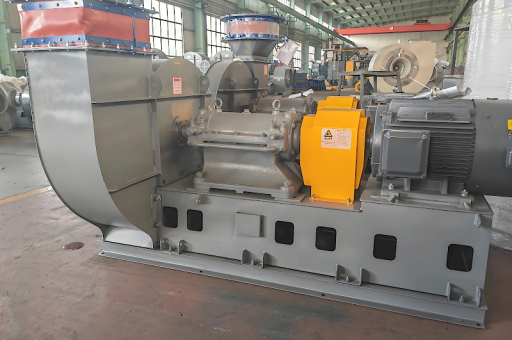
One prominent configuration is the centrifugal inline fan, favored for its compact footprint and ability to generate high static pressure for long duct runs. For extreme temperatures (above 200°C), engineers often specify high-temperature stainless steel alloys such as 310S or 253MA.
Critical Application Scenarios and Industry Use Cases
Stainless steel waste gas treatment fans are deployed across multiple sectors:
- Chemical Processing: Handling HCl, SO₂, and NOx gases from reaction vessels.
- Pharmaceutical Manufacturing: Exhausting solvent vapors (acetone, methanol) that require explosion-proof ratings.
- Wastewater Treatment: Removing hydrogen sulfide (H₂S) and methane from digester tanks.
- Semiconductor Fab Plants: Controlling corrosive dopant gases like boron trichloride.
- Food Processing: Ventilating cooking oils and smoke in high-temperature fryer systems.
In marine environments, such as those on offshore wind turbine platforms, these fans also play a role in ventilating battery rooms and maintenance bays where salt-laden air accelerates corrosion. The use of 316L stainless steel is standard in these offshore applications.
Material Selection: 304 vs. 316L Stainless Steel for Corrosive Gases
Choosing the correct grade directly influences system lifespan. Here is a comparison:
| Property | 304 Stainless Steel | 316L Stainless Steel |
|---|---|---|
| Corrosion Resistance | Good (except chlorides) | Excellent (with molybdenum) |
| Cost | Lower | Higher (≈30% premium) |
| Typical Use | Dry gases, mild acids | Chlorides, seawater, strong acids |
| Weldability | Good | Excellent (low carbon content) |
Recommendation: For waste gas streams containing chlorine, bromine, or sulfuric acid, always specify 316L or duplex stainless steels. A molybdenum content of 2–3% prevents pitting in condensing acidic environments.
Performance Metrics: Flow Rate, Static Pressure, and Efficiency
Key specifications for stainless steel waste gas treatment fans include:
- Airflow (CFM or m³/h): Determined by duct diameter and process exhaust volume.
- Static Pressure (in. wg or Pa): Required to overcome duct friction and scrubber resistance.
- Fan Efficiency: Typically 75–85% for backward-curved centrifugal designs.
- Sound Level (dBA): Important for occupational noise limits under OSHA regulations.
A correctly sized fan should operate near its Best Efficiency Point (BEP). Running far off BEP increases vibration and shortens bearing life. Use variable frequency drives (VFDs) to modulate flow in variable-load processes.
Installation Best Practices for Longevity and Safety
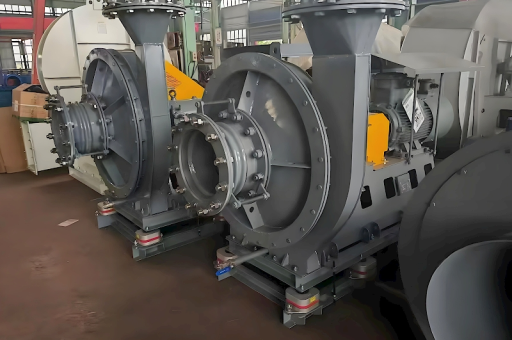
- Foundation: Use vibration isolators (spring or neoprene pads) to prevent structural resonance.
- Duct Design: Include flexible connectors at fan inlet/outlet to absorb thermal expansion.
- Drainage: Slope fan housing toward drain ports; install automatic condensate traps.
- Electrical Grounding: Bond the fan casing to earth ground to prevent static discharge in flammable gas environments.
- Ventilation of the wind turbine if used as a source of power: For fans integrated with a wind turbine energy recovery system, ensure the motor enclosure is weatherproof to NEMA 4X standards.
Common Operational Challenges and Troubleshooting Q&A
Q1: Why does my fan vibrate excessively after six months of operation? Answer: The most common cause is impeller imbalance due to uneven material build-up (e.g., salt crystals or tar deposits). Schedule quarterly cleaning using high-pressure water or dry ice blasting. Also check for bearing wear.
Q2: Can I use a standard carbon steel fan with a stainless steel coating? Answer: Not recommended. Coatings can chip or delaminate, exposing the base metal to corrosive gases. A full stainless steel construction (impeller, housing, shaft) is the only reliable solution for aggressive waste gas streams.
Q3: How often should I replace the shaft seals? Answer: For packed gland seals, inspect monthly and replace every 6–12 months. For mechanical seals, replace only when leakage is observed (typically every 2–3 years depending on gas temperature and solids content).
Q4: What is the maximum operating temperature for a 316L fan? Answer: Up to 450°C short-term, but continuous operation above 350°C reduces creep strength. For higher temperatures, specify a 253MA or Inconel alloy.
Q5: Do I need an explosion-proof motor for solvent vapor exhaust? Answer: Yes. If the gas concentration could reach 25% of the Lower Explosive Limit (LEL), use a UL-listed explosion-proof motor and ATEX/IECEx fan design.
Maintenance Checklist and Lifecycle Cost Considerations
A structured maintenance plan extends fan service life:
| Interval | Action |
|---|---|
| Weekly | Visual inspection for leaks, unusual noise, vibration |
| Monthly | Check belt tension (belt-driven models), clean drain ports |
| Quarterly | Impeller cleaning, bearing greasing, electrical check |
| Annually | Full disassembly, thickness measurement of housing walls |
Lifecycle Cost Analysis: A 316L stainless steel fan costs about 40% more upfront than a coated carbon steel fan. However, when factoring in reduced replacement cycles (every 3–5 years vs. 15+ years), the stainless steel option yields a 20–30% lower total cost of ownership over a 10-year period.
Conclusion: Future Trends in Fume Exhaust Technology
The demand for stainless steel waste gas treatment fans is accelerating due to stricter emission regulations (EPA, EU Industrial Emissions Directive) and the expansion of chemical manufacturing in Asia-Pacific. Emerging trends include:
- IoT integration: Vibration and temperature sensors providing real-time health monitoring.
- Hybrid materials: Stainless steel impellers with ceramic coating for abrasive particulate streams.
- Energy recovery: Fans coupled with wind turbine generators to offset electricity consumption—especially in remote or offshore installations.
Investing in high-quality stainless steel fan systems today ensures compliance, safety, and operational continuity for decades. As process complexity grows, so does the necessity for robust, corrosion-proof ventilation solutions.
This article has provided a comprehensive overview of stainless steel waste gas treatment fans—from material selection to troubleshooting. For tailored specifications, consult with an engineer who specializes in corrosion-resistant air-moving equipment.