This article's table of contents introduction:
- What is a Cabinet-Type Centrifugal Fan?
- Key Components
- How It Works (Operational Principle)
- Advantages Over Traditional Volute Fans
- Common Applications
- Types of Cabinet Fans
- Sizing and Selection Considerations
- Common Manufacturers (Examples)
- Summary Table
Here is a comprehensive overview of Cabinet-Type Centrifugal Fans, also known as Plug Fans or Plenum Fans.
What is a Cabinet-Type Centrifugal Fan?
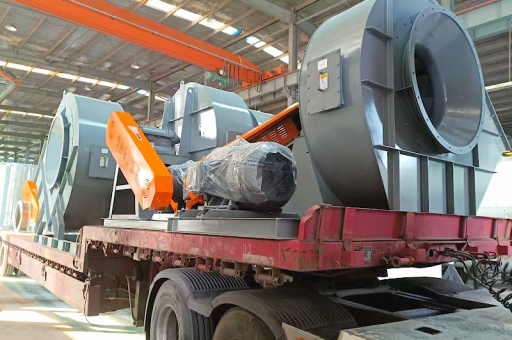
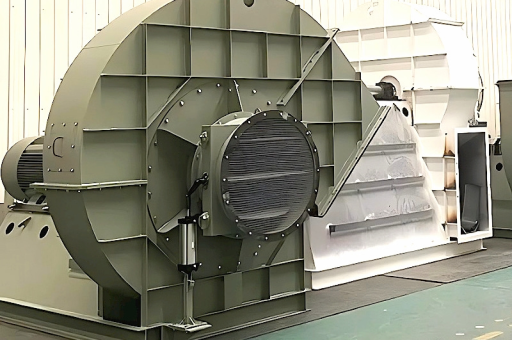
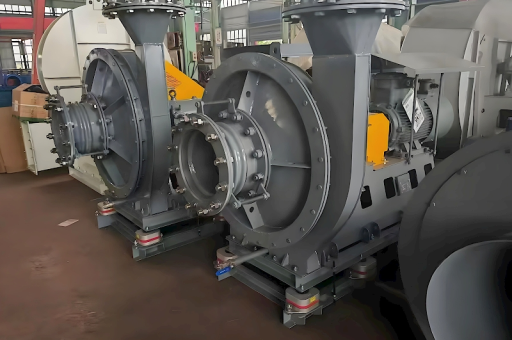
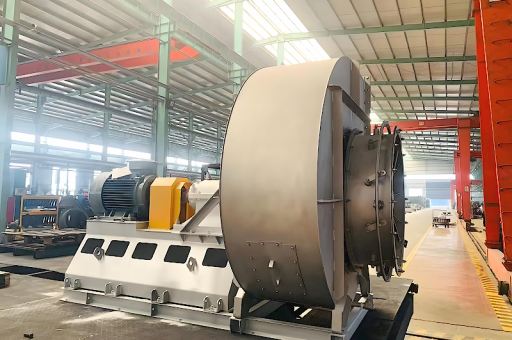
A cabinet-type centrifugal fan is a self-contained air-moving unit. Unlike a standard centrifugal fan where the wheel is housed within a specific volute (scroll) casing, a cabinet fan places the fan wheel (impeller) inside a rectangular or square sheet-metal cabinet (the plenum box). The fan draws air in through an inlet (often through the back or side of the cabinet) and discharges it freely into the cabinet's interior space, which then exits through an outlet.
This design creates a "plenum" (an enclosed space with higher pressure) within the cabinet.
Key Components
- The Cabinet (Plenum Box): A rigid, insulated (often double-wall) steel enclosure. It contains the noise and provides structural support.
- Centrifugal Impeller: Typically a backward-inclined (BI) or airfoil (AF) wheel. These are high-efficiency, non-overloading designs.
- Motor: Mounted inside the cabinet (often on an adjustable base) or externally. It drives the impeller.
- Drive System: Usually belt-driven (allowing for speed changes) or direct-drive (via a shaft or a motorized impeller).
- Inlet Cone (Venturi): A precisely shaped ring at the inlet that guides air smoothly into the impeller eye.
- Discharge Opening: A rectangular or square opening on the top, bottom, or side of the cabinet.
How It Works (Operational Principle)
- Intake: Air is drawn into the cabinet through the inlet opening and the inlet cone.
- Pressurization: The centrifugal impeller spins, accelerating the air outward. This high-velocity air is discharged directly into the large volume of the cabinet (the plenum).
- Plenum Action: Inside the cabinet, the high-velocity air slows down. This "velocity pressure" is converted into "static pressure" (the force needed to overcome resistance in ducts).
- Discharge: The pressurized air then exits the cabinet through the discharge opening(s), equally distributing the flow across the opening's face.
Advantages Over Traditional Volute Fans
- Space Saving: The motor and drive are tucked away inside the cabinet, making the overall footprint smaller than an exposed fan/scroll combination.
- Lower Noise: The insulated steel cabinet acts as an excellent sound attenuator.
- Flexible Orientation: Cabinet fans discharge perpendicular to the inlet, making them ideal for connecting to ductwork.
- Direct Connection to Ducts: The flat discharge face allows for simple, direct connection to ductwork (e.g., using a flexible connector).
- Easier Maintenance: Components (motor, belts, bearings) are accessible via hinged doors on the cabinet.
- Cleaner Installation: No exposed rotating parts; the unit is a neat, finished box.
Common Applications
They are workhorses of modern HVAC systems.
- Air Handling Units (AHUs): As the main fan inside a large HVAC unit.
- VAV (Variable Air Volume) Boxes: As the fan in a fan-powered terminal unit.
- Modular AHU's: As the primary fan section in a custom-built air handler.
- Exhaust Systems: For general building exhaust or laboratory exhaust where noise and cleanliness are concerns.
- Clean Rooms: Their sealed design and high-efficiency wheels are ideal.
- Retrofit Projects: Easy to install into existing ductwork.
Types of Cabinet Fans
- Class I / II / III: Refers to the construction strength and static pressure capability.
- Class I (Low Pressure): Up to ~4" w.g. (water gauge).
- Class II (Medium Pressure): Up to ~8" w.g.
- Class III (High Pressure): Up to ~12" w.g.
- Arrangement: Most common is Arrangement 10 (motor inside, belt drive) or Arrangement 9 (motor outside, belt drive). Direct drive (motor shaft drives impeller directly) is also common for smaller units.
- Discharge: Top Horizontal, Bottom Horizontal, or Vertical (up/down).
Sizing and Selection Considerations
When choosing a cabinet fan, you need to specify:
- Airflow (CFM): Cubic Feet per Minute.
- Static Pressure (SP): The resistance the fan must overcome (in inches of water gauge - "w.g.).
- Sound (Sones or dBA): Cabinet fans are quieter than raw scroll fans, but noise data is still critical for occupied spaces.
- Efficiency (BHP or kW): Look for high-efficiency motors (NEMA Premium or IE5) and backward-inclined/airfoil wheels.
- Temperature: Standard (up to 104°F), High Temp (up to 200°F+).
- Material: Standard steel, galvanized steel, stainless steel (for corrosive environments).
Common Manufacturers (Examples)
- Greenheck: A major, highly respected manufacturer.
- Trane / Carrier / Daikin: OEM for larger AHU packages.
- Loren Cook: A leading brand for commercial fans.
- Twin City Fan: Industrial and commercial heavy-duty fans.
- New York Blower (NYB): High-end industrial fans.
- Soler & Palau (S&P): European-influenced designs.
Summary Table
| Feature | Cabinet Fan (Plug Fan) | Traditional Volute Fan (Scroll Fan) |
|---|---|---|
| Housing | Rectangular steel cabinet (plenum) | Circular/scroll-shaped metal housing |
| Motor/Drive | Inside or on back of cabinet | Separately mounted, often on a base |
| Discharge | Flat face (top, bottom, side) | Round or rectangular outlet |
| Noise | Lower (insulated box) | Higher (uninsulated metal) |
| Space | Compact, neat | Wider footprint |
| Typical Use | VAV boxes, AHUs, ducts | General ventilation, larger industrial |
In short: A Cabinet-Type Centrifugal Fan is a quiet, space-efficient, and versatile workhorse for modern HVAC systems, designed to efficiently push air through ductwork while keeping the noisy bits inside a well-insulated box.