This article's table of contents introduction:
- What is a Forward Centrifugal Fan?
- Key Design & Working Principle
- Operating Characteristics (The Fan Curve)
- Key Characteristics & Performance
- Common Applications
- Advantages
- Disadvantages
- Comparison: Forward vs. Backward Curved Fans
- Summary
Here is a comprehensive overview of Forward Centrifugal Fans, covering their design, working principle, key characteristics, applications, advantages, and disadvantages.
What is a Forward Centrifugal Fan?
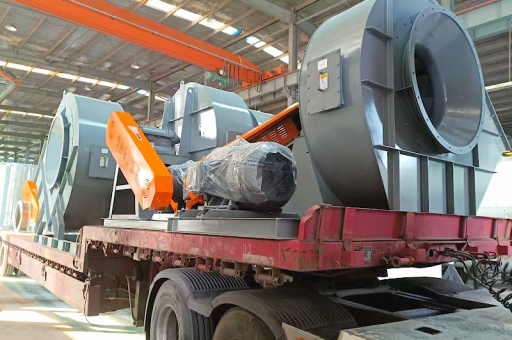
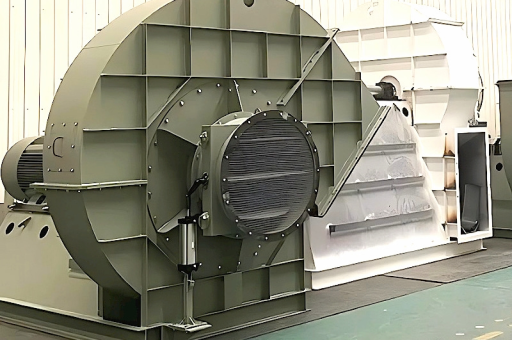
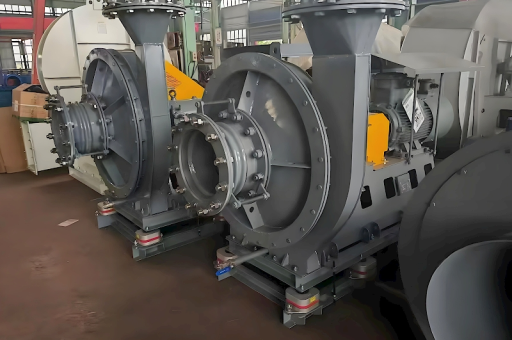
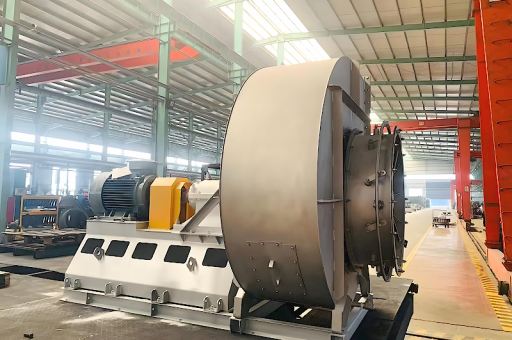
A forward centrifugal fan (also known as a squirrel cage fan or forward-curved fan) is a type of centrifugal fan where the blades of the impeller curve in the direction of the rotation.
This curvature design is the most fundamental distinction from other centrifugal fans (like backward-curved or radial-blade fans).
Key Design & Working Principle
- Blade Design: The blades are curved forward (towards the direction of rotation) and are typically shallow, with a large number of blades (often 24 to 64).
- Airflow Path: Air enters the fan axially (along the shaft) through the inlet. The spinning impeller forces the air outward radially. The forward-curved blades "throw" the air at a high velocity into the fan housing (scroll).
- The Housings Role (The Scroll): The housing is a spiral-shaped volute. As the air moves through this expanding spiral, the velocity energy is converted into pressure energy (static pressure).
Operating Characteristics (The Fan Curve)
The performance curve of a forward-curved fan has a distinct shape:
Pressure
  ^
  |    .
  |   . \      (Danger Zone / Stall Region)
  |  .   \
  | .     \
  |.       \______
  +-----------------> Airflow (CFM)
- Rising Curve: The pressure curve starts low and rises to a peak before dropping off to the right.
- Danger Zone (Left of Peak): Operating to the left of the peak pressure is unstable. The fan can "surge" or "stall," causing vibration and noise. This area should be avoided for continuous operation.
- Stable Operation (Right of Peak): The fan operates smoothly and predictably here. The horsepower curve is "non-overloading" in this region (more on that below).
Key Characteristics & Performance
- High Airflow, Low Pressure: They are excellent at moving large volumes of air against low to moderate resistance (static pressure).
- Low Speed Operation: Compared to backward-curved fans, they achieve the same performance at a lower rotational speed, making them quieter in many applications.
- Low Noise: The large number of blades and lower tip speeds generally result in quieter operation.
- Horsepower Characteristic (Non-Overloading vs. Overloading):
- Overloading: For a backward-curved fan, the power required increases as airflow increases. If the system has less resistance than expected, the motor can become overloaded and burn out.
- Non-Overloading: For a forward-curved fan, the required horsepower peaks at or near the point of maximum efficiency. If airflow continues to increase (e.g., due to an open duct), the power requirement actually decreases. This means the motor is unlikely to overload in a low-resistance system.
- Efficiency: Generally lower than backward-curved fans (typically 60-70%) but higher than radial-blade fans.
Common Applications
Forward centrifugal fans are the workhorses of the HVAC industry and are found in many low-pressure, high-volume applications:
- HVAC Systems:
- Air Handlers (AHUs) & Fan Coil Units (FCUs): The most common fan type inside these units for moving air through ducts, filters, and coils.
- Residential Furnaces: Blowers that push heated or cooled air through the house.
- Packaged Rooftop Units (RTUs)
- Clean Rooms: For supplying large volumes of filtered air.
- General Ventilation: In commercial buildings, schools, and hospitals.
- Electronic Cooling: In computer power supplies, server racks, and equipment.
- Automotive: Heater and air conditioning blowers in cars.
Advantages
- High Volume / Low Pressure: Ideal for applications with minimal duct resistance.
- Quiet Operation: Lower tip speeds and numerous blades reduce noise.
- Non-Overloading Power Curve: Motor protection in variable resistance systems.
- Compact Size: For the same performance, they can be smaller than other fan types.
- Cost-Effective: Generally less expensive to manufacture than high-performance backward-curved fans.
Disadvantages
- Low Static Pressure Capability: Cannot handle high duct resistance or dirty filters as well as backward-curved fans.
- Lower Efficiency: More energy is consumed for the same airflow compared to a high-efficiency backward-curved fan.
- Instability in the Stall Region: Dangerous to operate in the left side of the performance curve.
- Poor Performance with Dust & Sticky Materials: The close blade spacing and forward curvature can easily clog. They are generally not used for material handling or particulate-laden air.
- Slower Speed: If a higher static pressure is needed, you may need a larger fan or a different type.
Comparison: Forward vs. Backward Curved Fans
| Feature | Forward Curved (Squirrel Cage) | Backward Curved |
|---|---|---|
| Blade Shape | Curved in direction of rotation | Curved away from direction of rotation |
| Airflow | High Volume | High Volume |
| Pressure | Low to Moderate | Moderate to High |
| Efficiency | Lower (60-70%) | Higher (80-85%) |
| Speed | Lower (Quieter) | Higher (Louder) |
| Power Curve | Non-Overloading | Overloading (needs motor protection) |
| Dust Handling | Poor | Good |
| Typical Use | HVAC, clean air, low pressure | Industrial, high pressure, dusty air |
Summary
Forward centrifugal fans are the standard choice for moving large volumes of clean air at low pressure, especially in comfort heating, ventilation, and air conditioning (HVAC) systems. Their simple, robust design, low noise, and non-overloading motor characteristic make them ideal for applications where the system resistance is well-understood and relatively low. However, for higher efficiency, higher pressure, or handling dirty air, a backward-curved or other fan type would be more appropriate.