This article's table of contents introduction:
- What is a Centrifugal Fan in a Cooling Tower?
- Key Differences: Centrifugal vs. Axial Fans
- Why Choose a Centrifugal Fan? (Primary Applications)
- Types of Centrifugal Fans Used
- Advantages & Disadvantages
- Maintenance Considerations
- Common Configurations (Forced Draft)
- Alternatives & Market Trends
- Summary: When to Specify a Centrifugal Fan
This is a comprehensive breakdown of Cooling Tower Centrifugal Fans. While the iconic image of a cooling tower often involves a large propeller-style (axial) fan at the top, centrifugal fans play a critical role in specific types of cooling towers, particularly for industrial or HVAC applications where noise, static pressure, or installation constraints are factors.
Here is everything you need to know about them.
What is a Centrifugal Fan in a Cooling Tower?
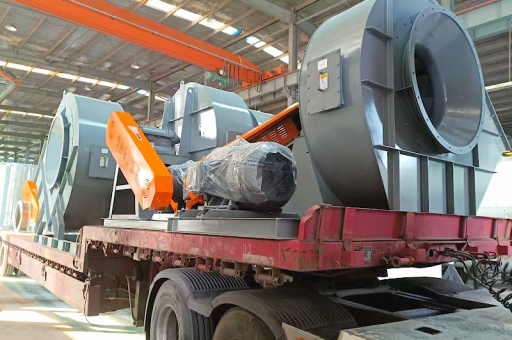
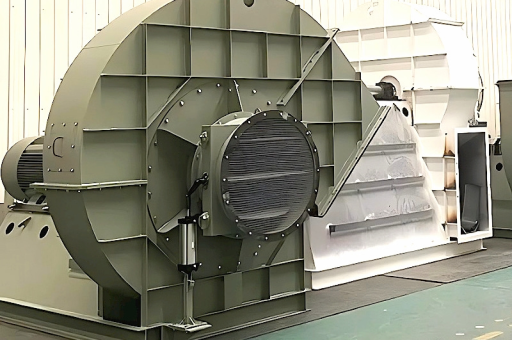
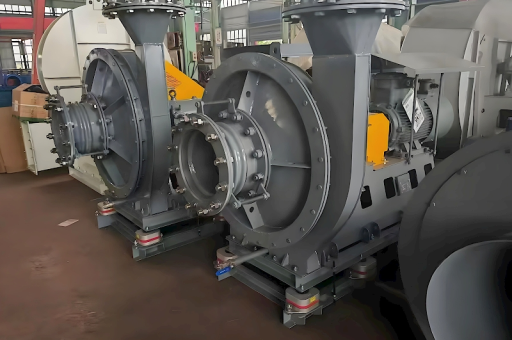
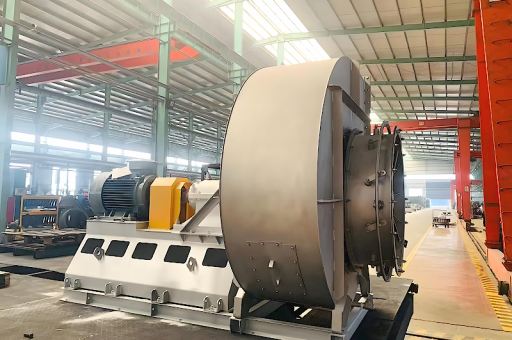
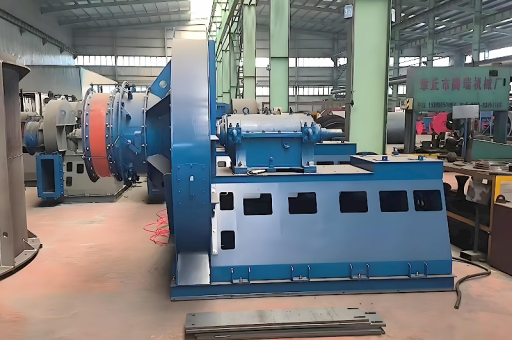
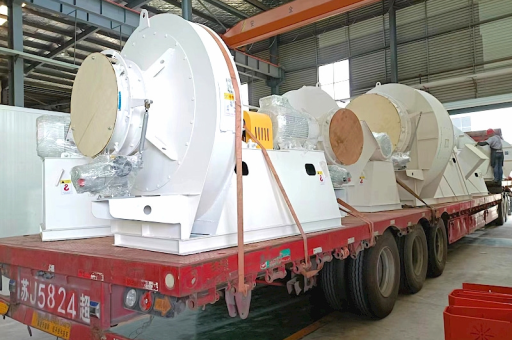
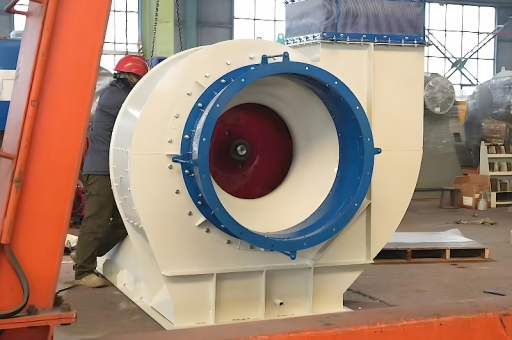
A centrifugal fan (also known as a squirrel-cage or radial fan) moves air by drawing it into the center of a rotating impeller and then flinging it outward at a 90-degree angle to the intake.
In a cooling tower, these fans are typically located at the air inlet (blowing air into the tower) rather than at the top (sucking air out). They are most commonly used in Forced Draft cooling towers.
Key Differences: Centrifugal vs. Axial Fans
| Feature | Centrifugal Fan | Axial Fan (Propeller) |
|---|---|---|
| Airflow Path | 90-degree change in direction | Straight through (axial) |
| Location | At the air inlet (sides/bottom) | At the top of the tower (exhaust) |
| Draft Type | Forced Draft | Induced Draft |
| Static Pressure | High (can overcome ductwork/louvers) | Low (moves large volumes freely) |
| Noise Level | Quieter (lower tip speeds) | Louder (higher tip speeds, windage) |
| Efficiency | Good for high resistance | Excellent for free air movement |
| Cost | Higher (more complex, heavier) | Lower (simpler construction) |
Why Choose a Centrifugal Fan? (Primary Applications)
Centrifugal fans are chosen when the installation or environment requires specific characteristics that axial fans cannot provide.
- Indoor or Enclosed Installations: Because centrifugal fans generate high pressure, they can be ducted to bring fresh air in from outside and exhaust hot air out, without the tower needing to be on an exterior wall.
- Acoustically Sensitive Areas: Hospitals, hotels, or residential buildings often use centrifugal fan towers. The fan operates at lower tip speeds, producing a constant "hum" rather than the low-frequency "roar" of a large axial fan.
- High Static Pressure Resistance: If the cooling tower has very fine mist eliminators, tight louvers, or long inlet ducts, the high static pressure capability of a centrifugal fan is essential to push the required airflow.
- Small to Medium Sized Towers: Most factory-assembled "packaged" cooling towers (e.g., 10 to 500 tons) use centrifugal fans, especially if they are designed for indoor use.
Types of Centrifugal Fans Used
Not all centrifugal fans are the same. For cooling towers, the most common blade types are:
- Forward Curved (Squirrel Cage):
- Pros: Very quiet, compact, and can move large air volumes against moderate pressure.
- Cons: Less efficient than other types; prone to stall if operating against high static pressure.
- Use: Most common in smaller, residential, or light commercial packaged towers.
- Backward Inclined (Airfoil):
- Pros: Very high efficiency (lowest operating cost), non-overloading horsepower (motor won't burn out if static pressure drops), and handles higher pressures well.
- Cons: More expensive than forward curved.
- Use: Large industrial cooling towers, high-efficiency applications, or where operating costs are critical.
Advantages & Disadvantages
Advantages:
- Low Noise: Typically 10-15 dB(A) quieter than axial fans in similar duty.
- Flexible Installation: Can be installed indoors, in basements, or on rooftops with ductwork.
- High Pressure: Can push air through complex pathways, long duct runs, and high-resistance heat transfer media.
- Stable Operation: Less affected by wind (since the inlet is at the bottom).
Disadvantages:
- Lower Airflow: For the same physical size, a centrifugal fan moves less air than an axial fan.
- Higher Initial Cost: More moving parts (bearings, heavy housing, sheaves, belts).
- Higher Maintenance: Belt drives require regular inspection, tensioning, and replacement (though direct-drive is an option).
- Efficiency: At the very highest air volumes (millions of CFM), large axial fans are more efficient overall.
Maintenance Considerations
Because they are belt-driven (most common), centrifugal fan towers require more frequent maintenance than direct-drive axial towers.
- Belt Tension & Wear: The highest maintenance item. Belts must be checked for tension monthly and replaced annually or semi-annually.
- Bearing Lubrication: Fan shaft and motor bearings need regreasing every 3-6 months, depending on temperature and humidity.
- Sheave Alignment: Misaligned sheaves cause premature belt wear and vibration.
- Cleanliness: Because the fan is at the air inlet, it can accumulate debris (leaves, paper, dust). The impeller blades must be cleaned to prevent imbalance and vibration.
- Vibration Monitoring: Due to the rotating mass and belt tension, vibration analysis is key to preventing bearing failure.
Common Configurations (Forced Draft)
- Blow-Through: The centrifugal fan is at the bottom or side, forcing air up through the fill media, while water falls down. This is the classic forced-draft centrifugal tower.
- Push-Pull: Rare, but used in very large systems where a centrifugal fan pushes air in and an axial fan pulls it out.
Alternatives & Market Trends
- Direct Drive Centrifugal Fans: Becoming more popular. The fan wheel is mounted directly on a NEMA motor shaft. This eliminates belts, sheaves, and bearings, drastically reducing maintenance. EC Motors (Electronically Commutated) are now being integrated with direct-drive centrifugal fans for variable speed and extreme efficiency.
- High-Efficiency Axial Fans: For new construction where space is available outdoors, modern large-diameter, low-speed axial fans with airfoil blades are often cheaper to install and operate than a bank of smaller centrifugal fans.
Summary: When to Specify a Centrifugal Fan
- Requirement: < 85 dBA noise level.
- Requirement: Indoor installation with ducted air intake/exhaust.
- Application: Hospital, school, hotel, or office building.
- Tower Type: Small to medium factory-assembled forced-draft tower.
- Constraint: Tall building where the tower must sit inside a mechanical room.
Would you like a detailed comparison of specific manufacturers (like Baltimore Aircoil, Evapco, or Marley) or more detail on EC motor retrofit options for centrifugal fan towers?